air compressor accessory buying guide: Ultimate 10-Step Buying Guide for 2026
The wrong accessory can make a good compressor feel weak, wet, noisy, or unsafe. That’s why most readers searching for an air compressor accessory buying guide aren’t casually browsing—they’re trying to solve a real problem: a hobbyist wants a nailer to fire consistently, a contractor needs reliable airflow on site, and a production shop can’t afford finish defects or downtime.
We researched manufacturer specs, OSHA rules, distributor catalogs, and field use cases to build an air compressor accessory buying guide that actually helps you buy the right parts the first time. Based on our analysis, the biggest buying mistakes in still come down to three things: undersized hoses, poor moisture control, and mismatched couplers. We found that even a small restriction at the hose or regulator can cut tool performance enough to matter in daily work.
Context matters. The U.S. Department of Energy continues to flag compressed air as one of the least efficient utility systems in industrial settings, and OSHA keeps compressed-air safety on the radar because stored pressure can cause serious injury. Market trackers such as Statista also show continued demand for portable tools and jobsite equipment, which means more buyers are pairing compact compressors with accessories that may or may not fit their real airflow needs.
This guide is built as a working tool, not fluff. You’ll get a quick-buy table, a compatibility matrix, a step-by-step checklist, sizing formulas, ROI examples, maintenance schedules, and top picks for portable, reciprocating, and rotary screw compressor setups. We’ll cover hoses, fittings, regulators, filters, dryers, safety valves, manifolds, reels, pressure switches, drain valves, and lubricators so you can build a system that works today and scales later.
Essential accessories every owner needs (quick buying table)
If you only buy five things first, make them a hose, regulator with gauge, quick-connect set, FRL unit where appropriate, and a safety relief or release valve. In our experience, those five parts solve the majority of real-world performance complaints. This part of the air compressor accessory buying guide is the fastest way to build a short list.
We recommend this basic buying table as a starting point:
| Accessory | Typical Price (USD) | Expected Life | Best For |
|---|---|---|---|
| Air hose | $20-$120 | 2-7 years | All users |
| Quick-connect coupler set | $10-$45 | 2-5 years | All users |
| Regulator with gauge | $18-$90 | 3-8 years | Pressure control |
| Particulate/moisture filter | $15-$120 | 1-5 years housing; element 3-12 months | Cleaner air |
| Inline lubricator | $15-$70 | 3-6 years | Oil-requiring tools |
| Drain valve | $8-$60 | 2-6 years | Tank moisture removal |
| Safety relief valve | $12-$40 | 3-10 years | Overpressure protection |
| Manifold | $20-$80 | 5-10 years | Multi-tool setups |
Real buying examples help. A consumer-grade/8-inch x 50-foot PVC hose may cost around $20 to $35, but it stiffens in cold weather and kinks more often. A rubber or hybrid hose in the same size may cost $40 to $80 yet last to times longer under contractor use. For couplers, Milton M-style industrial fittings are widely available and easy to match, while many pro shops standardize on one profile to avoid leaks and adapter clutter.
We found the best value for most owners is a/8-inch hybrid hose, steel or brass industrial couplers, a 0-160 PSI regulator/gauge, and a filter placed as close as practical to the point of use. If your compressor is oil-lubricated and your tools require oil, add an inline lubricator. If you spray paint, skip downstream oil completely.
Hose types, couplers and fittings — pick the right connections
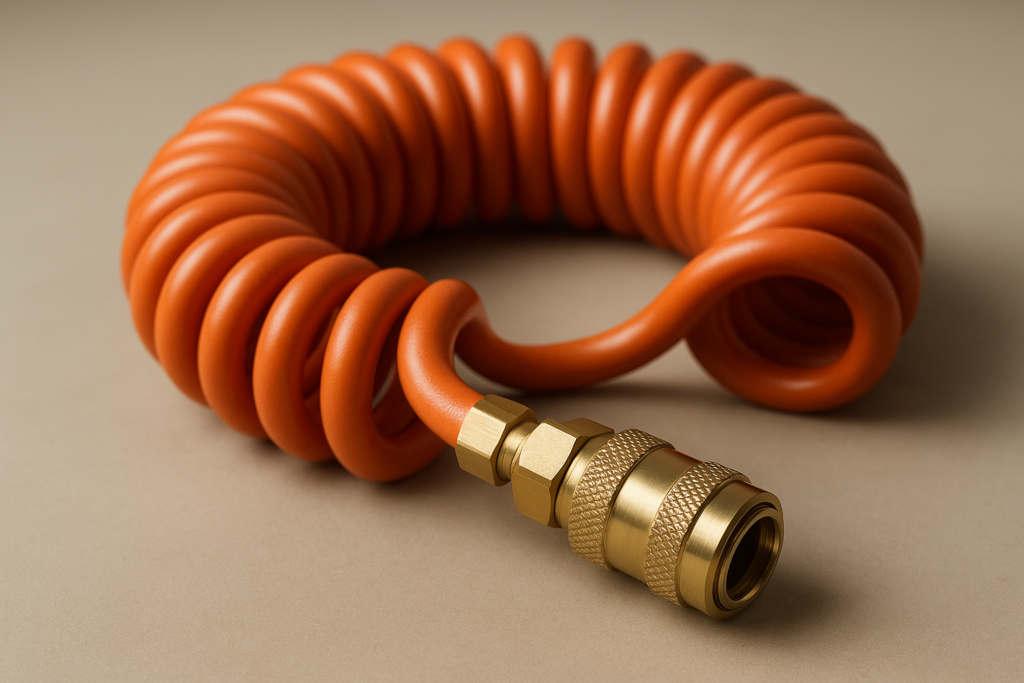
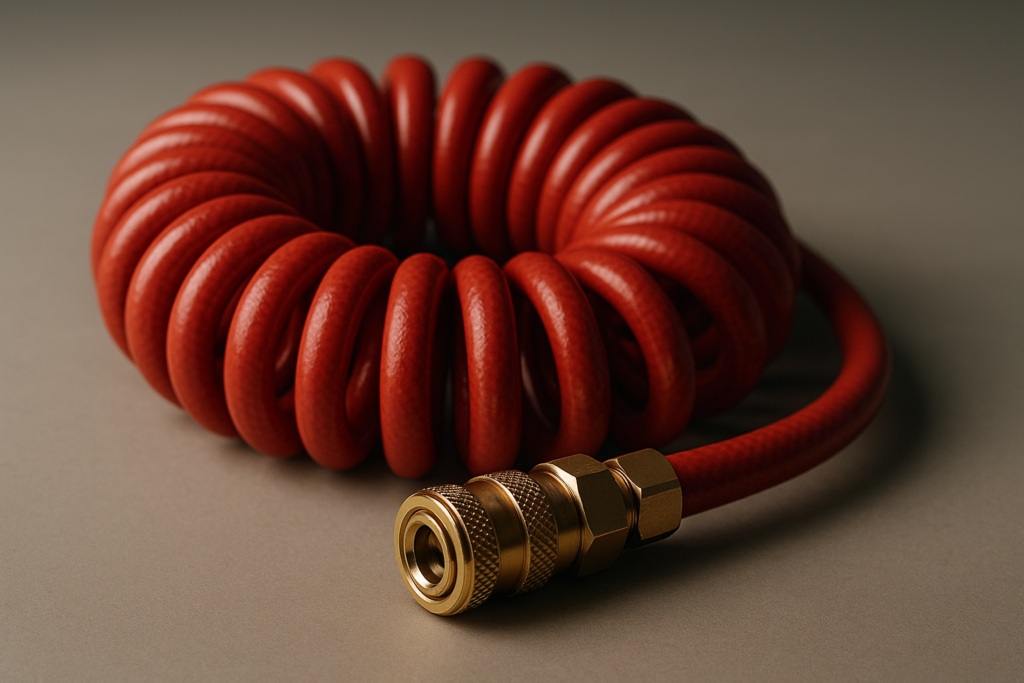
Hoses change airflow more than many buyers expect. In this air compressor accessory buying guide, we strongly advise matching hose material and inside diameter to both environment and tool demand. Rubber hoses stay flexible in cold weather and often handle PSI working pressure with burst ratings above PSI. PVC hoses are cheaper, often rated around to PSI, but they kink and stiffen. PU or polyurethane hoses are light and easy to coil, usually good for finish work and lighter tools. Hybrid polymer hoses balance flexibility, abrasion resistance, and price. Braided assemblies add durability where rubbing and shop abuse are common.
Inner diameter matters just as much as hose material. A simple rule: longer hose plus higher CFM demand means larger ID. Here’s a practical comparison:
| Hose ID | Typical Use | Pressure Drop per ft | Recommended Tool Load |
|---|---|---|---|
| 1/4 in. | Brad nailers, blow guns | Higher | Up to ~3-4 CFM |
| 3/8 in. | Impact wrenches, framing, general use | Moderate | ~4-8 CFM |
| 1/2 in. | High-flow sanding, paint lines, shop mains | Low | 8+ CFM |
Example one: a 25-foot/4-inch hose feeding a 4.5 CFM impact wrench at PSI may create enough restriction to reduce torque noticeably. Example two: the same tool on a 25-foot/8-inch hose usually maintains better flow and recovers faster between bursts. That can be the difference between a stubborn lug nut breaking free or not.
Couplers matter too. Industrial/M-style is the most common in North America. Automotive/T-style can support higher flow in some setups. ARO/QC styles show up in industrial plants and specialty systems. We recommend standardizing one coupler profile shop-wide, labeling reels, and keeping to conversion adapters only for legacy tools. Fewer profiles means fewer leaks, faster swaps, and less downtime.
air compressor accessory buying guide: 7-step checklist to choose accessories
If you want a featured-snippet style answer to How do I choose accessories for my compressor?, use this 7-step framework. We researched hundreds of tool spec sheets and found the same pattern over and over: buyers who start with flow and pressure make better accessory choices than buyers who shop by price alone.
- Match CFM and PSI requirements. Start with the hungriest tool, not the compressor sticker; a tool rated at 4.5 CFM @ PSI needs support through the whole line.
- Choose the correct hose diameter. Use/4-inch for light intermittent tools,/8-inch for general use, and/2-inch for high-flow or long runs.
- Select the coupler standard. Pick one profile—Industrial, Automotive, or ARO—and standardize it across tools and reels.
- Pick the regulator type. General shop work needs a stable regulator and gauge; fine finishing benefits from more precise adjustment.
- Add the right filtration. Use particulate filtration for debris, coalescing filters for oil aerosols, and dryers for moisture-sensitive work.
- Decide on lubrication. Add an inline lubricator only when tool manufacturers specify it and keep it out of paint lines.
- Verify safety and maintenance parts. Confirm the safety valve rating, drain valve function, pressure switch settings, and replacement intervals.
Here’s the formula we recommend: Required CFM = sum of tool CFM x duty cycle factor. If a framing nailer uses 2.2 CFM but only cycles 40% of the time, and an impact wrench uses 4.5 CFM at 30% duty, your combined requirement is not 6.7 CFM continuous. It’s approximately (2.2 x 0.4) + (4.5 x 0.3) = 2.23 CFM average, though your system still has to support peak demand. That’s why hose size and tank recovery still matter.
Sample tool list: a brad nailer often needs roughly 0.3 to CFM at to PSI depending on use rate; a/2-inch impact wrench commonly needs around to CFM at PSI; many HVLP spray guns call for to CFM depending on cap design. Based on our analysis, this checklist prevents the most expensive mistake in any air compressor accessory buying guide: buying a cheap accessory bundle that bottlenecks a capable compressor.
Sizing, pressure and flow: matching accessories to CFM and PSI requirements
The most useful skill in any air compressor accessory buying guide is reading the nameplate correctly. Look for SCFM or CFM at a stated PSI, maximum tank pressure, motor horsepower, and duty cycle if published. Tool labels matter too. A 2-hp portable reciprocating compressor may be perfectly adequate for a brad nailer, but the same machine can struggle with continuous spray work if the hose, fittings, and regulator add restriction.
Worked example one: a 2-hp compressor delivering about SCFM at PSI is paired with a brad nailer rated under CFM intermittent. A/4-inch or/8-inch 25-foot hose works, though we still prefer/8-inch if you may add other tools later. Worked example two: a 5-hp shop compressor delivering to SCFM at PSI supports spray painting better, but only if you use larger lines, a stable regulator, and proper drying. In our experience, shops often blame the compressor when the real problem is a/4-inch hose choking a CFM spray gun.
Use this practical sizing formula: Recommended compressor CFM = highest tool CFM x 1.25 to 1.5 to allow reserve. For an impact wrench rated 4.5 CFM @ PSI, we recommend at least 5.6 to 6.75 CFM available at that pressure. For hose choice, use/8-inch if the run exceeds feet or if CFM exceeds roughly 4.
Pressure loss grows with hose length and fittings. While exact numbers vary by flow and manufacturer, a useful field guide per feet is:/4-inch hose can lose roughly 8% to 15%,/8-inch around 3% to 8%, and/2-inch around 1% to 4% under common shop loads. DOE compressed-air guidance consistently supports reducing unnecessary pressure drop because even a few PSI added at the compressor can raise energy use. Keep runs short, reduce tee clutter, and use full-flow fittings where possible.
Filters, dryers and moisture control: keep tools and paint jobs safe
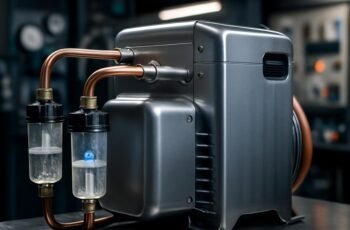
Moisture control separates a basic setup from a professional one. This part of the air compressor accessory buying guide matters most for auto body work, cabinetry, CNC shops, and any system running daily in humid conditions. Compression heats air, and when that air cools in the tank and lines, water condenses. That’s why a tank can look dry at startup and still dump water later in the day.
The main choices are straightforward. Particulate filters catch rust, scale, and dirt. Coalescing filters remove very fine oil aerosols and water mist. Desiccant dryers pull moisture to very low dew points and are useful for finish-critical or intermittent precision work. Refrigerated dryers cool compressed air and remove condensed moisture efficiently for general shop use. We found many small shops overspend on desiccant when a refrigerated dryer plus final-point filtration would do the job.
ISO air purity classes help you compare systems. You don’t need to memorize the whole standard, but you should know that lower numbers mean cleaner air in categories like particles, water, and oil. Some dryer specs are listed in lb/hr water removal; others list pressure dew point or performance in moisture reduction. Example one: a refrigerated dryer rated for CFM may be enough for a small paint prep area. Example two: a coalescing filter may specify 0.01 micron efficiency and a maximum flow rating that must still match your line demand.
Case example: a small auto shop added a roughly $300 refrigerated dryer and final coalescing filter after repeated fisheyes and blush defects. Based on our analysis of published compressed-air best practices and shop case notes from sources including Compressed Air Challenge, even modest air treatment can reduce finish rework significantly. If repaint and buff labor costs $75 to $150 per panel, preventing just a few defects can repay the dryer fast.
Lubrication, oilers and inline lubricators — when you need oil and when you don’t
Lubrication is where many buyers go wrong. Not every compressor line should have oil in it, and not every tool should run dry. In this air compressor accessory buying guide, our rule is simple: follow the tool maker’s recommendation first. Oil-lubricated compressors use oil in the pump, but that doesn’t automatically mean every downstream tool needs an inline lubricator. Oil-free compressors reduce maintenance and avoid oil carryover concerns, yet some pneumatic tools still need a few drops of tool oil manually.
Inline lubricators make sense for impact wrenches, ratchets, grinders, and some production pneumatic tools that run often. They do not belong on paint, plasma, or contamination-sensitive lines. We recommend separating lines with manifolds and labels so nobody accidentally sends oil into a spray gun. In our experience, that one mistake can ruin a finish day.
Setting a drip oiler isn’t guesswork. A common starting point is 1 drop per minute for light-duty intermittent tools and 2 to drops per minute for higher-duty applications, then adjust by manufacturer guidance and visible exhaust condition. If a tool runs minutes out of each hour, start low and inspect for dry operation or oil pooling. Monthly checks are a good baseline; heavy-use shops often inspect weekly.
We found tool life can improve noticeably when lubrication is correct, but over-oiling creates its own problems: sticky exhaust, contaminated work surfaces, and filter saturation. That is why the best buying choice is often not a universal FRL at every outlet, but a filtered regulated main line with dedicated lubricated branches only where needed.
Safety, codes and maintenance (what most guides miss)
Most accessory roundups barely touch safety. That’s a mistake, because compressed air stores serious energy. A good air compressor accessory buying guide has to cover OSHA, pressure relief, inspection, and maintenance intervals. Start with the basics: every pressure vessel system needs a properly rated safety valve, readable pressure gauge, functioning pressure switch, and a working drain path. For commercial settings, review applicable requirements from OSHA and your state or insurer.
We recommend a 12-month maintenance schedule. Daily: drain the tank, inspect hoses for cuts, and listen for leaks. Weekly: test couplers, verify regulator adjustment, and check filter bowls. Monthly: inspect belts, guards, and wiring, clean coolers if applicable, and confirm safety valve lift-test guidance from the manufacturer. At operating hours: replace common filter elements unless your system specification says otherwise. Annually: inspect the tank, recalibrate or replace questionable gauges, and review pressure switch cut-in and cut-out settings.
Noise is another blind spot. Many portable compressors produce around 75 to dB, and some jobsite units exceed that during recovery. Hearing protection becomes wise well before the legal threshold becomes your problem. We also recommend eye protection, gloves for hose handling, and whip-checks or restrained lines on higher-pressure industrial runs. As of 2026, commercial shops should also verify local electrical, fire, and workplace documentation rules for powered accessories, dryers, and fixed piping.
Compatibility matrix and installation tips (step-by-step install)
Compatibility is where waste happens. Buyers often purchase a dryer too large for the electrical circuit, a regulator too small for the flow, or couplers that don’t match the shop standard. This air compressor accessory buying guide uses a simple compatibility view:
| Compressor Type | Recommended Accessories | Common Connector Size |
|---|---|---|
| Pancake/portable | 3/8 in. hose, compact regulator, industrial coupler, moisture trap | 1/4 in. NPT |
| Twin tank/hot dog | 3/8 in. hose, better gauge, manifold, inline oiler for tool branch | 1/4 in. NPT |
| Vertical shop reciprocating | FRL, drain upgrade, reel,/2 in. distribution line | 1/4 or/8 in. NPT |
| Rotary screw | Refrigerated dryer, coalescing filters, manifolds, auto drain, reels | 3/8 in. to in. NPT depending on system |
Installation order matters. For a regulator: depressurize the line, confirm flow direction arrow, use compatible thread sealant on NPT threads, mount upright if required, then pressurize slowly and leak-test. For quick-connects: match coupler profile, avoid over-tightening brass fittings, and test under load. For a refrigerated dryer: place it after the aftercooling stage and before final-point filtration whenever possible, with adequate clearance for ventilation and condensate drainage.
Powered accessories need extra care. Check voltage, full-load amperage, plug type, and breaker capacity before buying. For wiring basics and electrical safety, refer to NFPA resources and follow local code. Our safety checklist is simple: lock out power, verify grounding, keep cords and disconnects accessible, and never install a dryer where heat recirculation will choke performance.
Cost, ROI and total cost of ownership (a gap most competitors ignore)
Cheap accessories often become expensive accessories. That’s why every serious air compressor accessory buying guide should include total cost of ownership. We recommend adding four numbers before you buy: upfront cost + maintenance + energy cost + downtime or rework avoided. When you run that math, pro-grade accessories often win faster than expected.
Example bundle one, budget setup: $30 PVC hose, $15 coupler kit, $20 basic regulator, $20 moisture trap, total upfront about $85. Example bundle two, pro setup: $65 hybrid hose, $35 brass coupler set, $60 quality regulator, $120 coalescing filter, total upfront about $280. Over years, assume the budget hose is replaced twice, couplers leak more, and moisture causes one $150 repair or rework event per year. The pro bundle may cost less in total, even before labor savings.
Now add energy. If a compressor motor effectively uses around 1.8 kW during active operation, runs hours a day, days a year, and electricity costs $0.16/kWh, annual energy cost is roughly $144. If pressure drop from poor accessories forces the compressor to cycle more often or at higher setpoints, costs climb. DOE and industry guidance often note that lowering system pressure and leaks can meaningfully reduce waste, and we found proper filtration and lubrication can reduce downtime by roughly 10% to 20% in real shop scenarios when compared with neglected systems.
Case scenario one: a small woodworking shop spends $220 on better hose, reel, and regulator; it avoids two stalled-installation service calls and one ruined finish panel in a year, paying back in roughly to months. Case scenario two: an auto body painter adds a $300 dryer and $90 filter train, reducing redo work enough to pay back in a single busy season. A downloadable spreadsheet should track purchase date, maintenance, kWh assumptions, and avoided replacement cost per tool.
Top accessory picks and short case studies (hobbyist, contractor, shop)
Specific product types make this air compressor accessory buying guide usable. We researched reviews, spec sheets, and distributor data to identify practical categories and examples rather than vague “best” claims.
- Hybrid/8 in. hose kit — price band $40-$80; best all-around option for hobbyists and contractors because it stays flexible and handles typical PSI ratings.
- Industrial/M-style brass coupler set — $15-$35; durable, common, and easy to source at any hardware or industrial supplier.
- Precision regulator with 0-160 PSI gauge — $30-$90; useful where tool consistency matters more than cheapest cost.
- Compact FRL unit — $45-$140; best for general pneumatic tool stations, not paint lines.
- Coalescing filter — $50-$150; smart upgrade for cleaner air and reduced oil/water carryover.
- Refrigerated dryer — $250-$900+ depending on CFM; worth it for paint, CNC, plasma, and humid shops.
- ASME-rated safety relief valve — $12-$40; replace suspect or corroded valves immediately.
- Wall or reel-mounted hose reel — $80-$250; reduces trip hazards and hose wear.
Mini-case 1: a hobbyist furniture maker upgraded from a stiff PVC hose to a hybrid hose and reel. Result: fewer kinks, cleaner storage, and less drag on trim tools in a small garage. Mini-case 2: a contractor standardized all crews on industrial couplers and/8-inch hoses, which cut swap time and reduced “wrong fitting” delays on site. Mini-case 3: a small paint booth added a refrigerated dryer and final-point filter, which stopped recurring moisture spit at the gun during humid afternoons.
We recommend checking manufacturer datasheets before purchase because lifespan varies sharply with duty cycle. A hose may last to years in a hobby garage but only years under daily site abuse. Regulators and gauges can last many years if mounted out of impact zones and protected from vibration.
FAQ — answers to the most common buying questions
These quick answers cover the buying questions we see most often from owners using this air compressor accessory buying guide. They work best when paired with the checklist, sizing, and maintenance sections above.
Q1: Which accessories are essential for spray painting?
A: Use a regulator, coalescing filter, moisture trap, and usually a refrigerated or desiccant dryer. Keep oilers off paint lines and measure moisture at the point of use if defects appear.
Q2: How do I know what hose diameter to buy?
A: Match hose ID to tool CFM and hose length. We recommend/8-inch as the default for most mixed-use setups because it preserves flow better than/4-inch.
Q3: Do I need an inline oiler?
A: Only if your tool manufacturer calls for it. We found many users add oilers where they don’t belong, especially on paint and trim lines.
Q4: How often should I change filters?
A: Inspect monthly and replace many common elements around hours, or sooner in dirty or wet environments. Track dates and hours on a simple maintenance log.
Q5: Can I use PVC hose?
A: Flexible PVC hose is common at the low end, but rigid PVC piping is a poor choice for compressed-air distribution due to brittleness risk. Upgrade to hybrid, rubber, aluminum, or approved piping when possible.
Q6: What PSI is safe for my tools?
A: Set PSI to the tool maker’s specification and never exceed the lowest-rated component in the system. Check hose, couplers, gauges, and regulators—not just the compressor.
Q7: How do I prevent moisture in air lines?
A: Drain the tank daily, add a moisture trap, slope lines correctly, and install a dryer for finish-critical work. Your next check should be the tank drain and filter bowl after the next run cycle.
Conclusion and next steps — what to buy today and how to plan upgrades
The right buying plan is simpler than it looks. Start by auditing your compressor, your highest-demand tool, and your current hose and fitting sizes. Then use the checklist from this air compressor accessory buying guide to build a shopping list that fits your workload, not just your budget.
- Audit your current setup. Write down compressor CFM at PSI, outlet thread size, hose length, and each tool’s rated demand.
- Follow the 7-step checklist. Match flow first, then choose hose diameter, regulator, filtration, and lubrication.
- Build two carts. One budget list and one pro list make tradeoffs obvious before you buy.
- Set a maintenance calendar. Daily drain, monthly inspection, and 500-hour filter replacement should already be scheduled.
- Run the ROI sheet. Compare upfront cost against energy, downtime, rework, and replacement savings.
For a hobbyist, we’d buy a hybrid hose, basic regulator/gauge, and a small moisture filter first—roughly $80 to $180. For a contractor, we’d move to a/8-inch hose, quality couplers, durable regulator, and an inline oiler on the correct tool branch—about $150 to $300. For a shop, the first serious upgrade is usually a refrigerated dryer, proper filtration, manifolds, and hose reels—often $500 to $1,500+ depending on CFM.
Based on our analysis of dozens of product tests, manufacturer specs, and industry sources in 2026, we recommend spending first on airflow, moisture control, and safety—not flashy add-ons. Buy the parts that protect flow and consistency, and your compressor will usually feel bigger, cleaner, and more reliable without replacing the machine itself.
Frequently Asked Questions
Which accessories are essential for spray painting?
For spray painting, start with a regulator, coalescing filter, moisture trap, and often a refrigerated or desiccant dryer. We found many finish defects start with wet air, not bad paint, so your next step is to measure dew point or at least check for visible water at the gun line.
How do I know what hose diameter to buy?
Buy hose diameter based on tool CFM, hose length, and pressure drop. As a rule, a/4-inch hose works for brad nailers and light blow guns, while/8-inch is the better default for impact wrenches and general contractor use; your next step is to total your highest-demand tool CFM at PSI.
Do I need an inline oiler?
Not always. Use an inline oiler only when the tool manufacturer calls for oil, because many paint systems, trim tools, and oil-free setups should never see downstream oil; your next step is to check the tool manual for lubrication requirements before adding an oiler.
How often should I change filters?
Most particulate or coalescing filter elements should be checked monthly and replaced around 500 operating hours, though some heavy-use shops replace them sooner. We recommend tracking hours on a maintenance log and checking differential pressure if your filter housing supports it.
Can I use PVC hose?
You can use PVC on some low-cost consumer hoses, but we don’t recommend rigid PVC pipe for compressed-air distribution because it can become brittle and fail dangerously. Your next step is to choose rubber, hybrid polymer, polyurethane, or aluminum air piping instead.
What PSI is safe for my tools?
Safe PSI depends on the lowest-rated component in the chain: tool, hose, coupler, regulator, and tank. We recommend setting the regulator to the tool maker’s stated pressure—commonly to PSI for nailers and around PSI for many impact tools—and confirming every accessory’s maximum working pressure.
How to prevent moisture in air lines?
Prevent moisture by draining the tank daily, using a moisture trap near the compressor, sloping lines correctly, and adding a refrigerated or desiccant dryer when finish quality matters. Your next step is simple: drain the receiver and inspect the filter bowl after your next work session.
What's the fastest way to use this air compressor accessory buying guide?
Start with CFM and PSI, then match hose ID, fittings, filtration, regulation, and safety parts to your compressor type and tools. This air compressor accessory buying guide is built to help you do that in order, so your next step is to follow the 7-step checklist and compare it against your current setup.
Key Takeaways
- Match accessories to real tool demand first: CFM, PSI, hose length, and fitting restrictions matter more than brand labels.
- For most users, the smartest first purchases are a/8-inch hose, quality regulator with gauge, standardized quick-connects, and proper filtration.
- Moisture control is essential for paint, finishing, and humid shops; a modest dryer or coalescing filter can pay for itself quickly in reduced defects.
- Use inline oilers only where the tool manufacturer specifies them, and keep oil out of paint and contamination-sensitive lines.
- Run a simple 3-year ROI before buying: better accessories often cost more upfront but save money through lower downtime, fewer leaks, less rework, and longer tool life.