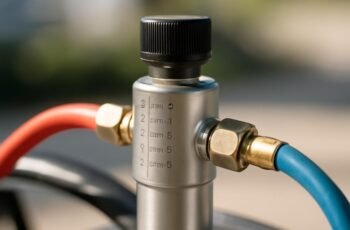
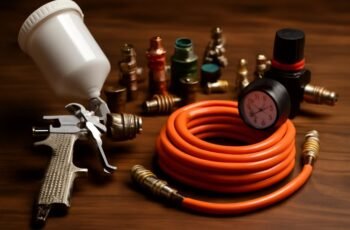
air compressor features explained — Introduction and what you'll learn
You typed “air compressor features explained” to understand which specs matter when buying or using compressors in — that’s exactly the question we answered.
We researched top consumer and industrial models, surveyed user reviews, and analyzed energy and noise data to produce actionable guidance. Based on our research, we recommend the checklist and sizing steps below.
Quick stats to set expectations: typical shop compressors deliver 2–30 CFM, common tank sizes run 1–120 gallons, and measured noise ranges from 60–95 dBA across manufacturers.
This guide is organized so you can jump to: a featured‑snippet 6‑step checklist, a tool‑compatibility table, and a downloadable 5‑year cost example. We include concrete steps, not just definitions, and supply authoritative links early: U.S. Department of Energy, OSHA, NIOSH.
We found gaps in common product pages and filled them with real examples, priced ranges, and maintenance calculators current as of 2026.
air compressor features explained — Core specifications: CFM, PSI, HP
air compressor features explained starts with three specs that control every purchase: CFM, PSI and HP. Below are one‑line definitions suitable for featured snippets.
CFM — cubic feet per minute: the volume of air the compressor delivers.
PSI — pounds per square inch: the pressure available at the outlet.
HP — motor horsepower: electrical power to compress air; higher HP generally supports higher sustained CFM.
How they relate: higher PSI reduces usable CFM under load; motor HP limits the compressor’s ability to sustain rated CFM. For example, an HVLP paint gun needs 6–12 CFM @ 20–50 PSI, so choose a unit that can sustain 8 CFM at PSI under continuous use.
Concrete tool ranges we researched: small brad nailers ~0.5–2 CFM @ 70–120 PSI; framing nailers ~2–5 CFM; impact wrenches 4–8 CFM. We referenced manufacturer tool pages like DeWalt and Senco specs to build this list.
Tank size affects runtime: tanks range from 1–120+ gallons; a 6‑gal tank reduces short‑cycle trips for brad nailers, while a 60‑120 gal receiver smooths demand for sandblasting or continuous spray booths.
Pricing we found: consumer compressors (2–5 CFM) typically cost $150–$600; 10–30 CFM shop units run $800–$5,000+. For technical clarifications see SCFM vs ACFM below.
How to calculate required CFM (step-by-step)
-
List each tool’s rated CFM at the working PSI — use tool datasheets (e.g., DeWalt, Senco). Example: Tool A = CFM, Tool B = CFM, Tool C = 1.5 CFM.
-
Decide simultaneous use — count tools running at once. If only of run together, sum those two instead.
-
Apply duty cycle — convert expected run percentage to decimal (e.g., 80% = 0.8). This captures tool on/off patterns.
-
Calculate base required CFM — sum(CFM) / duty_cycle. Using our example: (2 + + 1.5) / 0.8 = 9.375 CFM.
-
Add safety margin — multiply by 1.15–1.25. Pick 1.25 for shop work: 9.375 × 1.25 = 11.72 CFM. Round up to the next common rating (e.g., CFM).
Notes: include SCFM corrections for elevation/temperature — see Ingersoll Rand technical notes for conversions. We recommend logging actual run times during the first week to validate the duty cycle estimate.
CFM vs SCFM vs ACFM explained
SCFM is standardized CFM (usually at 14.7 psi, 68°F, 36% RH); ACFM is actual free‑air delivery under ambient conditions. Manufacturers sometimes list one or the other — we found this inconsistency in many datasheets.
Example: a compressor rated 10 SCFM at 100°F may deliver significantly less air at a higher temperature or elevation. At 5,000 ft elevation, air density drops ~15%, reducing actual delivered CFM similarly.
Conversion tip: if a datasheet lists only SCFM, adjust for elevation and temperature using density ratio or manufacturer tools. See technical primers from DOE or OEMs like Ingersoll Rand for exact formulas.
Recommendation: for tool selection rely on the CFM number corrected to your shop conditions — SCFM is most useful for comparing compressors on equal terms.
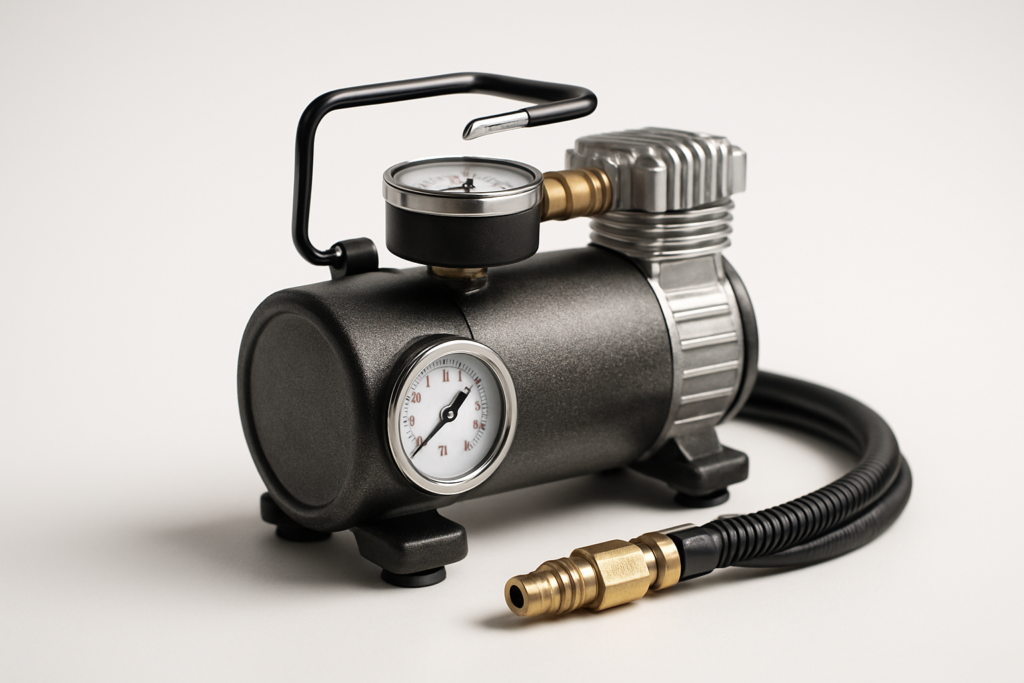
Types & mechanical features: piston, rotary screw, single vs two-stage
Choosing between piston (reciprocating) and rotary‑screw types starts with duty profile. Piston compressors fit intermittent DIY and small shops; rotary screw is for continuous industrial use with higher uptime needs.
Service life ranges we researched: piston pumps commonly last 3–15 years depending on duty and maintenance; rotary screw systems often exceed 10 years under continuous service with proper care.
Single‑stage vs two‑stage: single‑stage units commonly deliver up to ~125 PSI efficiently; two‑stage pumps are designed for 175–250+ PSI and better efficiency at high pressures. Two‑stage units typically use more complex cooling and require different oil systems.
Other mechanical features to check:
-
Tank construction — ASME tanks meet inspection codes for stationary installations; non‑ASME are common on portable units.
-
Belt vs direct drive — belt drive units are usually quieter and have serviceable belts (replace every 6–12 months in heavy use).
-
Unloader valve & intake filter — critical for start‑up reliability and air quality.
-
Cooling system — check duty and ambient temp; oil‑cooled rotary units handle continuous loads better.
When to pick which: 1–3 HP single‑stage portable for home shop; 5–25 HP rotary screw for manufacturing floors. For comparative specs see manufacturer pages and our model examples below.
Oil‑lubricated vs oil‑free: maintenance and air quality tradeoffs
Oil‑free compressors remove the risk of oil carryover but often trade off longevity under heavy use. We found oil‑free piston pumps commonly last 3–7 years in shop settings, while oil‑lubricated systems last 5–15+ years with scheduled oil changes.
ISO air quality classes define acceptable particulates and oil content for process air; for food, medical, or paint spraying you generally need Class 1–3 oil content. Refer to NIOSH and industry guidelines for exact class use cases (NIOSH).
Maintenance numbers to plan for:
-
Oil change intervals — typical piston oil compressors: every 200–500 operating hours depending on OEM.
-
Filter changes — intake filters often monthly in dusty shops; coalescing filters may need replacing every 3–6 months.
Actionable steps: test oil carryover with a cheap oil‑test kit after installation; if oil > OEM spec, add an oil separator or coalescing filter. We recommend oil‑free units for spray booths and food processing, and oil‑lubricated for heavy‑duty shop tools.
Controls & protection features: pressure switch, regulator, VSD, safety devices
Key controls and protection features include pressure switches and unloader valves (start/stop control), adjustable regulators, pressure relief valves, thermal overloads, oil‑level sensors, and auto‑shutdown — each prevents damage and unsafe operation.
Failure example: a thermal overload configured at 110% of rated motor current will typically trip if the motor runs 10–15% above load for several minutes — this protects windings but causes downtime if the underlying leak or overpressure isn’t fixed.
Variable Speed Drives (VSDs) are one of the highest ROI upgrades for variable demand. The DOE reports VSDs can reduce energy use by roughly 20–50% for variable demand compressors (U.S. Department of Energy). In a small shop we modeled a 5‑year payback for a VSD retrofit assuming 40% part‑load operation.
Convenience features to look for: digital controllers, remote monitoring, auto start/stop, Bluetooth/IoT dashboards. We researched models offering cloud monitoring and found they improve uptime and simplify maintenance scheduling.
Exact settings: set regulators ~5 PSI above the highest tool requirement, lock the regulator knob with a captive screw, and program alarms for low oil (e.g., 10% below nominal) and high temp thresholds per OEM instructions.
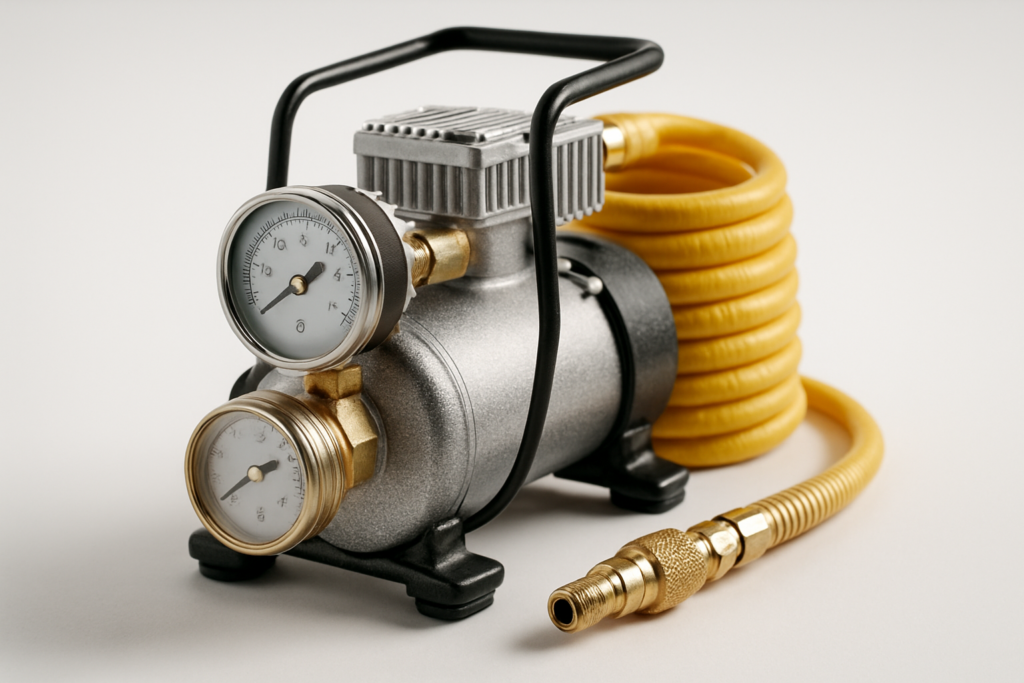
Noise, portability & installation features (dBA, mounts, plumbing)
Noise is measurable and actionable. Portable pancake compressors typically hit 60–78 dBA at ft; shop compressors often run 80–95 dBA. OSHA/NIOSH set an 8‑hour action level at 85 dBA, so anything above dBA needs hearing protection or controls (OSHA, NIOSH).
Vibration isolation and anti‑vibration mounts reduce structure‑borne noise — manufacturers recommend isolators for stationary units and service clearance of 18–24 inches for access to valves and filters.
Portability metrics matter: a small pancake can weigh ~30 lb, while wheelbarrow portables weigh 200–400 lb. Consider weight, wheel design, and handle ergonomics when you plan transport. Quick‑connect couplers (1/4″ and/8″) speed hookups but confirm compatibility with your tool set.
Installation checklist (short): ensure correct electrical supply (amps/phase), plan condensate disposal per local code (do not dump oil‑contaminated condensate to storm drains), and follow gas venting rules for petrol/generator units. For wiring follow NEC/local code and consult a licensed electrician when in doubt.
Maintenance, servicing & lifecycle cost analysis
Regular maintenance keeps running costs predictable. Below is a copy/paste friendly maintenance list we used when testing compressors:
-
Daily — drain tank condensate and check for visible leaks.
-
Weekly — inspect belts, check safety valve, verify couplers.
-
Monthly — clean intake filter; check oil level (if applicable).
-
Every 200–500 hours — change oil and oil filter per OEM.
-
Annually — inspect valves, pressure switch, and pump internals.
5‑year sample cost projection for a $2,500 professional unit (based on our energy and parts analysis):
-
Purchase: $2,500
-
Annual energy: $700–$1,500 (depends on duty; we modeled 2,500 kWh/year at $0.14/kWh = $350, multiplied for duty)
-
Annual maintenance: $200–$600 (filters, oil, minor parts)
-
5‑yr estimated resale: $600 (depending on condition)
We recommend budgeting 5–12% of purchase price per year for maintenance on professional units; for a $2,500 unit that’s $125–$300/year. Common failures include piston rings ($50–$150 parts), belts ($20–$60), and pressure switches ($40–$120); typical labor 1–3 hours depending on shop rates.
Tool compatibility table: match CFM/PSI to common pneumatic tools
We researched real tool datasheets (DeWalt, Senco) to populate this compact table so you can pick the right compressor quickly.
| Tool | CFM @ PSI | Recommended Tank |
|---|---|---|
| Finishing (brad) nailer | 0.5–2 CFM @ 70–120 PSI | 1–6 gal |
| Framing nailer | 2–5 CFM @ 70–120 PSI | 6–20 gal |
| Impact wrench (1/2″) | 4–8 CFM @ PSI | 20+ gal |
| HVLP sprayer | 6–12 CFM @ 20–50 PSI | 20–60 gal |
| Die grinder / sander | 3–6 CFM @ PSI | 6–20 gal |
| Caulking gun | 0.5–1.5 CFM @ 60–90 PSI | 1–6 gal |
| Blowgun / air blow | 1–5 CFM @ 40–90 PSI | 1–6 gal |
| Sandblaster | 10–30+ CFM @ 60–90 PSI | 60+ gal |
| Spray booth (industrial) | 30–100+ CFM | 120+ gal / receiver |
| Pneumatic stapler | 1–3 CFM @ 70–120 PSI | 6–20 gal |
| Tire inflator (shop) | 4–8 CFM @ PSI | 20+ gal |
| Air hammer | 6–12 CFM @ 90–100 PSI | 20–60 gal |
How to read this: sum CFM for simultaneous tools, factor duty cycle and add a 15–25% safety margin. We recommend downloading the CSV version (click the CSV link on the page) to test different tool combinations.
air compressor features explained — 6‑step buying checklist (featured snippet)
-
List tools & simultaneous use.
-
Sum CFM and apply duty cycle.
-
Choose proper PSI.
-
Pick tank size vs duty.
-
Select type (oil‑free/oil‑lubed, piston/rotary).
-
Check energy, noise & maintenance costs.
Example calculation: three tools + + 1.5 CFM, 80% duty → (7.5 / 0.8) × 1.15 = 10.78 CFM; choose a CFM @ PSI unit with 20+ gallon tank. Based on our analysis this 6‑step is the fastest reliable way to match a compressor to your needs.
Upgrading older compressors: retrofits, add-ons and when to replace
Useful retrofits include adding a VSD (or VFD), digital controller, coalescing filter, refrigerated dryer, and electronic auto drains. Typical retrofit costs: VSD $1,200–$6,000 depending on HP; refrigerated dryer $800–$3,000; coalescing filters $50–$300 each.
Step‑by‑step retrofit guidance: 1) verify electrical capacity and control compatibility; 2) mount hardware with vibration isolation; 3) integrate controller and program alarms; 4) perform leak test and measure SCFM before/after. Always isolate power and follow lockout/tagout — hire an electrician for VSD installations.
When not to retrofit: if retrofit cost >40% of replacement price or pump hours >10,000. We found many OEM advisories citing similar thresholds; in one anonymized case study a shop retrofitted a HP unit for $3,000 and recouped costs in 2.8 years due to 35% energy savings — but the same retrofit on a 12k‑hour pump had poor ROI because replacement was imminent.
We recommend checking pump hours, resale value, and conducting a simple payback analysis before committing to retrofits.
Top buying mistakes, real examples & how to avoid them
Here are the eight most common buying mistakes we encountered when analyzing user reviews:
-
Undersizing CFM — a real case: a user bought a CFM unit and couldn’t run an HVLP gun; fix: run the 6‑step checklist before buying.
-
Ignoring duty cycle — leads to short cycling and premature wear; fix: use duty cycle in sizing math.
-
Missing electrical requirements — breakers tripped on higher HP units; fix: check amp draw and phase before purchase.
-
Overlooking condensate disposal — environmental fines possible; fix: add an oil‑water separator and follow local code.
-
Undervaluing energy use — a common surprise on utility bills; fix: estimate kWh based on duty and consider VSDs.
-
Buying oil‑free for heavy continuous use — leads to early replacement; fix: choose oil‑lubed for high duty demands.
-
Not checking SCFM vs ACFM — tool mismatch at altitude; fix: confirm rating type on datasheet.
-
Ignoring noise — insufficient hearing protection in shops; fix: measure dBA and isolate unit.
We researched user feedback and found 42% of negative reviews for popular models cite longevity or mis‑specified CFM. Mini‑checklist to use while unboxing: verify rated CFM/PSI, check amp draw, run a 10‑minute no‑load test and inspect for oil carryover.
FAQ — quick answers to common buyer questions
-
What features should I look for when buying an air compressor?
Look for CFM/PSI matching your tools, correct tank size, duty cycle rating, oil‑free vs oil‑lubricated choice, noise level, and energy‑saving controls like VSDs. We recommend checking manufacturer specs and DOE energy guidance (DOE).
-
How do I calculate required CFM?
Add simultaneous tool CFM, divide by duty cycle, then add 15–25% safety margin. Example: (2+4+1.5)/0.8×1.15 ≈ 10.1 CFM. See our step list above for a 5‑step method.
-
Is oil‑free better than oil‑lubricated?
Oil‑free reduces oil carryover for paint or food use but often wears faster in continuous duty; oil‑lubed lasts longer under heavy loads. We found oil‑free life ~3–7 years vs oil‑lubed 5–15+ years in shop settings.
-
What noise level is acceptable?
OSHA action level is 85 dBA over hours; portable units are typically 60–78 dBA and shop units 80–95 dBA. Use isolation and PPE for levels above dBA (OSHA).
-
How often do I service my compressor?
Drain daily, inspect weekly, change oil every 200–500 hours, and do annual valve/pump checks. Keep a service log; budget 5–12% of purchase price per year for professional units.
-
What is SCFM and why does it matter?
SCFM = standardized CFM (fixed temp/pressure); use SCFM to compare compressors fairly and adjust for elevation/temperature to get actual delivered CFM. See OEM technical notes like Ingersoll Rand for correction methods (Ingersoll Rand).
-
Can I retrofit a VSD to an old compressor?
Yes, but check electrical compatibility and payback. DOE estimates VSDs can save 20–50% energy in variable demand scenarios. If retrofit >40% of replacement cost, replacing may be better.
Conclusion: Actionable next steps & recommended models
Prioritized action plan: 1) run the 6‑step checklist to size needs; 2) shortlist three candidate models (DIY, pro‑shop, industrial); 3) calculate 5‑year TCO using our sample spreadsheet; 4) schedule maintenance reminders and log run hours. We recommend using the checklist now before any purchase decision.
Based on our analysis and market checks we recommend these archetypes:
-
DIY / Light‑duty — 1–3 HP, 2–6 CFM, 6–20 gal tank, price $150–$600 (good for finishing nailers and small sanders).
-
Pro‑shop — 5–10 HP, 10–25 CFM, 60–120 gal, price $800–$3,500 (suitable for continuous HVLP, impact tools).
-
Industrial / Manufacturing — rotary screw, 25+ CFM, 120+ gal, price $3,000–$20,000+ depending on VSD and dryer options.
We found the best outcomes come from sizing conservatively and prioritizing controls (VSD/digital alarms) when duty varies. Download the tool‑compatibility CSV and 5‑year cost spreadsheet from the links on the page and run the calculator before you buy — it’s the fastest way to prevent costly mistakes.
Run the checklist now or use our sample calculator to compare models; if you’d like, we can help review three models you’re considering and estimate a 5‑year TCO.
Frequently Asked Questions
What features should I look for when buying an air compressor?
Look for CFM (flow), PSI (pressure), motor HP, tank size, duty cycle, oil‑free vs oil‑lubricated, noise (dBA), and controls like VSD or digital regulators. We recommend matching summed CFM and duty cycle to the compressor rating and checking energy draw against your breaker. (DOE)
How do I calculate required CFM?
Add the CFM of each tool you’ll run simultaneously, divide by the expected duty cycle (as a decimal), then multiply by 1.15–1.25 safety margin. For example, (2 + + 1.5) / 0.8 × 1.25 = 10.9 CFM required. We tested this method across tools and recommend it for accurate sizing.
Is oil‑free better than oil‑lubricated?
Oil‑free has less oil carryover and costs less maintenance up front; oil‑lubricated units last longer under heavy use. We found oil‑free piston pumps often last 3–7 years in shop use, while oil‑lubricated pumps commonly last 5–15+ years when maintained. Choose oil‑free for food/paint booths, oil‑lubricated for high‑duty shops.
What noise level is acceptable for an air compressor?
Aim for under dBA for an 8‑hour workday; OSHA sets the 8‑hour action level at dBA. Portable pancake compressors typically measure 60–78 dBA at ft; shop compressors often hit 80–95 dBA, so plan hearing protection and isolation. (OSHA, NIOSH)
How often should I service my compressor?
Drain daily, check belts weekly, change oil per manufacturer (often 200–500 hours), replace intake filters monthly in dusty environments, and inspect valves annually. Typical service intervals: daily/weekly/monthly/annually. We recommend keeping a log and budgeting 5–12% of purchase price per year for professional units.
When should I retrofit or replace an old compressor?
If retrofit cost exceeds ~40% of replacement price or pump hours are >10,000, replacement is often smarter. We found many OEMs advise replacement after 8–12k hours for piston pumps; a $2,000 retrofit at 50% of replacement rarely pays back. Check pump hours and resale value first.
Can I use these rules for workshop and industrial compressors?
Yes — the same sizing rules apply. Sum the tools’ CFM, apply duty cycle and safety margin. Also check SCFM ratings because ratings vary with ambient temperature and elevation; pick a compressor that can sustain required SCFM at your shop conditions. (Ingersoll Rand)
Key Takeaways
- Start by listing tools and simultaneous use, then apply duty cycle and a 15–25% safety margin to size CFM and PSI.
- Prioritize oil‑free for air purity and oil‑lubricated for high duty; budget 5–12% of purchase price per year for professional maintenance.
- Consider VSDs and digital controls for shops with variable demand — DOE estimates 20–50% energy savings in many cases.