Imagine trying to hold a full glass of water without spilling—precise control is essential. When it comes to air compressors, even small leaks can disrupt operation and cause inefficiency. Identifying and sealing these leaks requires a systematic, technical approach, from pinpointing the source to ensuring a proper seal. Understanding the proper techniques and tools involved can save time, money, and frustration. We’ll guide you through the process, so you can maintain ideal performance and extend your compressor’s lifespan.
Key Takeaways
- Identify leaks using soapy water, ultrasonic detectors, or listening for hissing sounds to locate the exact source.
- Tighten loose fittings, joints, and valves to eliminate escaping air.
- Replace damaged hoses or seals with compatible, manufacturer-recommended parts.
- Clean and seal leaks with appropriate sealant, ensuring proper curing before repressurizing.
- Schedule regular maintenance and inspections to prevent future leaks and ensure system integrity.
How to Identify Common Air Leaks in Your Compressor
To effectively address air leaks in your compressor, we first need to identify their common sources. Safety precautions are essential during inspection to prevent injury from high-pressure systems. Begin by visually inspecting joints, fittings, and hose connections for signs of deterioration or loose fittings, which are frequent leak points. Listen for hissing sounds that indicate escaping air, and use soapy water on suspect areas—bubbles reveal leaks clearly. Regular compressor maintenance helps prevent unnoticed leaks from worsening. Pay close attention to seals, valves, and pressure relief devices, as these components tend to develop leaks over time. Accurate identification allows for targeted repairs, ensuring system efficiency and safety. Properly maintaining your compressor reduces downtime and prolongs its lifespan.
Tools and Methods for Locating Air Leaks Effectively
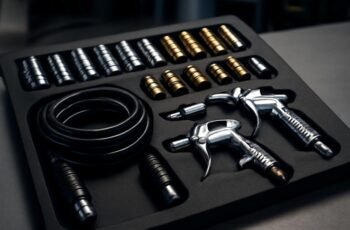
When locating air leaks in an air compressor, selecting the right tools and methods is essential for efficiency and accuracy. Effective leak detection techniques streamline air compressor maintenance by pinpointing leaks quickly. We recommend using the following tools:
Choosing the right tools and methods ensures quick, accurate air leak detection and efficient compressor maintenance.
- Ultrasonic leak detectors for pinpointing high-frequency leaks
- Soapy water solution to visually identify escaping air
- Electronic leak detectors for precise sound-based detection
- Pressure gauges to monitor drops in system pressure
- Visual inspection tools like flashlights for locating obvious damage
These tools enhance leak detection accuracy, reduce diagnostic time, and ensure reliable maintenance. Employing appropriate methods, such as listening for hissing sounds or applying soapy water, complements tool use. Adopting these leak detection techniques ensures a thorough assessment and effective resolution of air leaks.
Step-by-Step Guide to Sealing Air Leaks in Your Compressor
Once we’ve identified the location of the air leaks, the next step is to effectively seal them to restore system integrity. Proper air compressor maintenance begins with selecting a compatible sealant suited to the specific materials and pressure ratings of your compressor components. Verify the sealant’s compatibility by consulting manufacturer guidelines or product specifications, as incompatible sealants can cause further leaks or damage. Clean the affected areas thoroughly to remove debris, oil, or moisture, which can hinder adhesion. Apply the sealant evenly around joints, fittings, or damaged areas using a precise applicator. Allow adequate curing time as specified by the manufacturer before repressurizing the system. This systematic approach ensures a reliable seal, prolongs compressor lifespan, and maintains peak performance.
Preventative Tips to Avoid Future Air Leaks
Implementing regular maintenance routines is essential for preventing future air leaks in your compressor system. Consistent air filter maintenance ensures ideal airflow and prevents clogging that can cause pressure drops and leak development. Proper compressor lubrication reduces component wear, maintaining seal integrity and preventing leaks from deteriorated parts. To further minimize risks, routinely inspect fittings and hoses for signs of deterioration or loosening.
Regular maintenance prevents air leaks by ensuring optimal airflow, proper lubrication, and routine inspection of fittings and hoses.
- Schedule periodic checks of all fittings and connections
- Replace worn or damaged hoses promptly
- Maintain ideal air filter cleanliness and replacement intervals
- Ensure proper compressor lubrication according to manufacturer guidelines
- Regularly test pressure levels to identify early leaks
Troubleshooting Persistent Leaks and When to Call a Professional
Persistent air leaks that resist basic troubleshooting often indicate underlying issues requiring expert assessment. When leaks persist despite inspecting hoses, fittings, and valves, it’s time to evaluate your maintenance routines and consider compressor upgrades. Continuous leaks may stem from internal component wear, valve failure, or pressure regulation issues that simple repairs can’t resolve. Professionals can perform detailed diagnostics, such as leak detection tests and pressure analysis, to pinpoint root causes. If your compressor is outdated or frequently leaking, upgrading components or replacing worn parts might be necessary to restore efficiency. Recognizing when to involve specialists prevents further damage and guarantees your system operates at peak performance. Ultimately, timely professional intervention preserves compressor longevity and reduces downtime caused by unresolved leaks.
Frequently Asked Questions
How Often Should I Check My Air Compressor for Leaks?
We recommend checking our air compressor for leaks weekly during regular air compressor maintenance. Using effective leak detection methods, like soapy water or ultrasonic detectors, guarantees early identification, maintaining efficiency and preventing costly repairs caused by unnoticed leaks.
What Are the Best Sealants for Fixing Air Leaks?
We recommend using sealant types like epoxy or rubber-based products for effective leak detection and sealing. These provide durable, airtight bonds, especially for small leaks, ensuring reliable compressor performance while allowing for precise, technical repairs.
Can Using the Wrong Tools Damage My Compressor?
Using incompatible tools can damage your compressor, despite leak prevention techniques. Proper tool compatibility guarantees precise repairs, reduces risk of damage, and maintains compressor integrity, emphasizing the importance of selecting the right tools for effective, safe leak fixes.
How Do Temperature Changes Affect Air Leaks?
Temperature changes cause air leaks through temperature expansion and contraction, leading to pressure fluctuations that stress seals and fittings, potentially enlarging leaks over time. Monitoring these effects helps maintain compressor integrity and prevent ongoing air loss.
Are There Specific Brands Known for Fewer Leaks?
While some brands excel in leak prevention, we find that reputable names like Ingersoll Rand and Quincy consistently demonstrate superior brand reputation, minimizing leaks through advanced engineering and quality control, making them reliable choices for ideal compressor performance and durability.
Conclusion
By systematically identifying and sealing air leaks, we guarantee our compressor operates efficiently and reliably. Regular maintenance and prompt repairs prevent small issues from becoming major problems, saving time and costs. When leaks persist despite our best efforts, knowing when to call a professional is vital. It’s a coincidence how attention to detail and proper care can extend the life of our equipment, reinforcing the significance of consistent, precise maintenance for peak performance.