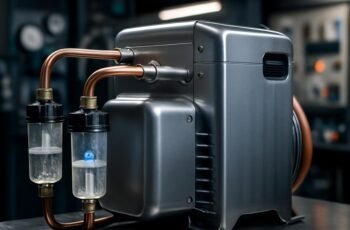
Did you know that improper oil maintenance is a leading cause of compressor failure, yet many operators overlook critical steps that can extend equipment life? Ensuring proper lubrication involves more than just topping off oil; it requires precise monitoring, timely filter changes, and regular analysis to prevent costly breakdowns. Understanding these maintenance essentials can make a significant difference in your compressor’s performance—so, let’s explore the key practices that keep your system running efficiently.
Key Takeaways
- Regularly check and maintain proper oil levels and viscosity to ensure optimal compressor performance and longevity.
- Perform routine oil analysis and filter inspections to detect contamination, oxidation, and additive breakdown early.
- Replace oil filters at recommended intervals to prevent contamination and maintain efficient lubrication.
- Address oil leaks, overheating, or unusual noise promptly through inspection and professional troubleshooting.
- Follow manufacturer guidelines for oil type, filter maintenance, and scheduled oil changes to maximize compressor lifespan.
How Does Oil Lubrication Keep Your Air Compressor Running Smoothly
Although air compressors are designed to operate efficiently, their internal components rely heavily on oil lubrication to minimize friction and wear. Effective compressor lubrication ensures that moving parts, such as pistons and bearings, operate smoothly under high stress. Oil filtration plays a critical role here, removing impurities that could compromise performance or cause damage. Clean oil maintains ideal viscosity, reducing metal-to-metal contact and preventing overheating. Proper lubrication also dissipates heat generated during compression, extending component lifespan. By maintaining high-quality oil filtration, we guarantee consistent oil flow and prevent contaminants from circulating through the system. This process safeguards internal surfaces, minimizes wear, and sustains the compressor’s efficiency over time, making reliable operation possible through precise oil management.
Checking and Maintaining Oil Levels for Optimal Performance
Regularly monitoring oil levels guarantees the compressor operates efficiently and prevents damage. It’s essential to use the manufacturer-recommended oil type to maintain proper lubrication and extend equipment life. Precise checks and correct oil selection optimize performance and reduce maintenance costs.
Monitoring Oil Levels Regularly
To guarantee peak performance and longevity of your oil-lubricated air compressor, we must actively monitor oil levels on a consistent basis. Regular checks ensure proper lubrication, preventing excessive wear or overheating. During inspection, evaluate oil filtration efficiency; clogged filters can impair oil flow and reduce effectiveness. Maintaining ideal oil levels supports the function of oil additives that combat oxidation and deposit formation. Low oil levels increase the risk of metal-to-metal contact, while overfilling can cause foaming and reduced lubrication quality. Use precise measurement tools to verify oil quantity, and top up as needed with the recommended oil type. Consistent monitoring allows early detection of abnormalities, ensuring the compressor operates within specified parameters, thereby maximizing performance and extending service life.
Using Correct Oil Type
How do we guarantee ideal performance from an oil-lubricated air compressor? By selecting the correct oil type, ensuring superior lubrication and minimizing wear. It’s essential to match oil viscosity to the compressor’s operating conditions, which improves efficiency and reduces energy consumption. Additionally, verifying additive compatibility prevents chemical reactions that could degrade components or impair lubrication.
Key considerations include:
- Using oil with the specified viscosity grade recommended by the manufacturer
- Ensuring additive formulations are compatible with compressor materials
- Avoiding oils with incompatible additives that could cause sludge or deposits
- Regularly checking oil labels and specifications before refilling
Adhering to these guidelines ensures reliable operation, extended component lifespan, and consistent performance.
How to Change and Refill Compressor Oil Properly
To change and refill compressor oil correctly, we start by draining the old oil completely to prevent contamination. Next, we verify the oil level and guarantee it’s within the recommended range. Finally, we refill with the specified oil type, guaranteeing proper lubrication and ideal compressor performance.
Drain Old Oil
Have you ever wondered why regular oil changes are essential for maintaining compressor efficiency and longevity? Draining old oil is a critical step that guarantees proper oil filtration and prevents contaminants from circulating. Before draining, verify that the oil temperature is within the recommended range to facilitate complete flow and removal. When draining, consider these points:
- Use a suitable container to collect used oil safely.
- Ensure the drain valve is fully open to facilitate complete drainage.
- Inspect the drain for blockages or buildup that could hinder flow.
- Dispose of used oil in accordance with environmental regulations.
Proper drainage eliminates old, degraded oil that can impair lubrication and heat dissipation, ultimately extending compressor lifespan and maintaining peak performance.
Check Oil Levels
Checking the oil levels in your compressor is a essential step to guarantee proper lubrication and critical performance. Use the dipstick or sight glass to assess oil quantity, ensuring it falls within the recommended range. Proper oil viscosity is key; too thick or thin can impair lubrication, leading to increased wear. When inspecting, verify that the oil appears clean and free of contaminants. If oil additives are present, confirm they are effective and compatible with the compressor’s specifications. Always refer to the manufacturer’s guidelines to determine the correct oil level and type. Maintaining the proper oil level prevents engine strain and overheating, promoting longevity. Regular checks allow early detection of issues, ensuring consistent operation and reducing downtime.
Refill With Correct Oil
How can we guarantee the compressor operates smoothly and efficiently? Properly refilling with the correct oil is essential. First, select oil with the appropriate viscosity recommended by the manufacturer, ensuring ideal lubrication under operating temperatures. Check for oils containing effective additives that reduce wear and prevent oxidation. When refilling:
- Drain old oil completely before adding new oil.
- Verify the oil type matches specifications, focusing on viscosity and additive content.
- Use a clean funnel to prevent contamination.
- Fill slowly, monitoring the oil level to avoid overfilling.
Using the right oil viscosity and additives ensures proper lubrication and reduces wear on compressor components. Consistent, precise refilling maintains efficiency, minimizes downtime, and prolongs equipment lifespan.
Identifying and Addressing Common Oil-Related Problems
Oil-related problems in air compressors often stem from contamination, improper lubrication, or degradation of the oil over time. Common issues include increased wear, overheating, and reduced efficiency. To diagnose, monitor oil viscosity; incorrect viscosity impairs lubrication, causing excessive friction. Oil additives can break down, leading to sludge buildup or corrosion. Regular analysis helps detect these problems early.
| Issue | Cause | Solution |
|---|---|---|
| Excessive wear | Oil viscosity too low | Use correct viscosity oil |
| Overheating | Oil breakdown | Replace oil and check additives |
| Sludge buildup | Contaminated oil | Change oil promptly |
| Corrosion | Degraded additives | Use quality oil with proper additives |
| Reduced lubrication | Oil contamination | Maintain clean oil levels |
Maintaining ideal oil viscosity and additives ensures smooth operation and minimizes damage.
Cleaning and Replacing Oil Filters to Prevent Contamination
Regularly cleaning and replacing oil filters is essential to prevent contamination that can compromise compressor performance. Proper oil filter replacement guarantees contaminants like dirt, metal particles, and degraded oil do not circulate, reducing wear and potential system failure. To maximize contamination prevention, follow these key practices:
- Inspect filters regularly for signs of clogging or damage
- Replace filters at manufacturer-recommended intervals
- Use filters specified for your compressor model
- Ensure proper installation to avoid bypass or leaks
Consistent maintenance of oil filters maintains oil purity, extends component lifespan, and optimizes overall efficiency. Neglecting oil filter replacement can lead to increased contamination, reducing compressor reliability and increasing downtime. Accurate, scheduled filter maintenance is a critical component of effective compressor upkeep.
Monitoring Oil Condition and Preventing Oil Degradation
Monitoring oil condition is essential for maintaining compressor efficiency and preventing premature degradation. Regular oil analysis helps identify contamination, oxidation, or additive breakdown, ensuring peak performance. We recommend using oil color analysis to detect color changes indicating contamination or oxidation, which can compromise lubrication quality. Additionally, evaluating oil additive compatibility is vital; incompatible additives may accelerate degradation or cause sludge formation. By implementing routine testing—such as viscosity checks and spectroscopic analysis—we can detect early signs of deterioration. This proactive approach allows timely oil replacement or treatment, reducing equipment wear and downtime. Maintaining precise records of oil condition helps optimize maintenance schedules, ultimately extending compressor life and ensuring reliable operation.
Tips for Extending the Lifespan of Your Compressor Oil
To maximize the lifespan of your compressor oil, it’s essential to implement proper filtration and contamination control measures. Maintaining ideal oil viscosity is critical; fluctuating viscosity accelerates oil degradation and reduces lubrication efficiency. Incorporate high-quality oil additives designed to enhance oxidation stability and inhibit sludge formation. Regularly monitor oil condition to detect viscosity changes early, as these indicate contamination or additive depletion. To extend oil service life, consider these practices:
- Use filtration systems that remove particulates and moisture effectively
- Select oils with appropriate viscosity ratings for your operating conditions
- Add stabilizers or antioxidants to improve oil longevity
- Conduct routine oil analysis to track additive levels and contamination
Consistent attention to these factors ensures the oil remains effective, protecting your compressor and extending its operational lifespan.
When to Schedule Professional Maintenance for Your Compressor
Scheduling professional maintenance for your compressor is essential when performance declines despite routine care or when operational issues arise that cannot be resolved through basic troubleshooting. Indicators include increased compressor noise, which often signals internal component wear or misalignment, and degraded oil filtration, leading to insufficient lubrication. Regular assessments by trained technicians ensure proper oil filtration, eliminating contaminants that can cause premature component failure. Additionally, persistent abnormal compressor noise or reduced efficiency suggests that internal parts require expert inspection and possible replacement. Professional maintenance also verifies that pressure settings and safety controls are calibrated accurately. Addressing these issues promptly prevents costly breakdowns and extends compressor lifespan, maintaining best operation and adequate air quality standards.
Troubleshooting Oil Leaks and Other Maintenance Issues
Oil leaks are a common issue that can compromise compressor performance and lead to costly repairs if not addressed promptly. They often indicate worn seals, loose fittings, or damaged components, risking oil contamination and increased risk of compressor overheating. To troubleshoot effectively, check for:
- Worn or cracked seals and gaskets
- Loose or damaged fittings
- Excessive oil buildup or leaks around valves
- Signs of oil contamination in the lubrication system
Addressing leaks promptly prevents oil loss, minimizes contamination, and guarantees proper lubrication, reducing the risk of overheating. Regular inspection of oil levels and fittings helps catch issues early. If leaks persist, replacing worn seals or fittings is essential to maintain ideal compressor operation and avoid further maintenance problems.
Frequently Asked Questions
What Type of Oil Is Best for My Specific Compressor Model?
We recommend using the oil specified by your compressor’s manufacturer, considering the correct oil viscosity and ensuring proper oil filtration. This combination optimizes performance, reduces wear, and prolongs your compressor’s lifespan. Always follow your model’s guidelines.
How Often Should I Perform Oil Analysis Tests?
We recommend performing oil analysis tests every 500 to 1,000 operating hours, like a vigilant lighthouse keeper, to verify oil filtration effectiveness and prevent contamination, thereby extending compressor life and maintaining peak performance.
Can Synthetic Oil Extend My Compressor’s Lifespan?
Yes, synthetic oil can extend your compressor’s lifespan by improving oil filtration and maintaining superior lubricate compatibility, reducing wear and tear. This results in enhanced efficiency and longevity, provided you regularly monitor oil condition and follow manufacturer guidelines.
What Are Signs of Oil Contamination I Should Watch For?
Oil contamination signs can be dramatic; look for milky or frothy oil, sediment, or unusual odors. Regular oil filtration and contamination prevention are essential, as ignoring these signs risks severe compressor damage and costly repairs.
How Does Ambient Temperature Affect Oil Performance?
Ambient temperature impacts oil performance by influencing temperature regulation and oil viscosity; higher temperatures decrease viscosity, risking inadequate lubrication, while lower temperatures increase viscosity, potentially hindering movement, so maintaining ideal temperature is essential for compressor efficiency.
Conclusion
Maintaining your oil-lubricated air compressor isn’t just routine—it’s essential for preventing unexpected failures and ensuring peak efficiency. By adhering to proper oil management practices, you can uncover subtle issues before they escalate. But what hidden problems could be lurking within your system? Stay vigilant, follow our guide meticulously, and regularly schedule professional evaluations. The next failure could be just around the corner—are you prepared to catch it early?