When evaluating air compression solutions, understanding the fundamental differences between portable and stationary units is essential for selecting the right equipment for specific applications. Each type offers distinct advantages and constraints that directly impact performance, efficiency, and cost. As we explore these options, it becomes clear that the decision hinges on balancing mobility, capacity, and operational demands—factors that can markedly influence project outcomes and long-term investment.
Key Takeaways
- Portable compressors are lightweight, mobile, and ideal for short-term, on-site tasks; stationary compressors are larger, fixed, and suited for continuous industrial use.
- Stationary units generally offer better air quality management and lower noise levels due to enclosed designs.
- Portable compressors provide quick deployment and flexibility but tend to produce higher noise and have limited capacity.
- Stationary compressors deliver higher power, capacity, and efficiency for demanding, high-volume applications.
- Cost-wise, portable units are cheaper initially but may incur higher maintenance costs, while stationary units have higher upfront costs but longer lifespan.
What Are Portable and Stationary Air Compressors?
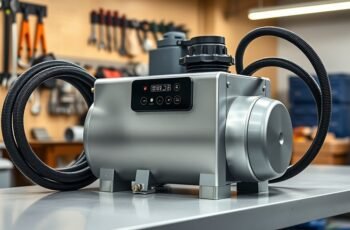
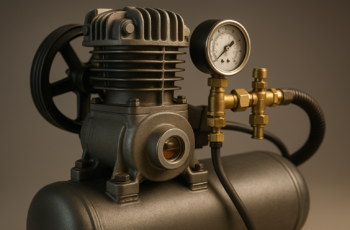
Portable and stationary air compressors serve distinct roles in various applications, primarily distinguished by their design, mobility, and capacity. Portable compressors are compact, lightweight, and designed for mobility, often used in fieldwork or temporary setups. They typically produce higher noise levels, which can impact air quality by dispersing more airborne particles and noise pollution. Stationary compressors, on the other hand, are larger, fixed installations optimized for continuous operation. They generally offer better control over air quality, with enclosed designs that minimize dust and contaminant ingress, and operate at lower noise levels. This distinction influences their suitability for specific tasks, where considerations of air quality and noise levels become critical in ensuring safe, efficient, and compliant work environments.
Key Features and Differences Between Portable and Stationary Compressors
Understanding the key features and differences between portable and stationary compressors is essential for selecting the right equipment for specific applications. Portable compressors are designed for mobility, offering compact size and lightweight construction, which facilitates quick setup and transportation. They typically have higher noise levels and may compromise air quality control due to less advanced filtration systems. In contrast, stationary compressors are built for continuous operation, with larger tanks and more robust construction, resulting in lower noise levels and improved air quality management. Stationary units often feature enhanced filtration and cooling mechanisms, making them suitable for environments requiring strict air quality standards. The primary distinctions lie in their size, mobility, noise emissions, and air quality capabilities, directly influencing their suitability for different industrial or maintenance tasks.
Advantages of Using a Portable Air Compressor
Portable air compressors offer significant advantages through their enhanced mobility and flexibility, enabling users to operate in various locations without fixed infrastructure. Their compact design also facilitates easy storage and transportation, reducing logistical constraints. These features make portable units particularly suitable for dynamic work environments demanding quick setup and adaptability.
Enhanced Mobility and Flexibility
Because of their compact design, portable air compressors offer markedly enhanced mobility and flexibility compared to stationary units. This design allows for easy transport across varied work environments, enabling quick adaptation to different tasks without setup delays. Battery efficiency is a critical factor here; portable units often incorporate rechargeable batteries, reducing reliance on external power sources and increasing operational independence. Additionally, these compressors typically operate at lower noise levels, facilitating use in noise-sensitive settings or confined spaces. This combination of mobility, battery efficiency, and reduced noise makes portable air compressors ideal for on-the-go applications, remote job sites, or situations requiring rapid deployment. Their streamlined design ensures that users can access compressed air where and when it’s needed, maximizing operational efficiency and versatility.
Easy Storage and Transport
What makes portable air compressors particularly advantageous is their ease of storage and transportation. Their compact design maximizes storage efficiency, allowing users to store them in limited spaces without hassle. This design promotes quick setup and takedown, making them ideal for job sites requiring frequent relocation. The lightweight structure enhances transportation ease, enabling one person to move the unit without specialized equipment. Unlike stationary compressors, which demand dedicated space and fixed installation, portable units offer flexibility for diverse applications. Their integrated handles and casters further streamline movement, reducing logistical barriers. Overall, these features optimize operational efficiency by minimizing downtime associated with repositioning equipment, ensuring that users can swiftly adapt to varying project demands.
Benefits of Choosing a Stationary Air Compressor
Stationary air compressors offer significant advantages in power and capacity, enabling continuous operation for demanding tasks. Their construction guarantees greater durability and longevity, reducing maintenance needs over time. These benefits make stationary units ideal for applications requiring reliable, high-volume compressed air supply.
Enhanced Power and Capacity
While portable air compressors offer convenience, stationary compressors provide considerably greater power and capacity essential for demanding applications. Their robust design enables higher CFM and PSI ratings, supporting continuous operation in industrial settings. This increased capacity translates to enhanced energy efficiency, as stationary units maintain ideal performance with less energy waste. Additionally, stationary compressors typically operate at lower noise levels due to better sound insulation and larger mufflers, reducing environmental impact.
| Feature | Portable Compressor | Stationary Compressor |
|---|---|---|
| Power Output (CFM) | Moderate | High |
| Energy Efficiency | Variable | Greater |
| Noise Levels (dB) | Higher | Lower |
| Capacity | Limited | Extensive |
| Application Suitability | DIY, light use | Industrial, continuous |
This analysis underscores the strategic advantage of stationary models for high-demand, efficiency-focused tasks.
Greater Durability and Longevity
Choosing a stationary air compressor often results in greater durability and longevity due to its robust construction and high-quality components. These units are designed for continuous operation, with reinforced frames and heavy-duty parts that withstand wear over time. Regular maintenance routines, such as oil checks and filter replacements, are easier to perform and critical in extending lifespan. Additionally, stationary compressors typically operate with lower noise levels, thanks to sound-dampening enclosures and strategic component placement, reducing stress on internal parts. This combination of durable build and manageable noise contributes to reduced downtime and maintenance costs. Overall, stationary compressors are engineered for long-term reliability, making them a more cost-effective option for industrial and high-demand applications.
Ideal Uses and Work Environments for Each Type
Portable air compressors excel in environments requiring mobility and quick setup, making them ideal for tasks that demand on-the-go inflation, maintenance, or repairs. Their energy efficiency is optimized for short-term, intermittent use, though noise levels can be relatively high, impacting worksite comfort. They thrive in dynamic settings where space and power access are limited, and frequent relocation is necessary.
Key environments include:
- Construction sites for tool powering and tire inflation
- Automotive repair shops during mobile service calls
- Agricultural fields for equipment maintenance
- Emergency roadside assistance
- Event setups requiring portable air supply
These applications benefit from their portability, although noise considerations and energy consumption should be evaluated for prolonged or sensitive environments.
Factors to Consider When Selecting Between Portable and Stationary Compressors
When selecting between portable and stationary air compressors, several critical factors must be carefully evaluated to guarantee the equipment aligns with specific operational needs. Key considerations include energy efficiency, as stationary units often offer better efficiency due to larger capacities and optimized designs, while portability may sacrifice some energy performance. Noise levels are equally important; stationary compressors typically operate more quietly, making them suitable for indoor or noise-sensitive environments. Conversely, portable models tend to produce higher noise levels, which can impact worksite comfort. Additionally, examining the power requirements and operational environment helps determine the most suitable choice. Ultimately, balancing energy efficiency with noise considerations ensures that the selected compressor meets both productivity and comfort demands effectively.
Common Limitations and Challenges of Each Compressor Type
While both portable and stationary compressors serve distinct operational roles, each comes with inherent limitations that can impact overall performance and suitability. Portable units often face noise limitations, making them less ideal for noise-sensitive environments. Their compact design also leads to maintenance challenges, such as limited access for repairs and reduced durability. Stationary compressors, though more robust, can present significant maintenance challenges due to their complex systems and larger components. They tend to be less flexible, restricting mobility and quick deployment. Additionally, stationary models often generate higher noise levels, requiring soundproofing measures for indoor use. Both types also grapple with cooling efficiency issues under continuous operation, which can affect longevity and reliability. Recognizing these limitations helps in selecting the right compressor for specific applications.
Cost Comparison: Which Is More Budget-Friendly?
Have you contemplated how the initial and ongoing costs of portable and stationary compressors compare? A thorough cost analysis reveals that portable units generally have lower upfront prices, making them more accessible for small-scale or temporary needs. However, their maintenance costs can accumulate quickly due to frequent mobility, wear, and tear. Stationary compressors, while more expensive initially, often benefit from lower maintenance costs over time because of their robust construction and less frequent handling. Additionally, stationary models tend to have longer lifespans, which can offset higher initial investments. When evaluating budget-friendliness, it’s essential to think about both the initial purchase price and ongoing expenses. Overall, stationary compressors may offer better long-term value, but portable units can be more cost-effective for short-term or intermittent applications.
Making the Right Choice for Your Projects and Needs
Selecting the appropriate compressor depends on a clear understanding of your specific project requirements and operational conditions. To make an informed decision, consider factors like noise levels, energy efficiency, portability, and power demands. Portable compressors excel in mobility and are suitable for short-term or on-site tasks, but may produce higher noise levels and lower energy efficiency. Stationary units, on the other hand, offer superior energy efficiency and quieter operation, making them ideal for continuous, high-volume applications.
- Noise levels influence work environment comfort and regulatory compliance
- Energy efficiency impacts ongoing operational costs
- Project duration dictates the need for portability versus stability
- Power source availability shapes equipment choice
- Maintenance and lifespan considerations affect total cost of ownership
Frequently Asked Questions
How Long Do Portable Air Compressors Typically Last?
Portable air compressors typically last 3 to 5 years, depending on durability factors like build quality and maintenance. Usage limitations, such as frequent heavy-duty tasks, can accelerate wear and reduce lifespan, so proper care is essential.
Can Stationary Compressors Be Easily Relocated?
Stationary compressors are generally not easily relocated due to mobility challenges and installation difficulties, requiring significant disassembly and setup efforts. We analyze these factors to determine their suitability versus portable options for projects needing flexibility.
What Maintenance Is Required for Each Compressor Type?
We keep both compressors in top shape by following their maintenance routines; stationary units need regular lubrication and filter cleaning, while portable ones require frequent checks on lubrication levels and filter replacements, ensuring peak performance and longevity.
Are There Safety Concerns Unique to Portable or Stationary Compressors?
We recognize safety concerns differ; portable compressors require hazard prevention for mobility risks, while stationary units demand strict safety protocols around fixed installations. Both necessitate diligent hazard assessment and adherence to safety standards to prevent accidents and guarantee operational safety.
How Do Noise Levels Compare Between Portable and Stationary Models?
Interestingly, noise levels often coincide with design; portable compressors typically have less sound insulation, making them noisier, while stationary models incorporate sound reduction and insulation, markedly minimizing noise for safer, quieter work environments.
Conclusion
Certainly! Here’s the modified text with alternative words replacing “In conclusion”:
Ultimately, selecting between portable and stationary air compressors hinges on your project’s scope and environment. While portable units offer swift deployment and flexibility reminiscent of an 18th-century invention’s ingenuity, stationary models provide durability and efficiency suited for continuous industrial demands. By analyzing your specific air requirements, budget, and workspace constraints, you can make an informed choice that optimizes performance and cost-effectiveness, ensuring your work progresses as smoothly as a well-oiled machine.