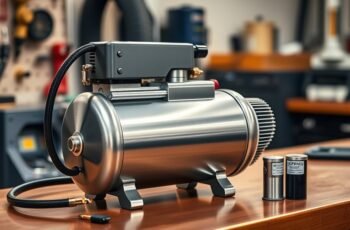
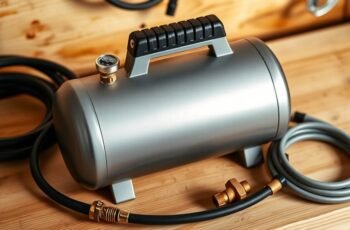
Choosing the right air compressor tank can be more complex than it appears, with factors that can make or break your project’s efficiency and safety. A misstep here might lead to costly downtime or hazards, which is why understanding the vital technical details is necessary. We’re about to explore the key considerations that guarantee your tank meets both your operational demands and safety standards—an area where precision truly matters. Are you prepared to navigate these essential decisions?
Key Takeaways
- Determine the appropriate tank size based on your project’s airflow needs and tool usage.
- Choose a material like steel or aluminum for durability and corrosion resistance.
- Verify the tank’s pressure rating matches your compressor’s operating requirements.
- Ensure the tank includes safety features such as pressure relief valves and reliable gauges.
- Regularly inspect and maintain the tank to prevent corrosion and ensure long-term safety.
How Do Air Compressor Tanks Work and Why Are They Important?
Air compressor tanks serve as essential components in storing compressed air generated by the compressor, guaranteeing a steady and reliable supply for various applications. They function by maintaining pressure within the tank through controlled compression cycles, enabling continuous operation and reducing compressor cycling frequency. Proper tank design incorporates safety valves, which prevent over-pressurization and mitigate potential hazards. Over time, tank corrosion can develop due to moisture buildup and environmental exposure, compromising structural integrity and safety. Regular inspection and maintenance are fundamental to detect early signs of corrosion and verify safety valve functionality. These measures help extend tank lifespan, prevent failures, and maintain consistent airflow, underscoring the tank’s indispensable role in system reliability and safety in compressed air applications.
What Size Air Compressor Tank Do You Need for Your Projects?
Determining the appropriate size of an air compressor tank hinges on understanding your specific project requirements and air demand. A larger tank supplies a steady air flow, reducing compressor cycling and maintaining consistent pressure.
Key considerations include:
- Air flow requirements — higher demands require larger tanks.
- Tank placement — positioning closer to tools minimizes pressure drops.
- Duty cycle — continuous operation benefits from increased tank capacity.
- Noise reduction — larger tanks and strategic placement help dampen operational noise.
Selecting the correct tank size ensures optimal performance, minimizes noise, and enhances efficiency. Proper tank placement also plays a role in noise reduction by isolating vibrations and reducing sound transmission, especially in noise-sensitive environments.
Which Materials Are Best for Air Compressor Tanks and Why?
Choosing the right material for an air compressor tank is essential because it directly impacts durability, safety, and longevity. Steel and aluminum are the most common options, each offering distinct advantages. Steel tanks excel in material durability, providing high strength and resistance to structural fatigue under pressure. Their inherent corrosion resistance can be enhanced with protective coatings to prevent rust, especially in humid environments. Aluminum tanks, on the other hand, offer superior corrosion resistance without additional coatings, making them ideal for applications exposed to moisture. They are lighter, which improves portability but may compromise some strength compared to steel. Ultimately, selecting a material depends on balancing material durability with corrosion resistance to guarantee a safe, long-lasting air compressor system.
How to Choose the Right Pressure Rating and Capacity?
Selecting the appropriate pressure rating and capacity for an air compressor tank is critical to guarantee both performance and safety. Proper pressure regulation ensures the tank operates within its limits, preventing over-pressurization. Capacity calculation involves evaluating your workload to avoid undersized or oversized tanks, optimizing efficiency. Consider these key factors:
- Determine max operating pressure based on your tools and applications.
- Match the pressure rating to your system’s required pressure to ensure safety margins.
- Calculate capacity by analyzing daily air consumption to prevent continuous cycling.
- Balance pressure regulation needs with capacity to maintain consistent airflow and avoid pressure drops.
Is Portability a Priority? Tips for Selecting a Mobile or Stationary Tank
Deciding whether a portable or stationary air compressor tank best suits your needs hinges on evaluating your operational mobility requirements. Portable options are ideal if your worksite demands frequent relocation or if space constraints limit stationary installations. These tanks typically feature wheels, handles, and lightweight materials, facilitating ease of movement, but may offer limited capacity and stability. Conversely, stationary advantages include larger tank sizes and enhanced durability, making them suitable for continuous, high-demand applications where mobility is less critical. When selecting, consider whether your tasks require mobility or if stability and capacity outweigh portability. Analyzing your work environment and operational scope ensures you choose the appropriate tank, optimizing efficiency while balancing logistical considerations.
What Safety Features and Certifications Should You Look For?
When evaluating air compressor tanks, prioritizing safety features and certifications guarantees reliable operation and compliance with industry standards. Confirming the tank meets recognized safety standards minimizes risks of failure or accidents. Certification marks on the tank validate adherence to these standards and indicate rigorous testing. Key safety features include:
Prioritize safety features and certifications for reliable, compliant air compressor tanks.
- Pressure relief valves to prevent over-pressurization.
- Robust structural design with welded or riveted seams.
- Properly rated pressure gauges for accurate monitoring.
- Corrosion-resistant coatings to prolong lifespan and prevent leaks.
These elements are essential for safe operation, especially in demanding environments. Always verify certification marks from reputable organizations, such as UL or CE, to ensure the tank aligns with established safety standards. This focus reduces liability and enhances operational reliability.
How to Maintain Your Air Compressor Tank for Longevity and Safety?
Regular maintenance is essential to guarantee the longevity and safety of your air compressor tank, as neglecting routine care can lead to corrosion, pressure buildup, and eventual failure. To prevent tank corrosion, we recommend inspecting the tank’s interior and exterior regularly for signs of rust or damage. Drain valve maintenance is equally critical; it ensures moisture and condensate are effectively removed, reducing corrosion risk. Regularly draining the tank prevents moisture accumulation that could compromise structural integrity. Additionally, ensuring the drain valve operates smoothly and replacing it when worn maintains ideal drainage. Implementing a scheduled maintenance routine that includes these checks helps to preserve the tank’s integrity, minimizes safety hazards, and extends the overall lifespan of your air compressor system.
Frequently Asked Questions
What Are the Common Signs That Indicate My Air Tank Needs Replacement?
We notice signs like tank corrosion, visible rust, or leaks indicating replacement is needed, especially if pressure relief valves malfunction or you experience inconsistent pressure, which suggests internal damage or weakness compromising tank integrity and safety.
How Do Environmental Factors Affect the Durability of an Air Compressor Tank?
We believe environmental factors profoundly impact tank durability, especially through corrosion resistance issues caused by moisture, temperature fluctuations, and chemicals. These elements influence the tank’s lifespan, highlighting the need for protective coatings and proper maintenance to mitigate environmental impact.
Can I Retrofit or Upgrade an Existing Air Tank for Better Performance?
We can retrofit or upgrade an existing air tank by evaluating its tank material and capacity potential; upgrading components or adding external accessories often enhances performance without compromising durability, ensuring efficient operation and extended service life.
What Are the Legal Regulations Regarding Air Compressor Tank Installation?
Like steering through a minefield, we must adhere to regulatory compliance and safety standards when installing air compressor tanks. These laws ensure safe operation, prevent accidents, and protect everyone, emphasizing meticulous adherence to legal and technical requirements.
Are There Any Specific Brands Known for Reliable Air Compressor Tanks?
We find that brands like Quincy and Ingersoll Rand are renowned for reliable air compressor tanks, thanks to their strong brand reputation and high material quality, ensuring durability and consistent performance in demanding industrial applications, making them excellent choices.
Conclusion
Choosing the right air compressor tank is like fine-tuning a precision instrument—every detail matters for peak performance and safety. By understanding your project needs, material options, and safety features, we can guarantee your investment runs smoothly and reliably. Regular maintenance keeps the engine of your system humming like a well-oiled machine, extending its lifespan. When properly selected and cared for, your tank becomes a steadfast partner, ready to power your endeavors with unwavering precision.