Are We Looking for a Compact but Capable Onboard Air Solution?
When we shop for an air compressor kit, many of us want something small, reliable, and easy to hard-mount, without sacrificing too much performance. The VIAIR 95 Viair 95C 12 Volt Air Compressor Kit aims to fill exactly that role: a compact 12V unit designed for light-duty onboard air tasks, small air tanks, and modest PSI needs.
In this review, we share our complete take on what this compressor does well, where it falls short, and who it truly suits best.

What the VIAIR 95C 12 Volt Air Compressor Kit Actually Is
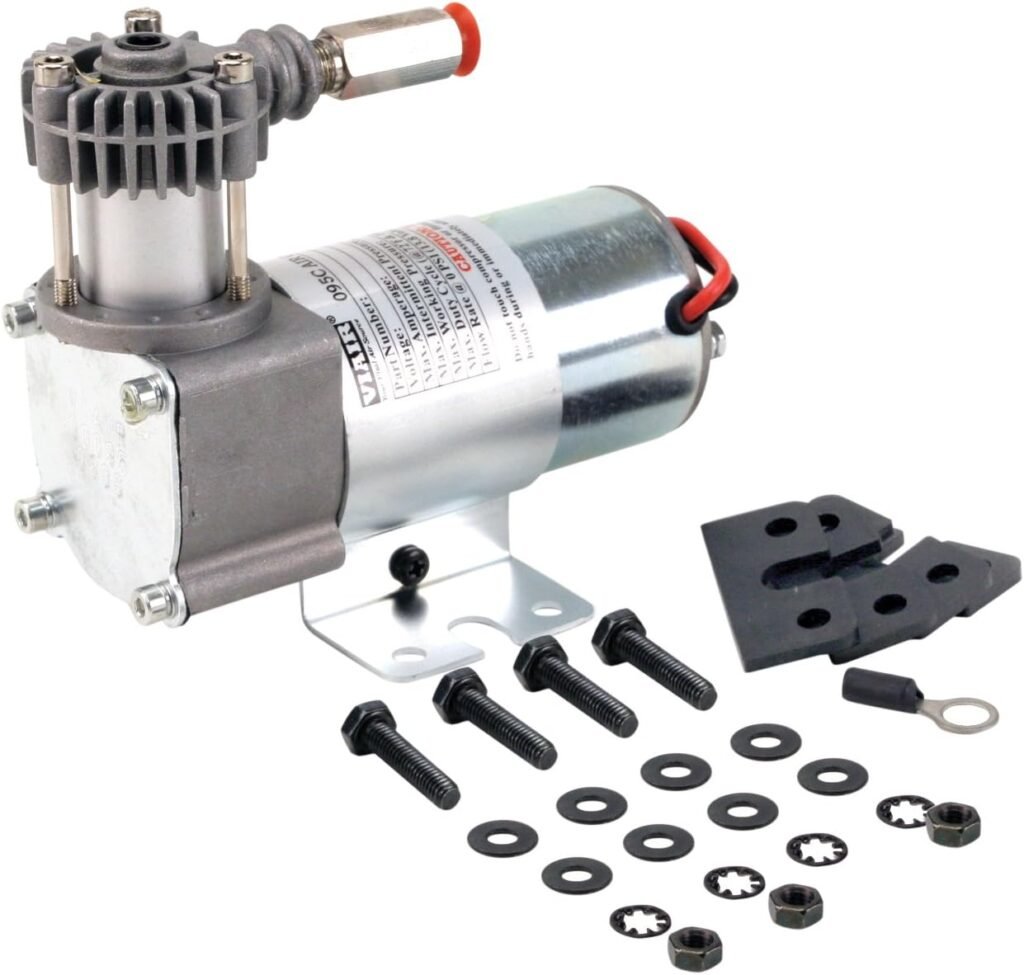
The VIAIR 95C is a 12-volt, hard-mount air compressor designed mainly for light-duty onboard air systems, horn setups, and small air tanks. It’s not a big trail-ready tire inflator for oversized trucks; instead, it’s a compact workhorse that’s meant to be installed and left in place.
We get a maximum working pressure of 132 PSI, with a free-flow rating of 1.03 CFM at 0 PSI. That’s enough to handle modest air needs like small air springs, small tanks, and some intermittent inflations, as long as we respect its duty cycle.
Key Specifications at a Glance
To make things easier to compare and understand, we have summarized the main details in a quick table.
| Feature | Specification |
|---|---|
| Voltage | 12 Volt DC |
| Max Working Pressure | 132 PSI |
| Free Flow Rate | 1.03 CFM @ 0 PSI |
| Duty Cycle | 9% @ 100 PSI |
| Mounting Style | Hard-mount with omega bracket |
| Included Components | Omega bracket, check valve, vibration isolators |
| Recommended Tank Size | Up to 1 gallon (0.5 gallon recommended) |
| Typical Use | Light-duty onboard air, horns, small air tanks, air suspension helpers |
| Engine Requirement | Engine should be running during use |
This table gives us a good snapshot of the compressor’s capabilities. From here, we can better decide whether it fits our current or future projects.
Design and Build Quality
The VIAIR 95C has that familiar VIAIR design language: compact, rugged, and clearly built with vehicle mounting in mind. It’s not flashy, but it looks serious and functional, which is often what we want from a component that will live under a hood or in a trunk.
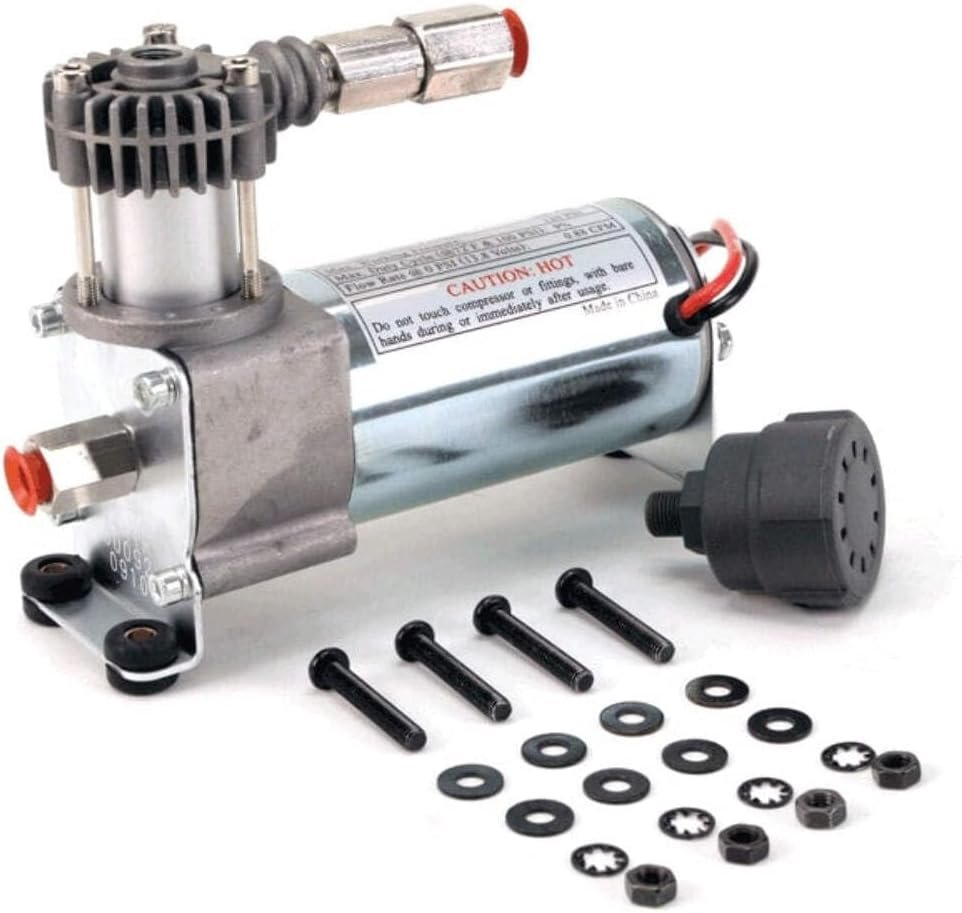
The hard-mount design paired with vibration isolators and an omega bracket means we can install it in a fixed position and trust it to stay secure. The casing and fittings feel sturdy, and overall, the kit has a solid, reliable feel that matches VIAIR’s reputation in the onboard air market.

Mounting and Installation Experience
We appreciate that this compressor is designed specifically as a hard-mount unit. Instead of being tossed in a tool bag and plugged in only when needed, it becomes part of our vehicle’s permanent equipment setup.
Mounting Hardware and Locations
The kit includes:
- An omega bracket for stable mounting
- Vibration isolators to reduce noise and harshness
- A check valve to help maintain pressure and protect the compressor
We typically mount a unit like this in places such as:
- Under the hood
- In a trunk or cargo area
- Under a seat or inside a storage compartment (with enough ventilation)
The presence of vibration isolators is especially nice. They make a meaningful difference in noise and vibration transfer to the vehicle body, which can transform an annoying buzzing sound into something much more tolerable.
Electrical Hookup and Requirements
Since this unit is rated at 12V, it ties into our vehicle’s electrical system. However, it does pull enough current that we must wire it properly:
- Direct to the battery with appropriate gauge wire
- Proper fuse or circuit breaker
- Controlled by a relay and a switch or pressure switch
We also must keep the engine running during operation. This is both for voltage stability and to avoid draining the battery, as compressors draw a fair bit of current under load.
Performance: PSI, CFM, and What That Means for Us
When we look at performance, we have two main numbers to consider: 132 PSI max working pressure and 1.03 CFM free flow at 0 PSI. These numbers tell us how strong and how fast the compressor is, but we need to interpret them in context.
Max Working Pressure: 132 PSI
A 132 PSI maximum pressure is more than sufficient for:
- Small air tanks up to 1 gallon
- Most horn setups
- Air helper springs
- Miscellaneous inflations within that pressure range
This pressure rating means we can manage many automotive and light-duty tasks. It’s not meant to power large pneumatic tools, but it comfortably supports most onboard air needs for daily driving and moderate recreational use.
Airflow: 1.03 CFM Free Flow
At 1.03 CFM free flow at 0 PSI, we’re in the light-duty category. This number drops as pressure increases, which is normal for compressors. In real-world use, we should expect slower fill times once we approach higher PSI, especially when filling a tank.
For a 0.5-gallon or 1-gallon tank, the airflow is adequate for casual, non-industrial usage. We can fill a small tank in a reasonable time, especially if we are patient and respect the duty cycle.
Understanding the 9% Duty Cycle
The duty cycle is one of the most important aspects of any compressor specification, and for this kit, it is 9% at 100 PSI. That number might seem low, and we should understand what it actually means.
What 9% Duty Cycle Really Means
Duty cycle is typically defined over a 10-minute or 1-hour period, depending on how the manufacturer rates it. With a 9% duty cycle at 100 PSI, a common interpretation over a 10-minute period is:
- Run time: ~54 seconds
- Rest time: ~9 minutes and 6 seconds
In practice, that means this compressor is designed for short bursts, not continuous operation. We should not run it for long, uninterrupted stretches, especially near 100 PSI. Letting it cool between cycles is essential to protect the motor and internal components.
Is 9% Enough?
For many light-duty onboard air applications, 9% can be perfectly fine:
- Occasional horn blasts with a small tank
- Intermittent top-offs of air bags or helper springs
- Light inflation tasks that don’t require long, continuous runs
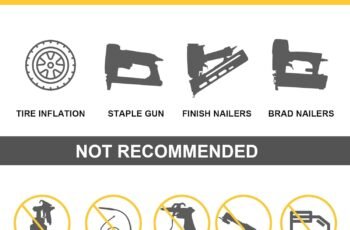
If we plan to frequently air up multiple large tires from low PSI or run air tools, this compressor will feel slow and potentially overstressed. In those scenarios, we would be better served by a higher-duty unit.
Recommended Tank Size: Why 0.5 to 1 Gallon?
The manufacturer recommends using the VIAIR 95C with up to a 1-gallon air tank, suggesting 0.5 gallon as the sweet spot. This recommendation isn’t arbitrary; it’s a reflection of the compressor’s airflow and duty cycle.
Why a Small Tank Makes Sense
With the compressor’s modest CFM and low duty cycle:
- A smaller tank fills faster
- The compressor spends less time under sustained load
- We reduce heat buildup and stress on internal components
This combination improves durability and reliability, which is critical for onboard systems we want to “set and forget.”
Use Cases with a 0.5–1 Gallon Tank
Within this tank range, we can comfortably handle:
- Medium to loud air horns
- Helper springs or air suspension assists that only need occasional adjustment
- A few short bursts of air for cleaning or topping off small items
If we try to push it with a large tank (like 2–5 gallons), we’ll be running the compressor much longer, which is not ideal given the 9% duty cycle.
The Included Check Valve and Why It Matters
The kit includes a check valve, which might seem like a small detail, but it has a significant role in a well-designed air system.
Function of the Check Valve
A check valve:
- Prevents backflow of air from the tank into the compressor
- Helps the compressor start under no-load conditions, which is easier on the motor
- Maintains tank pressure and reduces the risk of leaks back through the compressor
By including this component, the kit helps us build a safer and more efficient onboard air setup, particularly if we pair it with a pressure switch and safety relief valve.
Noise and Vibration: How It Feels in Real Use
Noise is always a concern with compressors. We usually don’t want a loud, buzzing motor disturbing everyone around us whenever our onboard air kicks in.
Role of Vibration Isolators
The built-in vibration isolators help:
- Reduce transmitted vibration into the vehicle’s body
- Cut down on resonance and rattling panels
- Make the overall sound more tolerable and less harsh
Even though this doesn’t make the compressor silent, it turns the noise from an irritating shake into more of a muted mechanical hum, especially when mounted in a well-chosen location.
Perceived Noise Level
This is still a mechanical compressor, so we should expect:
- An audible buzz or hum when it runs
- Noticeable sound if it’s mounted near thin sheet metal or in a cabin area
That said, for a compact 12V unit, the noise level is reasonable, especially if we give attention to mounting location and use the isolators correctly.
Practical Use Cases: Where This Compressor Fits Best
The VIAIR 95C is not a universal solution. Instead, it fits especially well into a few specific types of setups and users.
Great for Air Horn Systems
For those of us running air horns, this compressor and a 0.5–1 gallon tank can be a strong match:
- The tank gives us a few solid horn blasts
- The compressor recharges the tank in short cycles
- Duty cycle is manageable because horn use is intermittent
We just need to ensure our pressure switch is properly matched to the compressor’s 132 PSI maximum.
Air Helper Springs and Light Suspension Work
On vehicles with air helper springs or minimal air suspension support:
- We can use this compressor to adjust bag pressures as needed
- We don’t need huge airflow, just enough to raise or lower pressure occasionally
- The system usually runs briefly, which suits the 9% duty cycle
This makes it a good fit for light-duty towing setups or vehicles that occasionally carry heavy loads.
General Light Onboard Air Tasks
We can use this compressor for various small air jobs such as:
- Topping off small tires on ATVs, lawn equipment, or small trailers
- Occasional use for inflating sports equipment or small inflatables
- Providing short bursts of air for cleaning dust from crevices
As long as we remember that it is not a heavy-duty, high-volume compressor, it performs just fine in these casual tasks.
Where It Struggles: Limitations We Should Know
While the VIAIR 95C has its strengths, it is equally important that we are realistic about its limitations.
Not Ideal for Large Tire Inflation
If we regularly:
- Deflate and reinflate large truck or off-road tires from very low PSI
- Want fast fill times on multiple tires
- Expect the compressor to run for long stretches on the trail
This compressor will feel slow and will push beyond its comfort zone. The low duty cycle is the key limiting factor here.
Not for Heavy Air Tool Use
Air tools like impact wrenches, grinders, or paint sprayers demand:
- High CFM
- Longer continuous run times
- Larger air tanks
The VIAIR 95C is clearly not suited for this. It is a compact support unit, not a shop compressor.
Reliability and Long-Term Durability
VIAIR has a solid reputation for making reliable compressors, especially when they are used within their design limits. The VIAIR 95C continues that tradition, as long as we treat it properly.
Proper Use Extends Life
If we:
- Respect the 9% duty cycle
- Keep the compressor in a well-ventilated area
- Run the engine during use to maintain stable voltage
- Use it with an appropriately sized air tank and a proper pressure switch
We can expect consistent performance and a long service life. Most failures occur when a light-duty compressor is treated like a heavy-duty continuous unit.
Maintenance Considerations
This type of compressor doesn’t typically need complex maintenance, but we should:
- Periodically check electrical connections for corrosion or looseness
- Inspect fittings and lines for air leaks
- Ensure any air filters or intakes stay clean and unobstructed
Doing so keeps performance where it should be and reduces strain on the motor.
How the VIAIR 95C Compares with Larger Compressors
To place this compressor in context, it helps to compare it conceptually to some higher-duty units in the VIAIR lineup or similar brands.
Size and Airflow Trade-offs
Larger compressors:
- Provide higher CFM
- Support longer duty cycles
- Often handle larger tanks and more demanding tasks
But they also:
- Cost more
- Take up more space
- Draw more current
The VIAIR 95C strikes a balance for those of us who want a compact, budget-conscious solution that still offers respectable performance for smaller systems.
When to Step Up to a Bigger Model
We should consider a larger compressor if:
- We air up multiple tires after every outing
- We use air tools from our vehicle
- Our system requires large tank capacities and frequent cycling
If those statements describe us, a model with a higher duty cycle and greater CFM will be a better long-term investment.
Ease of Integration into Onboard Air Systems
One of the strengths of this kit is how easily it integrates into broader systems, such as:
- Onboard air for off-road vehicles
- Towing and load-leveling setups
- Horn systems for trucks, RVs, or recreational vehicles
Components That Simplify Integration
The included check valve, omega bracket, and vibration isolators give us a head start. All we need to add are:
- An air tank (up to 1 gallon, ideally 0.5 gallon)
- A pressure switch with a proper cut-in/cut-out range below 132 PSI
- Appropriate air lines and fittings
- Electrical components (relay, switch, wiring, fuse)
Once we have these, designing a clean, reliable onboard air system becomes straightforward.
Flexibility in System Design
Because of its compact size, we can get creative with mounting:
- Hidden under seats or panels
- Tucked in side compartments or toolboxes
- Mounted in the engine bay, away from direct heat sources
This flexibility lets us maintain a neat, professional-looking install.
User Experience: Day-to-Day Use and Feel
When we live with the VIAIR 95C day to day, it becomes more than just a spec sheet. The real-world experience is shaped by convenience, sound, and reliability.
Convenience
Once installed, the system can be largely hands-off:
- The compressor kicks on automatically via a pressure switch
- The tank stays ready for horn blasts or bag adjustments
- We don’t have to unpack and repack a portable compressor every time
This convenience is one of the biggest benefits of a fixed-mounted, onboard compressor.
Perceived Quality in Operation
During operation, we notice:
- A consistent, predictable sound
- Adequate speed for small tasks
- Minimal vibration when properly mounted
It may not impress us with raw power, but it earns our trust with reliable behavior in its intended use cases.
Pros and Cons Summary
To quickly evaluate whether this compressor is right for us, we can summarize the main advantages and limitations.
Pros
- Compact 12V design suitable for tight spaces
- 132 PSI max working pressure provides good headroom for small systems
- 1.03 CFM free flow adequate for light-duty applications
- Hard-mountable with omega bracket and vibration isolators included
- Check valve included for better system integrity
- Ideal for small tanks (0.5–1 gallon), horns, and helper springs
- Integrates well into onboard air setups on cars, trucks, and RVs
Cons
- Low 9% duty cycle at 100 PSI limits continuous run time
- Not suited for large tire inflation on a frequent basis
- Not appropriate for air tools or heavy-duty shop-style usage
- Requires engine running to avoid battery drain and voltage drop
These points give us a realistic picture: it’s a focused tool, not a do-everything powerhouse.
Who Should Choose the VIAIR 95C 12 Volt Air Compressor Kit?
This product shines for a specific kind of user. If we recognize ourselves in these descriptions, the VIAIR 95C might be exactly what we need.
Ideal Buyers
We’re a great match for this compressor if:
- We want a compact, permanent onboard air solution
- Our needs center around air horns, helper springs, or small tanks
- We value reliability and easy integration over raw throughput
- We’re comfortable with short, intermittent compressor runs and don’t expect industrial-level performance
For this kind of use, the VIAIR 95C offers a smart mix of size, capability, and practicality.
Who Should Look Elsewhere
We should consider a different compressor if:
- We regularly air up multiple large off-road tires from low PSI
- We intend to run air tools or a large pneumatic system
- We need long continuous operation and fast fill times
In those situations, investing in a higher-output, higher-duty model will serve us much better in the long run.
Final Thoughts: Is the VIAIR 95C Worth It for Our Setup?
The VIAIR 95 Viair 95C 12 Volt Air Compressor Kit offers a compact, well-built solution for those of us who need light-duty onboard air without consuming a lot of space or budget. Its 132 PSI max pressure, 1.03 CFM free flow, and hard-mount design make it a solid match for small air tanks, horn systems, and simple suspension support applications.
We do need to respect its 9% duty cycle and remember that it’s not a heavy-duty tire inflator or tool driver. Used within its design limitations, though, it becomes a reliable, quiet partner that quietly supports our vehicle’s onboard air needs.
If our priority is a small, permanent, and dependable 12V compressor that can integrate neatly into a modest onboard air system, the VIAIR 95C stands out as a sensible and friendly choice for our next project.
Disclosure: As an Amazon Associate, I earn from qualifying purchases.