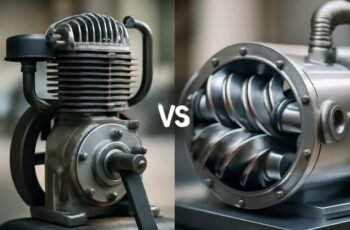
Did you know that the orientation of an air compressor tank can significantly impact system performance and installation logistics? While vertical tanks are often chosen for their space efficiency and stable design, horizontal tanks offer a broad, stable platform that simplifies maintenance in certain environments. Understanding these differences is crucial for making an informed choice, especially when considering space constraints and operational needs. Let’s explore how each option suits various applications and what factors should guide your decision.
Key Takeaways
- Vertical tanks save space and are ideal for tight environments, while horizontal tanks offer stability and easier maintenance access.
- Vertical tanks have a smaller footprint, making them suitable for limited space, whereas horizontal tanks distribute weight more evenly.
- Horizontal tanks often provide better oil lubrication distribution due to their elongated shape.
- Vertical tanks reduce vibrations and noise, enhancing operational stability and comfort.
- The choice depends on space constraints, safety, maintenance needs, and system compatibility.
How Do Vertical and Horizontal Air Compressor Tanks Differ in Design?
How do vertical and horizontal air compressor tanks differ in design? The primary contrast lies in their design contrasts, which influence space utilization and stability. Vertical tanks feature a tall, cylindrical shape, often mounted on a sturdy base, making them suitable for tight spaces and easier to transport. Horizontal tanks typically have a broad, low profile, with mounting methods that often involve bolted or welded brackets for secure positioning. These differences impact installation and maintenance procedures. Vertical tanks are advantageous where height is less restricted, while horizontal tanks excel in stability and ease of access. The mounting methods vary accordingly, with vertical tanks emphasizing vertical support structures, and horizontal tanks relying on lateral stabilization. Understanding these design contrasts helps in selecting the optimal tank based on application needs.
What Are the Advantages of Vertical Air Compressor Tanks?
Vertical air compressor tanks offer a space-efficient footprint, making them ideal for limited areas. Their design provides enhanced stability, reducing the risk of tipping during operation. Additionally, the upright orientation allows for easier access to controls and maintenance points.
Space-Saving Design
Limited floor space is a common concern in many workshop or industrial environments, making the compact footprint of vertical air compressor tanks a significant advantage. Their design is vertically integrated, allowing the tank to occupy less horizontal space, which is crucial in constrained settings. This orientation maximizes vertical space utilization, facilitating easier placement in tight areas. Additionally, vertical tanks are often more horizontally optimized for efficient airflow and maintenance access, reducing overall spatial requirements. This space-saving design enables facilities to optimize layout and workflow, especially where floor real estate is at a premium. By minimizing the footprint without sacrificing capacity, vertical tanks support more ergonomic and adaptable workspace configurations, making them an optimal choice for environments where space efficiency is paramount.
Enhanced Stability
Have you considered how stability impacts the safety and performance of an air compressor system? Vertical tanks offer enhanced stability due to their low center of gravity, reducing the risk of tipping during operation or maintenance. This stability minimizes vibrations, which can otherwise lead to equipment wear and increased production costs. Additionally, vertical tanks often align better with regulatory compliance standards, as their design can facilitate more straightforward inspection and maintenance routines. This structural advantage helps in maintaining consistent pressure levels and reduces potential system failures. Overall, choosing vertical tanks can improve operational safety, lower long-term maintenance expenses, and ensure adherence to safety regulations, making them a strategic choice for optimizing system reliability and controlling production costs.
Easier Access
Why do vertical air compressor tanks often provide easier access for maintenance and inspection? Their compact, upright design reduces the footprint, making internal components more reachable without extensive disassembly. This orientation simplifies fluid drainage and allows technicians to quickly identify issues like corrosion or leaks. Additionally, vertical tanks facilitate clear color coding, enhancing safety and operational clarity during inspections. Access points are often more conveniently positioned, reducing noise levels during routine checks. This setup minimizes disruptions and streamlines maintenance workflows. Overall, the vertical configuration improves operational efficiency by enabling faster, safer inspections and repairs, especially in constrained spaces. The ease of access directly supports proactive maintenance, extending equipment lifespan while maintaining optimal performance.
Why Choose Horizontal Air Compressor Tanks? Key Benefits Explored
Horizontal air compressor tanks are often preferred for their stability and efficient use of space, making them a practical choice for various industrial and workshop settings. Their elongated design facilitates better oil lubrication distribution, promoting smoother operation and prolonged component lifespan. Additionally, horizontal tanks tend to generate less noise during operation, contributing to a more comfortable work environment. The low center of gravity enhances stability, reducing vibration and movement that could compromise safety or equipment integrity. These tanks are also easier to integrate into existing setups due to their compact footprint. Overall, their design supports better maintenance access and operational efficiency, making them a reliable option for high-demand applications. The combination of stability, noise reduction, and oil lubrication benefits underscores their suitability in demanding industrial contexts.
Which Tank Orientation Is Best for Small Workshops or Industrial Settings?
In small workshops and industrial settings, selecting the appropriate tank orientation remarkably impacts operational efficiency and safety. Vertical tanks are advantageous for limited space, offering easier installation and better access for maintenance. They facilitate noise reduction by positioning the compressor components in a way that minimizes sound transmission, enhancing workplace comfort. Horizontal tanks, however, provide greater stability and are often preferred when handling alternative fuels, as their design supports heavier fuel integration and facilitates fuel management systems. For facilities prioritizing space-saving and noise control, vertical tanks are typically optimal. Conversely, if stability and fuel handling are paramount, horizontal tanks may be better suited. Ultimately, choosing the right orientation depends on specific operational needs, safety considerations, and compatibility with alternative fuel systems.
How Do Space, Portability, and Stability Influence Your Choice?
Space constraints and workspace layout markedly impact tank selection, as vertical tanks often require less floor space, making them suitable for confined areas. Portability and handling considerations influence whether a compact, lightweight design is preferred, especially for mobile applications. Stability is also critical; horizontal tanks generally provide a lower center of gravity, enhancing safety in dynamic environments.
Space Efficiency and Layout
How does the orientation of an air compressor tank impact its integration into your workspace? Vertical tanks optimize space by occupying minimal floor area, allowing for efficient space optimization in tight environments. Their slim profile lends itself well to mounting options, enabling wall mounting or stacking, which further conserves floor space. Horizontal tanks, conversely, generally require more horizontal room but provide stability on the ground, reducing the risk of tipping. When considering layout, vertical tanks are advantageous in constrained spaces due to their compact footprint, while horizontal tanks may suit open areas with ample room. Ultimately, the choice hinges on balancing available space with mounting flexibility, ensuring the setup aligns with your workspace’s spatial constraints and operational requirements.
Portability and Handling
When evaluating portability and handling, the orientation of an air compressor tank considerably influences ease of transportation and setup. Vertical tanks often offer better compact mobility due to their smaller footprint, making them easier to maneuver in tight spaces. Horizontal tanks, while typically more stable during operation, tend to have a wider profile, which can complicate transport and storage. Weight distribution is critical; well-balanced tanks reduce strain during handling, minimizing the risk of tipping or damage. Vertical tanks generally concentrate weight vertically, simplifying lifting and carrying, whereas horizontal tanks distribute weight across a broader area, requiring more effort for movement. Ultimately, the choice hinges on how portability and handling requirements align with space constraints, with vertical tanks favored for ease of mobility and horizontal tanks for stability.
What Factors Should You Consider When Selecting Between Vertical and Horizontal Tanks?
Deciding between vertical and horizontal air compressor tanks requires careful consideration of several technical and practical factors. Vertical orientation insights highlight the space efficiency and ease of accessibility for maintenance, making them ideal for limited areas. Conversely, horizontal tanks often provide better stability and are more suitable for installation on flat surfaces, aligning with horizontal installation considerations. We also evaluate capacity needs, as vertical tanks tend to be taller with less footprint, while horizontal tanks often offer easier maintenance access. Structural support requirements, mobility considerations, and future expansion plans also influence the choice. Ultimately, selecting the appropriate tank orientation hinges on balancing space constraints, installation environment, and operational efficiency, ensuring the system aligns with both technical specifications and practical needs.
Frequently Asked Questions
How Does Tank Orientation Affect Maintenance and Cleaning?
Tank orientation influences maintenance and cleaning by affecting rust prevention and vibration reduction; vertical tanks allow easier access and drainage, leading to reduced corrosion, while horizontal tanks may require more effort for thorough cleaning and stabilization.
Are There Specific Safety Concerns for Vertical Versus Horizontal Tanks?
Vertical tanks generally pose fewer handling hazards due to stability, but both must comply with safety standards. Vibration and mounting issues can impact safety, making maintenance accessibility critical for preventing accidents and ensuring adherence to safety protocols.
What Are the Cost Differences Between Vertical and Horizontal Tanks?
We find that vertical storage tanks typically cost more due to their design complexity, while horizontal models are usually more affordable. Noise considerations and portability options also influence costs, with horizontal tanks often offering easier relocation and lower noise levels.
Can Tank Orientation Impact Compressor Efficiency?
We find tank orientation affects compressor efficiency through tank design’s influence on heat distribution; for example, vertical tanks promote better cooling, reducing moisture buildup, which enhances performance and longevity compared to horizontal tanks.
How Do Installation Requirements Differ for Each Tank Type?
We find that installation requirements vary: vertical tanks need a stable, level foundation and sufficient clearance, while horizontal tanks require more space for maintenance practices. Proper setup ensures safety, longevity, and optimal compressor performance.
Conclusion
Ultimately, choosing between vertical and horizontal tanks boils down to your space constraints and maintenance preferences—because nothing says “efficient” like a tank that’s either a vertical marvel or a sprawling horizontal giant. Weigh the trade-offs carefully: verticals save space but demand height accommodations, while horizontals offer stability at the expense of floor real estate. In the end, aligning tank orientation with your operational needs ensures optimal performance—because who wouldn’t want a compressor setup that’s just right, not just tall or wide?