Looking for a compact 12V vacuum pump that actually pulls a real vacuum without burning out in a week?
When we started checking out the Vacuum Pump 12V Mini Diaphragm Air Compressor with Silicone Tube, we wanted to know one thing: is this just another small, noisy gadget, or can it actually perform as a practical vacuum pump for real projects? As we got into the details, we found it has a lot more going for it than just a compact size and a 12V connector.
In this review, we walk through what we like, what we do not like, where it shines, and where it falls short, so we can decide together if this pump fits our setup and expectations.

Product Overview: What This Mini 12V Vacuum Pump Actually Is
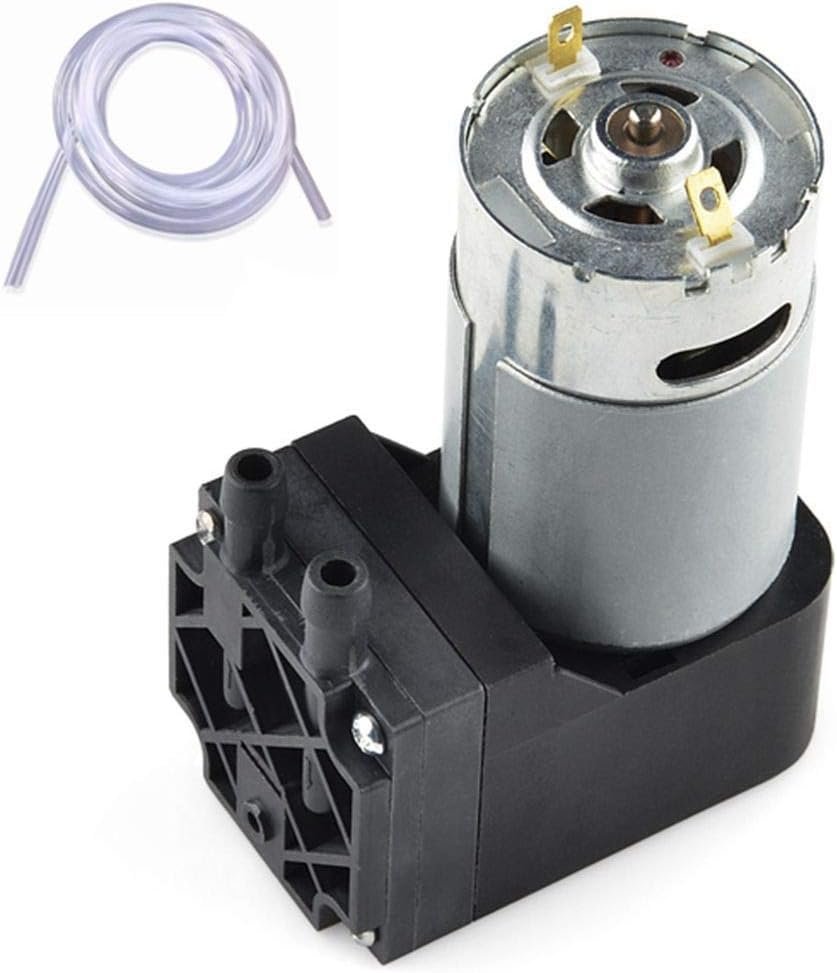
This product is a mini diaphragm-type vacuum pump and air compressor powered by a 12V DC motor. It comes with a 1-meter silicone tube and features 1/4″ barbed fittings for easy hose connections. It is intended for low- to medium-demand applications where we need a compact vacuum or low-pressure air source without going to full industrial equipment.
It operates at about 12W, which already tells us it is quite power-efficient. The working range of 9–15 LPM (liters per minute) and a vacuum level over 350 mmHg make it a serious little unit for small projects like electronics work, lab setups, small vacuum chambers, and hobbyist builds.
Key Specifications at a Glance
Sometimes it is easier to understand a product when we see the numbers in one place. Here is a breakdown of the primary specs and what they mean in practice.
| Feature | Specification | What It Means for Us |
|---|---|---|
| Power Supply | 12V DC | Can be powered from batteries, power supplies, or vehicle systems |
| Power Consumption | 12W | Low current draw; energy-efficient |
| Flow Rate (Working Range) | 9–15 LPM (liters per minute) | Decent airflow for small to medium vacuum/air tasks |
| Vacuum Level | > 350 mmHg | Moderate vacuum suitable for many hobby, lab, and service uses |
| Vacuum Range | 0–16 inHg | Adjustable/usable across typical low-vacuum ranges |
| Fittings | 1/4″ barbs | Easy connection to common tubing sizes |
| Included Tubing | 1 meter silicone tube | Ready to use right out of the box |
| Pump Type | Mini Diaphragm Air Compressor / Vacuum Pump | Oil-free, low-maintenance design |
This spec sheet tells us this is not a high-vacuum scientific pump, but it is a capable general-purpose vacuum/air pump for projects that need reliable suction or airflow in a small footprint.
Build Quality and Design
When we think about a small 12V pump, we often worry about flimsy construction. With this unit, the design feels functional and purpose-driven rather than purely budget-driven.
Compact Diaphragm Construction
The internal mechanism uses a diaphragm pump design, which is a common choice for oil-free operation. Instead of oil-lubricated pistons, the diaphragm flexes to create the vacuum and airflow. This helps keep maintenance low and prevents oil contamination in any system we connect.
We like this because it means we can use the pump in more sensitive setups—like basic lab experiments, sensor testing, or small vacuum forming setups—without worrying that oil mist will be carried into our lines.
12V Motor and Housing
The 12V motor running at 12W is modest in power but well-matched to the diaphragm system. In most situations, we can power it from a:
- Bench power supply
- 12V battery (like a sealed lead-acid or large Li-ion pack)
- Car or RV electrical system
- Regulated adapter from mains power
The housing and fittings are fairly straightforward: 1/4″ barbs on the port(s), designed to accept common tubing sizes. The included 1-meter silicone tube attaches snugly, helping avoid air leaks without needing extra clamps in many situations.
Performance: What We Can Expect in Real Use
The headline performance numbers are 9–15 LPM flow rate and >350 mmHg vacuum, with a 0–16″ Hg vacuum range. Let us unpack what that means for actual tasks.
Vacuum Strength and Range
A vacuum of 350 mmHg corresponds to a moderate vacuum level. It is not near absolute vacuum, but it is enough for:
- Holding objects in place using suction
- Light vacuum forming for thin plastics and small shapes
- Degassing small resin or silicone batches in simple chambers
- Assisting in fluid transfer or filtration setups
- Supporting some electronics repair tasks using suction tools
The 0–16″ Hg vacuum range fits many small-to-medium vacuum applications. For context, full atmospheric pressure is about 29.9″ Hg, so 16″ Hg represents a good partial vacuum level for non-industrial uses. We should not expect performance comparable to a large rotary vane vacuum pump, but we can rely on this unit for tasks that call for consistent, moderate vacuum.
Airflow: 9–15 LPM
The 9–15 LPM airflow range gives us enough throughput for:
- Small vacuum chambers (e.g., for crafts, model making, or hobby resin)
- Air sampling systems
- Small pneumatic tools or actuators that do not demand large volumes
- Air mattress, inflatable toys, or cushion experiments (though not as fast as dedicated inflators)
Realistically, we will sit toward the lower end of that flow rate when the pump is under heavier vacuum load, and closer to the upper end when there is little restriction. We like that the working range is clearly stated; it sets reasonable expectations.

Included Silicone Tube: Why the 1-Meter Length Matters
The product includes a 1-meter silicone tube, which might sound like a small detail, but it affects how quickly we can put the pump to work.
Ready Out of the Box
Instead of hunting down compatible tubing, we can attach the included tube directly to the 1/4″ barbs and start testing. Silicone tubing offers several advantages:
- Flexibility: Easy routing around benches and work areas
- Chemical resistance: Better suited to many lab or workshop chemicals than cheap PVC
- Temperature tolerance: Can handle moderately warm or cool gases better than some alternatives
This makes the pump immediately usable for experiments, testing rigs, and quick setups.
Tubing Fit and Connections
The tubing fits snugly on the 1/4″ barbs, providing a reasonably airtight seal out of the box. For higher reliability and deeper vacuum, we may still want to secure the connections with:
- Small hose clamps
- Zip ties
- Cable clips
But for many applications, friction fit alone will work well enough, especially in short-term or non-critical setups.
Ease of Use: Getting Up and Running
One of the most important factors for us is how quickly we can integrate the pump into our workflow. This mini diaphragm pump keeps things simple.
Powering the Pump
Since it runs on 12V DC at about 12W, powering it is straightforward. We can:
- Use a regulated 12V DC bench supply
- Use a 12V wall adapter (with enough current capacity)
- Connect to a car battery or 12V vehicle socket (with a suitable adapter)
- Integrate into any existing 12V system in a DIY project
Because the current draw is relatively small, we do not need especially heavy wiring, but we should still respect basic electrical safety and use properly insulated connectors.
Installation and Setup
To get the pump running, the steps are usually:
- Mount or place the pump securely on a stable, flat surface.
- Connect the 1-meter silicone tube to the 1/4″ barbed vacuum or intake port.
- Attach the other end of the tube to our application (chamber, suction tool, filter, etc.).
- Hook up the pump leads or terminals to our 12V DC power source, observing correct polarity.
- Switch on the power and monitor suction and noise level.
There is no complicated priming process or oil-fill step. The oil-free diaphragm system keeps things plug-and-play.
Applications: Where This Pump Shines
To really understand if this vacuum pump fits our needs, it helps to map its specs to real-world uses. Here are some common applications where this pump can be a strong option.
Small Vacuum Chambers and Degassing
If we use small vacuum chambers for:
- Degassing resin or silicone for casting
- Drying small components
- Simple science demonstrations or experiments
this pump can serve as a suitable vacuum source. The >350 mmHg vacuum and 16″ Hg range allow us to remove a significant portion of air and trapped bubbles, especially for small volumes.
We should keep expectations realistic: for larger chambers, the pump will be slower. But for small or hobby-scale systems, it strikes a nice balance of cost, size, and performance.
Electronics, Repair, and Hobby Projects
In the electronics and repair domain, we might use vacuum for:
- Suction-based pick-and-place tools
- Holding small circuit boards or components in place
- Creating test environments that require low pressure
The compact form factor and 12V operation let us integrate this pump directly into custom benches or mobile toolkits. We can even connect it to an Arduino- or microcontroller-managed relay system to automate vacuum on/off cycles.
Laboratory and Experimental Setups
For light-duty laboratory environments—education, small research projects, or maker spaces—this pump works well for:
- Filtration through small vacuum filters
- Gas sampling with appropriate adapters
- General-purpose suction where oil-free operation is important
We appreciate that the diaphragm design means no oil contamination, making it safer for sensitive experiments and easier to maintain.
Automotive and Field Use
Because the pump runs on 12V, we can power it from a vehicle for:
- On-the-go vacuum testing (with the proper adapters and gauges)
- Small vacuum-based tools in the field
- Simple in-vehicle experiments or setups
Its low power draw makes battery-powered operation more practical, allowing for portable vacuum systems where we do not have access to mains electricity.
Strengths of the Vacuum Pump 12V Mini Diaphragm Air Compressor
This unit has several notable strengths, especially when we think about convenience, flexibility, and form factor.
Compact and Portable
The mini size is a major plus. We can easily:
- Fit it on a crowded bench
- Mount it inside a small project enclosure
- Transport it between locations without much hassle
For makers, hobbyists, and small labs, minimizing space without sacrificing functionality is always helpful.
Low Power and 12V DC Compatibility
Running at 12V / 12W, this pump is ideal when we want to avoid large AC-powered devices:
- We can run it from a battery backup in case of power outages.
- It pairs nicely with solar-powered setups that output 12V.
- The current draw is modest, making it energy-efficient for longer sessions.
This flexibility opens up plenty of creative setups we may not consider with bulkier pumps.
Oil-Free Diaphragm Operation
The oil-free diaphragm mechanism brings multiple advantages:
- No oil changes or level checks required.
- Reduced risk of oil mist or contamination.
- Cleaner operation in workshop and lab environments.
For us, that means less ongoing maintenance and more confidence when running the pump near delicate equipment or materials.
Included Tubing and Standard Barbs
The 1-meter silicone tube and 1/4″ barbs mean we:
- Do not have to hunt for specialty fittings immediately.
- Can connect standard tubing and adaptors without proprietary hardware.
This helps us prototype and test setups more quickly, especially when we are experimenting.
Limitations and Things We Should Keep in Mind
No product is perfect, and this pump is no exception. There are some practical limitations we should be aware of before committing.
Not for Deep Vacuum or Industrial Loads
While the >350 mmHg vacuum rating is respectable, it does not approach deep-vacuum or industrial vacuum levels. That means:
- It is not suitable for high-vacuum scientific instrumentation.
- It will not match the performance of large, multi-stage or rotary vane pumps.
If our goal is near-absolute vacuum, ultra-high vacuum systems, or heavy-duty industrial applications, we will need a different class of pump.
Continuous Operation Considerations
Mini diaphragm pumps like this one can typically run for extended periods, but:
- Long continuous use may lead to heat buildup.
- Noise can become noticeable during lengthy sessions.
- Duty cycle may need to be respected (e.g., operating in cycles rather than 24/7).
We recommend checking how warm the pump gets during extended use and, if necessary, giving it rest intervals or adding extra ventilation.
Noise Level
Most small diaphragm pumps produce a noticeable hum or buzz. We should expect:
- Some vibration if the pump is not mounted or cushioned.
- A sound level that may be distracting in ultra-quiet environments, but still acceptable in typical workshops or labs.
Mounting the pump on rubber feet or a damping surface can significantly reduce noise and vibration.
Installation Tips and Best Practices
To get the most consistent and reliable performance from this vacuum pump, we can follow a few simple guidelines.
Securing the Pump
We should mount or position the pump to reduce vibration and movement:
- Use rubber feet or foam pads to minimize vibration transfer to tables.
- Secure it with screws or brackets if it will be part of a fixed installation.
- Keep it on a stable surface to avoid tipping or line strain.
This will not only reduce noise but also increase the durability of connectors and internal parts.
Improving Vacuum Tightness
Even a good vacuum pump cannot compensate for major leaks in our system. To improve vacuum performance:
- Use tight-fitting tubing (the included silicone tube is a good start).
- Clamp or secure the tubing on the 1/4″ barbs.
- Check junctions and adapters for leaks with soapy water or similar methods.
We can also shorten the tubing run where possible to reduce losses and improve response time.
Adding Filters or Traps
If we expect to pull moisture, dust, or chemicals through the line, it is wise to protect the pump:
- Use an inline particle filter to keep dust out.
- Add a moisture trap if we are degassing or drying humid materials.
- Avoid sucking in any liquids directly; diaphragm pumps do not appreciate that.
This extra protection helps extend the pump’s lifespan and keeps the diaphragm and valves in better condition.
Safety and Maintenance Considerations
Even though this is a small, low-power device, we should treat it with the same care as any electrical and mechanical tool.
Electrical Safety
Since the pump runs at 12V DC, the voltage is relatively low, but we still need to:
- Use a properly rated power supply with adequate current capacity.
- Respect polarity when wiring: positive to positive, negative to negative.
- Keep wires insulated and protected from abrasion.
If we plan to use it in automotive systems, fusing the circuit is a good practice to prevent damage in case of shorts.
Mechanical and Operating Safety
During operation:
- Avoid blocking the intake or exhaust completely for long periods without reason.
- Do not run the pump submerged or in extremely dusty or wet environments.
- Make sure the pump has adequate ventilation to shed heat.
We also want to keep fingers and loose items away from any moving or exposed parts (such as the motor fan), if present, especially if we mount the pump in an open frame.
Maintenance Requirements
One of the benefits of this diaphragm pump is low maintenance. Still, there are a few tasks worth doing occasionally:
- Check tubing and fittings for cracks or wear and replace if needed.
- Inspect wiring for looseness or damage.
- Clean external dust from the pump housing and motor vents.
Over a long period, diaphragm wear may eventually occur, but for most hobby and light-duty uses, we can expect a good operational lifespan without major servicing.
Power Options and Integration Ideas
Because it is a 12V device with modest power requirements, we can get creative integrating this pump into different setups.
Bench and Workshop Use
In a fixed workspace, we can:
- Connect it to a regulated 12V bench power supply.
- Use a dedicated 12V adapter, possibly with an inline switch.
- Mount it under or behind a bench and run tubing to our work area.
We can even connect it to a relay or MOSFET controlled by a microcontroller, automating vacuum based on sensor input or time.
Mobile and Off-Grid Use
For portable or off-grid scenarios, we can:
- Power it from a small 12V lead-acid battery or LiFePO₄ pack.
- Integrate it with solar-charged battery systems.
- Use it in a vehicle while powered from the automotive electrical system.
This opens up options for field experiments, mobile repairs, or camping and RV setups that require low-pressure air systems.
Comparing Expectations: What This Pump Is and Is Not
To decide whether this product is right for us, it helps to clearly frame what category it belongs in.
What It Is Good For
We can rely on this pump when we want:
- Moderate vacuum levels (up to 16″ Hg) for hobbyist and small professional tasks.
- Portable, low-power operation on 12V.
- Oil-free, low-maintenance performance.
- Easy connection thanks to 1/4″ barbs and included silicone tubing.
This makes it very appealing for makers, small labs, and anyone who needs a versatile, compact vacuum solution.
What It Is Not Designed For
We should not expect this pump to:
- Reach ultra-high or deep vacuum levels required for advanced scientific apparatus.
- Handle very large vacuum chambers with rapid pump-down times.
- Replace heavy industrial vacuum systems in production environments.
If our needs fall into those more demanding categories, we should see this pump more as a secondary tool or portable option rather than our main workhorse.
Practical Pros and Cons Summary
To put things succinctly, here is how we would weigh the strengths and weaknesses of the Vacuum Pump 12V Mini Diaphragm Air Compressor with Silicone Tube.
Pros
- 12V, low-power design (12W): Easy to power from many sources and energy-efficient.
- Decent vacuum performance (>350 mmHg, 0–16″ Hg): Strong enough for many small-scale tasks.
- Good flow rate (9–15 LPM): Suitable for small chambers and general vacuum/air needs.
- Oil-free diaphragm pump: Cleaner operation and less maintenance.
- 1/4″ barbed fittings: Standard and easy to integrate with common tubing.
- Includes 1-meter silicone tube: Immediate usability out of the box.
- Compact and portable: Ideal for tight spaces and mobile use.
Cons
- Not for deep vacuum: Limited to moderate vacuum levels, not high or ultra-high vacuum.
- Possible noise and vibration: As with most small pumps, noise reduction measures may be needed.
- Duty cycle considerations: Extended continuous operation should be monitored for heat.
For us, the pros are very attractive if we are within the target use case. The cons are typical of this pump class and are manageable with proper expectations and setup.
Who Will Benefit Most from This Pump?
We find this pump particularly well-suited to a few user groups.
Makers and Hobbyists
If we tinker with:
- Resin casting
- 3D printing support processes (like vacuum forming small parts)
- Electronics projects that need vacuum or low-pressure systems
this pump gives us a practical, affordable vacuum source that does not demand big, dedicated equipment or special electrical work.
Small Labs and Educational Settings
For teaching environments or small labs that need:
- A general-purpose vacuum pump for experiments
- An oil-free solution that keeps maintenance simple
- A compact device that can be shared between stations
this pump fits in nicely and offers a good balance between performance and ease of integration.
Field Technicians and Mobile Users
If we work on the move and want:
- A portable vacuum solution that runs directly from 12V
- Lightweight equipment to carry in a vehicle or toolkit
this pump becomes a handy part of our mobile setup, especially if we already use 12V tools and supplies.
Tips for Getting the Best Results
To really make the most of the Vacuum Pump 12V Mini Diaphragm Air Compressor with Silicone Tube, a few simple practices can make a noticeable difference.
Optimize Connections and Seals
We can:
- Keep tubing runs as short and direct as possible.
- Use secure clamps or ties on all hose-barb connections.
- Seal any additional joints with tape or sealant suitable for vacuum use if needed.
Small leaks can significantly reduce vacuum performance, especially at this scale.
Monitor Heat and Duty Cycle
During early use, we should:
- Run the pump for a while and feel the housing to judge heat build-up.
- If it becomes very warm, consider shorter duty cycles or better airflow.
- Avoid enclosing the pump in airtight boxes unless proper ventilation is provided.
This will help maintain performance and extend the lifespan of the diaphragm and motor.
Use Support Accessories When Necessary
For more demanding applications, we can enhance the setup with:
- A vacuum gauge to monitor levels.
- A reservoir tank to smooth demand and give steady vacuum over short bursts.
- Filters and traps to protect both the pump and our system.
With these additions, we can turn this mini pump into a more robust vacuum solution for a wider variety of tasks.
Final Thoughts: Is the Vacuum Pump 12V Mini Diaphragm Air Compressor with Silicone Tube Worth It?
After going through the specifications, use cases, strengths, and limitations, we see this pump as a well-balanced, practical tool for anyone needing moderate vacuum performance in a compact, low-power package.
We should choose this pump if:
- We want a 12V, portable vacuum source.
- We need oil-free operation for clean, low-maintenance use.
- Our projects involve small vacuum chambers, filtration, suction tools, or light lab work.
- We appreciate included accessories like the 1-meter silicone tube and standard 1/4″ barbs that let us start quickly.
We should look elsewhere if:
- We require deep or ultra-high vacuum for advanced scientific or industrial tasks.
- We need to evacuate very large volumes quickly on a regular basis.
Within its intended range, the Vacuum Pump 12V Mini Diaphragm Air Compressor with Silicone Tube offers strong value and reliable performance. If our projects sit in that sweet spot between hobby use and light professional workloads, this pump can easily become a dependable part of our toolkit.
Disclosure: As an Amazon Associate, I earn from qualifying purchases.