Have we ever wished our workshop had the kind of compressed air setup that just works every time, without constantly running out of air or hogging all the floor space?

Understanding What the SIP Airmate VN3/150-SB Actually Is
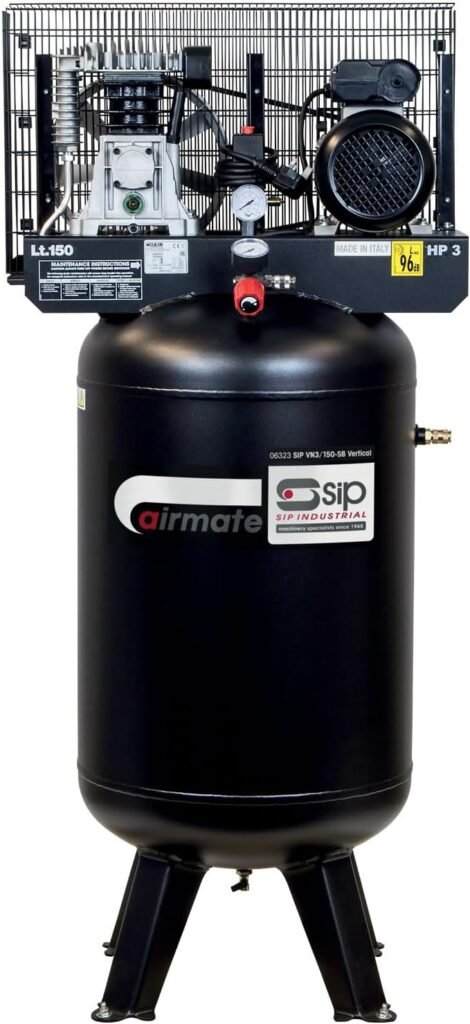
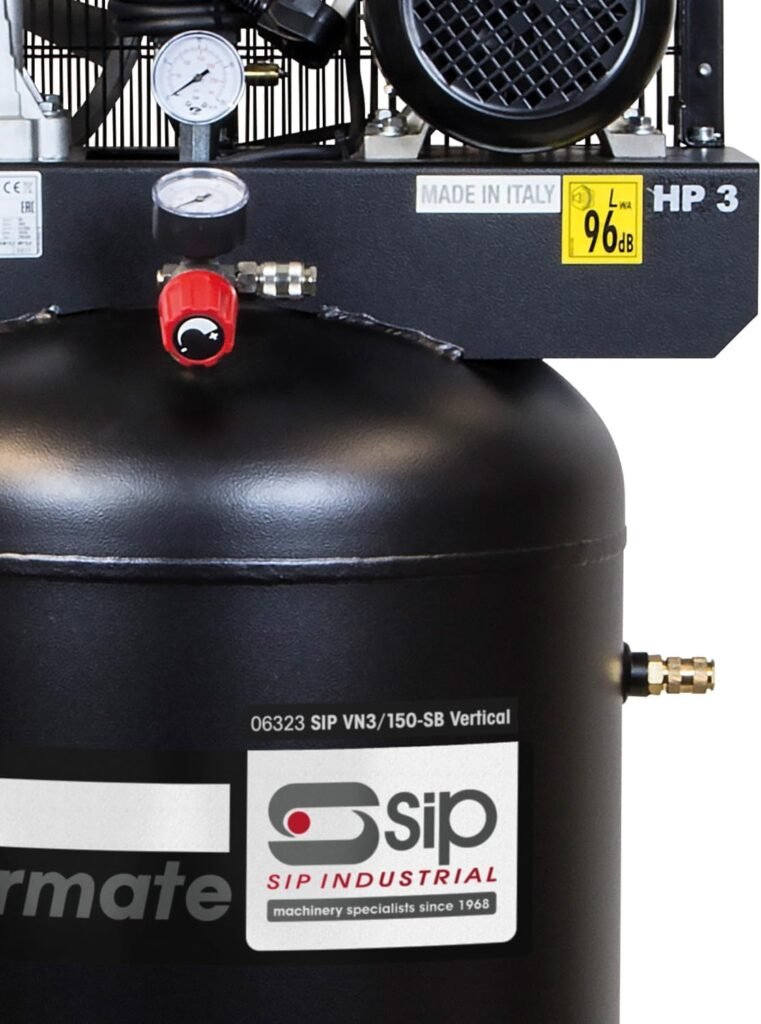
When we first look at the SIP Airmate VN3/150-SB Vertical Belt Drive Air Compressor, it can sound like a long string of technical terms. So it helps to unpack what we are really getting. This is a 230V, 13A, 3hp / 2.2kW, belt‑driven, oil‑lubricated vertical air compressor with a 150L tank, delivering up to 145psi / 10 bar and around 13CFM, with a noise level around 96dB.
In other words, this is not a tiny DIY gadget we tuck under a bench. It is a robust, workshop‑grade compressor designed for tools, spraying, and light commercial or trade use, especially where floor space matters.
Key Specifications at a Glance
Sometimes it is easier to understand a machine by seeing its main specs side by side. We find this helps us quickly judge whether it meets our needs.
| Feature | Specification |
|---|---|
| Product Name | SIP Airmate VN3/150-SB Vertical Belt Drive Air Compressor |
| Power Supply | 230V, 13A (single phase) |
| Motor Power | 3hp / 2.2kW |
| Drive Type | Belt drive |
| Tank Capacity | 150 litres |
| Tank Orientation | Vertical “squant tank” (space‑saving footprint) |
| Maximum Pressure | 145psi / 10 Bar |
| Air Delivery (Approx.) | 13CFM (Cubic Feet per Minute) |
| Lubrication Type | Oil‑lubricated |
| Intended Use | Workshops, garages, light commercial, trade, professional |
| Noise Level | Around 96dB |
| Typical Applications | Air tools, paint spraying, inflating, blowing, light industrial |
When we look at this table, we can immediately see this compressor aims at a serious workshop environment rather than casual, once‑a‑year use.
First Impressions and Build Quality
When we picture bringing this unit into our space, the first thing that stands out is its vertical format. The 150L tank is arranged upright, so while the compressor is tall, it does not occupy a big footprint on the floor. For cramped garages and packed workshops, that layout can be a genuine advantage.
In terms of build, we are dealing with a heavy‑duty, steel‑tank unit with a belt‑driven pump and an electric motor mounted on top. It feels engineered for long‑term use rather than looking like a lightweight, throwaway tool. That alone gives us confidence if we are planning to rely on it for work.
Power and Performance: 3hp / 2.2kW of Practical Muscle
Motor Strength and Electrical Requirements
The 3hp / 2.2kW motor is a meaningful step up from hobby‑level compressors. We are in the territory where we can power a good range of air tools for real‑world tasks, not just inflate tires. At 230V and 13A, it is compatible with a standard domestic or workshop socket in many regions, but we still want to ensure the circuit can handle that consistent load.
This level of power allows the compressor pump to replenish the 150L tank fast enough to keep tools running without frustrating pauses. For short bursts of high demand, the tank capacity and motor complement each other quite well.
Air Delivery and Pressure: 13CFM and 145psi / 10 Bar
With a maximum pressure of 145psi (10 bar) and air delivery around 13CFM, we can handle most common workshop tasks. That includes:
- Running impact wrenches and ratchets for vehicle work
- Operating air blow guns for cleaning parts and work surfaces
- Powering a range of nailers and staplers
- Supporting paint spraying applications with a decent, stable airflow
We still want to check each tool’s CFM requirement against the compressor’s output, especially if we run tools continuously. But for intermittent use and typical garage workloads, the SIP Airmate VN3/150-SB has enough headroom to keep us productive.
The Vertical “Squant Tank” Design and Space‑Saving Benefits
Why Vertical Matters in Real Workshops
Many of us know the pain of trying to fit a full‑size horizontal compressor into an already crowded space. The vertical “squant tank” design of this model is specifically aimed at that problem. The 150L tank stands tall rather than wide, reducing the floor area needed.
That means we can position it in a corner or beside a bench while still enjoying the air capacity of a much bulkier horizontal unit. For small garages or mixed‑use spaces (like a combined home garage and workshop), that kind of footprint is often the difference between having a compressor and thinking we do not have room for one.
Stability and Access
Even though it stands upright, the tank is designed to remain stable. We should still place it on a level floor and follow any recommendations for securing or positioning. In daily use, the vertical design makes the gauges, regulator, and controls more naturally at arm or eye level. That creates a more comfortable working posture when we are adjusting settings or checking pressure.

Oil‑Lubricated System: Efficiency and Longevity
How Oil Lubrication Helps
This compressor is oil‑lubricated, meaning oil is introduced into the compression chamber to reduce friction and heat. That process offers several advantages for us:
- Reduced wear on moving parts, extending the life of the pump
- Improved heat dissipation, allowing longer duty cycles under load
- Smoother operation compared to some oil‑free designs
Once the air is compressed, the system separates the oil from the air stream so that the outgoing air is clean enough for general tasks. We may still want filters or dryers for ultra‑sensitive applications, but the base design aims to provide clean, usable air for most workshop jobs.
Maintenance Responsibilities
With the benefits of oil lubrication comes a responsibility: we need to check and change the oil periodically. For us, this is similar to maintaining a car engine. We monitor the oil level, use the recommended type of compressor oil, and change it at intervals suggested in the manual or after heavy usage spells.
We also want to drain condensate from the tank regularly. Compressed air always carries moisture, which will accumulate inside the tank. By opening the drain valve and letting water escape, we protect the tank against corrosion and preserve its structural integrity.
Noise Level: What 96dB Means in Practice
Working Comfort and Hearing Protection
The SIP Airmate VN3/150-SB is rated around 96dB. In practical terms, this is not quiet. It is typical for a powerful belt‑driven workshop compressor but still loud enough that we should plan for hearing protection when working near it for extended periods.
If our workshop has multiple noisy machines, this compressor will join the chorus. We may want to position it in a corner, behind a partition, or even in a side room (with proper ventilation) to reduce direct exposure to the sound. With ear defenders or quality earplugs, the noise becomes manageable.
Comparison to Smaller Compressors
Many small portable compressors can be similarly loud but with less capability. With the SIP Airmate VN3/150-SB, at least we know the noise is going toward a serious output of air. For us, that makes the trade‑off more reasonable, especially in a professional environment where performance matters more than ultra‑low noise.
Suitability for Different Users
For Home Garages and Enthusiast Workshops
If we run a serious home garage or a hobby workshop where we regularly use air tools or spray equipment, this compressor can feel like a professional upgrade. The 150L tank, 3hp motor, and 13CFM capacity mean we are not constantly waiting for the tank to refill during tasks like:
- Removing wheels and suspension components with impact wrenches
- Cleaning engine bays or parts with an air gun
- Running a small spray gun for panels, furniture, or hobby projects
We might consider whether the noise and size are appropriate for our home, but in terms of capability, it can easily exceed most hobby demands.
For Trade and Professional Use
The SIP Airmate VN3/150-SB is also described as suitable for industrial, trade, and professional applications. For small to medium workshops, light commercial repair shops, and tradespeople with a fixed base, it makes sense as a central air supply.
We may not use it for very high‑demand, multi‑operator continuous production lines, but for a typical workshop with one or two technicians using air tools intermittently, it offers a good blend of power, reliability, and tank capacity.
For Paint Spraying and Finishing
One of the advertised strengths of this compressor is support for paint spraying. That requires:
- Consistent airflow, so the spray pattern stays even
- Stable pressure, avoiding surges that ruin the finish
With a 150L tank and 13CFM output, the SIP Airmate VN3/150-SB has the backbone to run many spray guns effectively, especially for automotive panels, furniture, gates, and similar work. We may still choose to add regulators, filters, and dryers in the air line for best results, particularly if we are finishing high‑value surfaces.
Belt Drive: Why It Matters to Us
Belt Drive vs Direct Drive
This model uses a belt drive between the motor and the pump. For us, that brings some practical advantages:
- Reduced vibration transferred to the pump, improving longevity
- Better efficiency at matching motor speed to optimal pump speed
- Easier servicing, since belts can be replaced when worn
Direct‑drive compressors are often more compact and cheaper, but for heavier, longer‑term use, belt drive is a classic choice. It feels like a more professional setup, designed with durability in mind.
Maintenance of the Belt System
We will want to periodically inspect the belt for signs of wear, cracks, or slackness. Adjusting tension, if needed, and swapping out an old belt when the time comes are straightforward tasks, especially if we already maintain other belt‑driven equipment.
This minimal upkeep is a fair trade for the smoother, more robust performance the belt drive offers.
Capacity and Duty Cycle in Real‑World Use
Understanding the 150L Tank
A 150L air receiver tank is large enough to handle most workshop demands without constant cycling. It gives us a buffer of stored air that we can draw from during short bursts of high use, with the motor kicking in when pressure drops below the cut‑in level.
In real jobs, that means:
- Running an impact wrench for multiple bolts before the motor needs to top up
- Spraying for a reasonable interval before the tank pressure starts to drop
- Using an air gun for cleaning without constantly hearing the compressor start and stop
The exact duty cycle (how long it can run versus rest) will depend on the pump design and operating conditions. We want to follow the manufacturer’s guidance to avoid overheating and premature wear.
Matching Tools to the Compressor
To get the best out of this unit, we should match our tools sensibly:
- Light to medium CFM tools: well suited for regular use
- High CFM tools (e.g., large sanders, heavy blasters): better in shorter bursts or with breaks
- Multiple tools at once: possible if total CFM stays within reason
We can think of 13CFM as a good benchmark for one user doing virtually any typical task, and two users doing lighter tasks if they are not running continuously at full load.
Set‑Up and Installation Considerations
Power and Location
Before wheeling the compressor into place, we want to check that:
- Our power supply really is 230V and can safely provide 13A on the chosen circuit
- The socket and wiring are in good condition, ideally on a dedicated or lightly loaded circuit
- The unit is placed on a stable, level surface with enough clearance for ventilation and maintenance
Because this is a tall unit, we also want to be sure it is not in a position where it might be knocked or bumped by vehicles or large materials. Giving it a defined “home” in the workshop makes daily life smoother.
Initial Checks
On first start‑up, we should:
- Check the oil level and add the correct compressor oil if necessary.
- Ensure all fittings and connections are snug, but not over‑tightened.
- Run the compressor without load for the recommended run‑in period, if specified.
- Test the pressure switch cut‑in and cut‑out to see that the compressor stops at the correct pressure.
Taking these steps early can help us avoid small issues turning into frustrating problems later.
Day‑to‑Day Use: What It Feels Like
Starting Up and Controls
In everyday use, the SIP Airmate VN3/150-SB behaves much like other workshop compressors but with the advantage of that substantial air reserve. We switch it on, allow the tank to build up to the cut‑out pressure, and then connect tools as needed.
The vertical configuration places gauges and (depending on configuration) regulators in an accessible position, so it is easy for us to monitor pressure. Once we get used to the sound and cycle of the compressor, it becomes a familiar background element in our workshop routine.
Tool Performance and Workflow
In real work, we will probably notice that air tools feel “properly fed” rather than starved for air. Impact wrenches hit harder and more consistently, spray guns maintain a smoother fan pattern, and blow guns deliver a strong, steady blast.
For jobs like removing multiple wheels, prepping surfaces, and then spraying, we can rely on this compressor as a continuous partner rather than something we are constantly waiting on. That sense of flow can transform how productive and enjoyable our work feels.
Reliability and Long‑Term Ownership
Designed for Heavy‑Duty Use
The SIP Airmate VN3/150-SB is described as more than just a mini compressor. It is positioned as a heavy‑duty machine, intended to support industrial and trade applications. That does not mean it is indestructible, but it does suggest solid engineering, a robust tank, and components sized for serious workloads.
If we treat it with basic mechanical respect—regular oil changes, tank draining, and periodic visual inspections—we can reasonably expect it to serve our workshop for many years. For professionals relying on uptime, that reliability is worth more than flashy gimmicks.
Common Wear Points to Watch
Over time, the main areas we might monitor include:
- Belt wear and tension
- Oil condition and level
- Tank drain valve condition (making sure it does not seize)
- Hoses and couplings (checking for leaks)
- Pressure switch and safety valves (confirming they function as intended)
These are normal maintenance concerns for any compressor at this level, and the SIP Airmate’s design does not appear to add unnecessary complexity.
Advantages and Disadvantages
What We Might Love About It
There are several stand‑out strengths with this compressor that will matter to many of us:
- Serious power and capacity: 3hp motor, 150L tank, and 13CFM offer plenty of muscle.
- Vertical, space‑saving footprint: ideal for cramped workshops and garages.
- Belt‑driven, oil‑lubricated design: built with durability, efficiency, and smoother operation in mind.
- Suitable for trade and professional use: not a flimsy hobby toy.
- Versatile applications: from air tools to paint spraying and general workshop tasks.
This combination makes it a strong candidate for anyone wanting to step up from smaller portable units into a reliable, workshop‑grade solution.
What Could Be Better for Some Users
Of course, no compressor is perfect for everyone, and we should consider potential drawbacks:
- Noise level (96dB): we should plan for hearing protection and think about placement.
- Weight and size: even though it is vertical, it is still a sizable, heavy machine that is not meant to be carried around frequently.
- Oil and belt maintenance: we must be comfortable with occasional service tasks, unlike some maintenance‑lighter oil‑free units.
- Single‑phase limitation: perfect for many workshops, but large industrial sites might prefer three‑phase systems.
For us, these are not flaws so much as realities of using a robust compressor. The key question is whether they fit our environment and working style.
Comparing to Smaller or Portable Compressors
Why Not Just Use a Mini Compressor?
If we have only used small portable compressors before, we might wonder why this model is worth the jump. A “mini” compressor is fine for:
- Occasional tire inflation
- Small airbrush or light spray work
- Very light nailer use
However, once we start wanting to:
- Remove stubborn bolts with impact tools
- Spray full panels or multiple large parts
- Run tools repeatedly and reliably
those mini units quickly show their limits. They cycle constantly, generate even more relative noise, and cannot maintain consistent pressure and volume. The SIP Airmate VN3/150-SB is a genuine step into a different class of performance.
Portability vs Fixed Installation
If we need something we can easily carry from job to job, this is the wrong tool. But if we mainly work in one garage or workshop and want a permanent compressed air backbone, this unit makes sense. We trade mobility for stability, capability, and reliability, which many of us in fixed locations will happily accept.
Safety Considerations
Working Safely with Compressed Air
Whenever we introduce a powerful compressor into our space, safety habits become important:
- Always wear hearing protection when working near the running compressor for extended periods.
- Avoid directing air guns at skin or clothing; high‑pressure air can be dangerous.
- Use hoses and fittings rated for the pressure this unit produces.
- Do not tamper with safety valves or pressure switches.
By following basic guidelines, we can enjoy all the benefits of compressed air without unnecessary risk.
Tank Safety and Inspections
Over time, any compressor tank will see cycles of pressure and exposure to moisture. Draining condensate regularly is our first line of defense against internal corrosion. We can also give the tank periodic visual inspections from the outside and listen for any strange sounds or rapid air loss that might indicate a problem.
If we ever suspect an issue with the tank’s integrity, we should take it seriously and consult a professional rather than continuing to operate it.
Who This Compressor Is Really For
Ideal Users and Scenarios
This machine fits best if we see ourselves in one or more of these descriptions:
- We run a home or small commercial workshop and use air tools frequently.
- We do automotive repairs, metalwork, or fabrication and want reliable compressed air.
- We spray paint or finishes regularly and need consistent airflow and pressure.
- Our workshop is tight on floor space, so a vertical tank is a big benefit.
- We prefer owning solid, heavy‑duty equipment rather than replacing cheaper gear often.
If we nod along with these points, the SIP Airmate VN3/150-SB aligns well with our priorities.
Who Might Want Something Else
On the other hand, we might be better with a different compressor if:
- We only inflate occasional tires and rarely use air tools.
- We must often move the compressor between locations.
- Ultra‑quiet operation is more important than power and capacity.
- We are not comfortable performing basic maintenance like oil and belt checks.
For those situations, a smaller oil‑free portable unit or a low‑noise, low‑capacity compressor might be more suitable.
Practical Tips for Getting the Most Out of It
Optimizing Our Air System
To fully benefit from this compressor, we can also think about the rest of the system:
- Use properly sized hoses: larger diameter hoses reduce pressure drop over distance.
- Add regulators and filters close to the point of use for spray guns or sensitive tools.
- Plan air line routing to keep hoses off the floor where they can be tripping hazards.
By treating the SIP Airmate VN3/150-SB as the heart of a well‑planned air network, we make our work more efficient and safer.
Routine Care Checklist
We might find it handy to keep a simple mental (or written) checklist:
- Check oil level weekly (or based on usage).
- Drain tank condensate daily or after heavy use.
- Inspect belts and hoses monthly.
- Clean around the unit to avoid dust buildup and overheating.
These small habits keep the compressor healthy and avoid surprise breakdowns at the worst moment.
Our Overall Verdict on the SIP Airmate VN3/150-SB
When we put everything together, the SIP Airmate VN3/150-SB Vertical Belt Drive Air Compressor stands out as a strong, workshop‑grade machine that strikes a smart balance between power, capacity, and space efficiency.
We get a 3hp / 2.2kW motor, a substantial 150L vertical tank, approximately 13CFM of air delivery, and up to 145psi / 10 bar of pressure. The belt‑driven, oil‑lubricated design is tailored for durability and efficiency, supporting a wide range of tools and applications from automotive work to paint spraying.
It is not silent, it is not tiny, and it does ask us to look after oil, belts, and tank drainage. But in return, it offers serious performance and reliability that can underpin an entire workshop’s workflow. For us, that makes it an excellent choice if we are ready to step beyond basic portable compressors and invest in a heavy‑duty, space‑savvy air system we can genuinely depend on.
Disclosure: As an Amazon Associate, I earn from qualifying purchases.