Have we ever stood in our workshop, looked at our growing list of air-powered tools, and thought, “We really need a serious compressor that can keep up”?

Why We Might Choose the SIP Airmate TN10/270
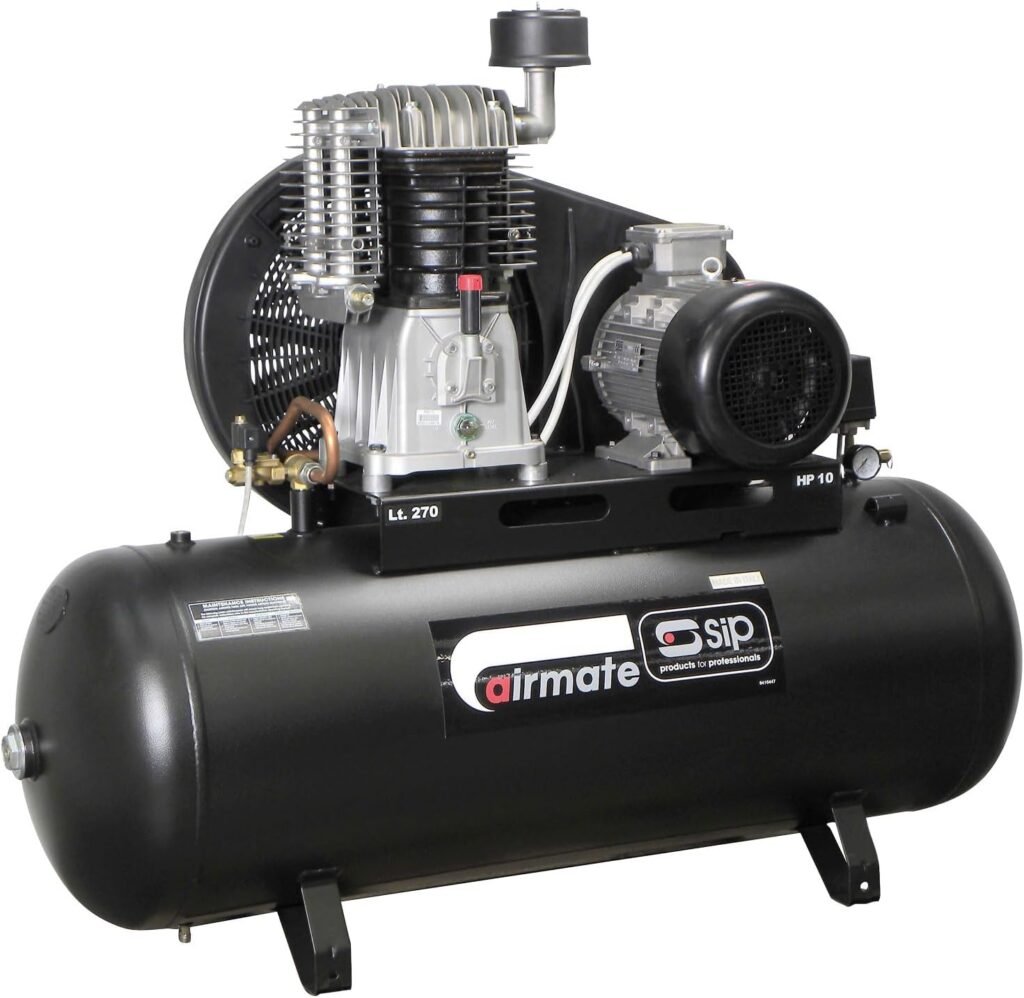
When we reach the point where a small or “mini” compressor just cannot deliver enough air, we know it is time for a heavy-duty upgrade. The SIP Airmate TN10/270 Belt Drive Air Compressor is clearly built for that stage—when we are running multiple tools, working longer hours, and need a machine that will not quit halfway through a job.
This model brings together a powerful motor, a generous tank, and strong airflow output, making it well-suited for workshops, garages, and professional environments. It is not an entry-level hobby unit; it is aimed at serious users who depend on consistent compressed air every day.
Core Specifications at a Glance
Before we get into how it performs in real-world work, it helps to break down the essentials. At its heart, this compressor is designed around three pillars: power, capacity, and reliability.
Here are the key specs in a simple table so we can see what we are really working with.
| Feature | Specification |
|---|---|
| Product Name | SIP Airmate TN10/270 Belt Drive Air Compressor |
| Power Supply | 400V, 20A, 3-Phase |
| Motor Power | 10hp / 7.5kW |
| Tank Capacity | 270 liters |
| Maximum Pressure | 145psi / 10 Bar |
| Air Delivery (Approx.) | 42 CFM (Cubic Feet per Minute) |
| Drive Type | Belt drive |
| Lubrication Type | Oil-lubricated |
| Application Level | Industrial, trade, professional, intensive workshop and garage use |
| Typical Uses | Paint spraying, air tools, air guns, airbrush work, general compressed air |
From this snapshot, we can already see that we are looking at a serious air system rather than a portable DIY compressor. The 3‑phase 400V input and 42CFM output put it squarely into the professional category.
Power and Performance: What 10hp / 7.5kW Really Gives Us
When we talk about air compressors for workshops and industry, motor power is more than just a number on a spec sheet. That 10hp / 7.5kW rating is what allows this compressor to maintain high airflow and recover pressure quickly after we use large volumes of air.
Because of the robust motor, we can run air-hungry tools without constantly waiting for the tank to refill. This makes a huge difference in productivity, especially for tasks like paint spraying, impact wrenching, or continuous use of air grinders.
Where 42CFM and 10 Bar Start to Shine
The approximate 42 CFM air delivery combined with a maximum pressure of 145psi / 10 Bar puts this compressor in a sweet spot for professional shops. It is powerful enough to handle:
- Spray guns for full vehicle resprays
- High-consumption tools like sandblasters (within reasonable duty cycles)
- Impact wrenches, ratchets, chisels, and drills
- Larger air guns for cleaning and blow-down work
Because the compressor is not straining just to keep up, we get smoother operation, steadier pressure, and a longer service life from both the compressor and our tools.
The 270-Liter Tank: Why Capacity Matters
Tank size is one of those things we only truly appreciate when it is not big enough. The 270-liter capacity here plays a major role in maintaining steady output and reducing pressure fluctuations.
A larger tank acts as a buffer: once the system is fully charged, we can operate for longer before the motor needs to kick in again. This is especially important when we are using tools in bursts or doing workflows that involve start-stop patterns, such as panel work, tightening bolts, or light sanding.
Consistency for Paint Spraying and Airbrushing
Paint spraying is one of the most demanding applications when it comes to air quality and consistency. Pressure drops and pulsing air can ruin a paint finish faster than almost anything else. With 270 liters of stored air and strong motor output, we get:
- More stable air pressure at the gun
- Less chance of uneven spray patterns
- Smoother paint edges and surfaces
For users doing detailed airbrush work alongside standard spray guns, this buffer is particularly helpful. We can switch between different tools and still enjoy a steady, clean air supply, assuming we pair the compressor with proper filtration and dryers.
Belt Drive Design: Quieter, Smoother Operation
The SIP Airmate TN10/270 uses a belt drive system, which is a clear sign that it has been built with professional expectations in mind. Belt drive compressors are preferred in many workshops for several reasons.
First, they typically run quieter than direct drive units. The belt allows the motor to spin at an optimal speed while the pump runs slower, reducing noise, wear, and heat. That means a more pleasant working environment and less fatigue after long days in the shop.
Why Belt Drive Supports Longevity
We also gain advantages in durability. Because the pump is not forced to run at the same high RPM as the motor, there is:
- Less mechanical stress
- Reduced heat build-up
- More even wear on internal components
Over years of use, this can translate to fewer breakdowns, longer intervals between major maintenance, and better return on our investment. For trade and industrial users, reliability and uptime are worth as much as raw performance.

Oil-Lubricated System: Efficiency and Protection
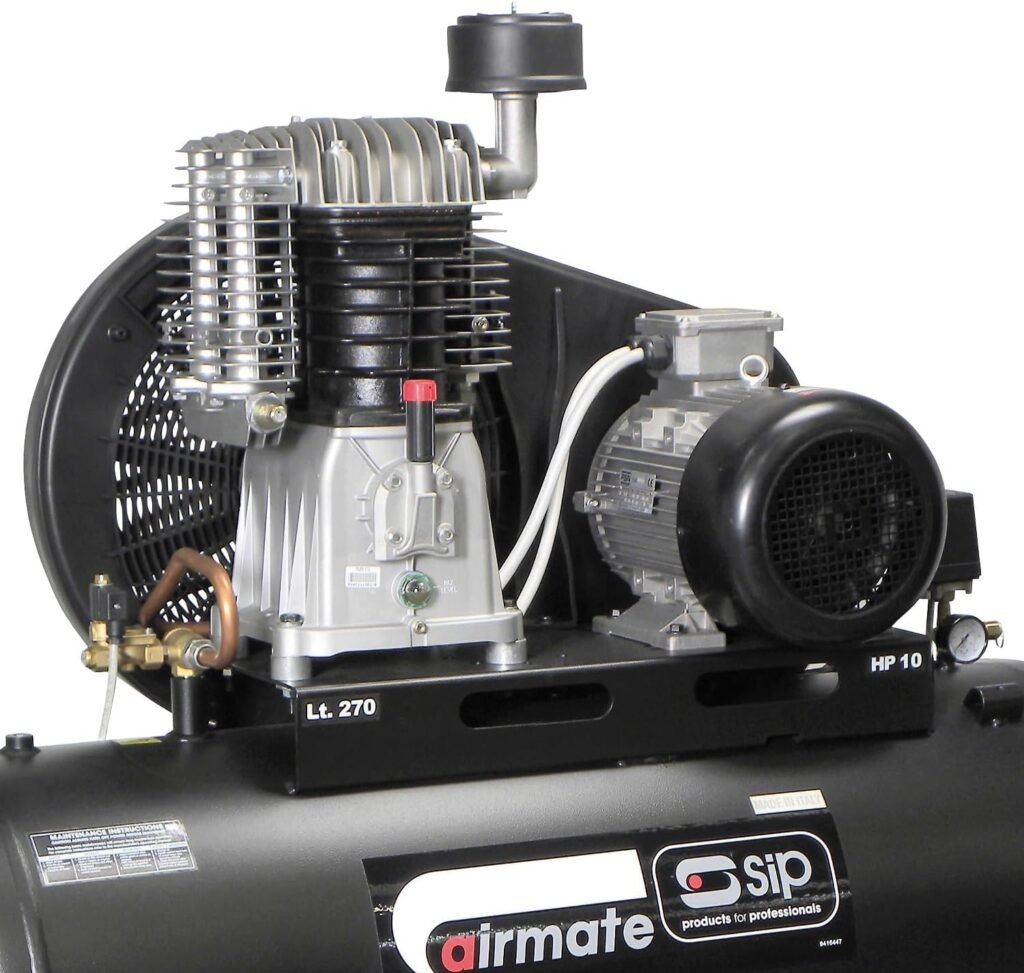
The mention of oil lubrication is not just a minor technical detail. Compressors that use oil in the compression process tend to last longer and run cooler. In the SIP Airmate TN10/270, oil is injected to reduce friction and help dissipate heat, then separated again from the compressed air so that we still have clean output.
This approach offers several practical benefits to us as users:
- Improved component life due to better lubrication
- Reduced risk of overheating during extended operation
- More efficient running, especially under heavy workloads
Clean Air and Oil Management
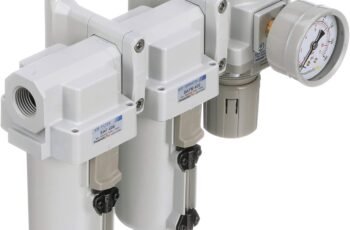
We might wonder if an oil-lubricated compressor means we will always get oily air in our tools and paint guns. The system is designed specifically to separate the oil from the air afterwards; however, for applications where absolutely clean, dry air is needed (like top-quality automotive painting), we should still pair the compressor with:
- An air filter or filter-regulator
- An oil separator
- A dryer, if we are working in humid conditions
With the right after-treatment, we can confidently use this compressor for both heavy industrial tools and sensitive finishing work without contamination issues.
400V 3‑Phase Power: What This Means for Our Setup
The SIP Airmate TN10/270 runs on 400V, 20A, 3‑phase power. This clearly positions it in the professional and industrial world. For many commercial workshops, 3‑phase is standard and easy to accommodate, but for smaller garages, this may require checking building power availability.
The advantage of a 3‑phase motor is that it offers smoother operation and better efficiency compared to equivalent single‑phase models. Start-up currents are typically more manageable, and the motor experiences more even torque, which reduces stress on components.
Considering Installation and Electrical Requirements
Because this is not a plug-and-play home compressor, we should treat installation as a serious step:
- We will likely need a qualified electrician to wire it in
- We must ensure our workshop supply matches 400V, 20A, 3‑phase
- We should consider a dedicated circuit for the compressor
This adds some initial setup cost, but in return we get a machine that is ready to run for years in a professional context.
Intended Users: Who This Compressor Suits Best
Reading through the specifications and the design choices, it is pretty clear that this compressor is not for occasional weekend tyre inflation or blowing dust off the lawnmower. It is aimed at industrial, trade, and professional users, as well as serious enthusiasts with demanding workshops.
We can think of typical environments where this unit makes sense:
- Automotive repair and body shops
- Fabrication and metalworking workshops
- Professional paint and refinishing facilities
- Busy garages handling fleets or frequent servicing
- Manufacturing or light industrial production lines
Not Just Another “Mini Compressor”
The product description makes a point of separating this unit from mini or hobby compressors, and for good reason. The SIP Airmate TN10/270 is fundamentally a heavy-duty machine, expected to run for long duty cycles and power multiple or high-demand air tools without struggling.
If our workload is mostly light, infrequent tasks, we would be overspec’d with this unit. But if we are tired of waiting for small tanks to refill, or we are seeing our current compressor overheat or cut out under pressure, the TN10/270 represents a meaningful step up.
Versatility: From Air Guns to Airbrushes
One of the nicest aspects of this compressor is how flexible it is across different air applications. It is powerful enough for demanding industrial tools yet can also be tuned to suit more delicate work with the right regulators and accessories.
We can realistically run:
- Standard blow guns for cleaning machinery and work areas
- Impact wrenches and air ratchets for mechanical tasks
- Air chisels and hammers for bodywork or demolition
- Spray guns for primers, basecoats, and clearcoats
- Airbrush equipment for finer detailing and custom paintwork
Managing Different Pressures for Different Tasks
Because the tank stores air at up to 10 Bar / 145psi, we will almost always run our tools through a pressure regulator. This lets us match the specific pressure each tool needs:
- Around 90psi for many impact wrenches
- Often 20–40psi at the gun for conventional spray applications
- Lower pressures for airbrushing and fine finishing
Having a large and stable reservoir feeding into regulators ensures that these pressures do not fluctuate wildly when we pull the trigger, which improves both finish quality and tool control.
Build Quality and Durability
While the provided details focus mainly on performance specs, the description also emphasizes robust build and reliable design. For a compressor at this level, we expect a solid chassis, durable tank construction, and components built to industrial standards.
We are not looking at a lightweight or flimsy frame that will rattle apart after a year. Instead, we can reasonably anticipate:
- A sturdy tank rated for 10 Bar use
- Strong mounting points and secure pump/motor assembly
- Belt guards and safety features to protect users and moving parts
Heavy-Duty Intent
When a manufacturer positions a compressor for industrial and trade applications, it is effectively a declaration about expected duty cycle and resilience. We are dealing with a machine that is intended to:
- Run for extended periods without consistent shutdowns
- Withstand environments where dust, vibration, and heavy use are common
- Provide years of service with regular, sensible maintenance
If we treat it as a serious piece of equipment—maintaining oil levels, checking belts, draining condensate—we can reasonably plan for long-term use rather than regular replacement.
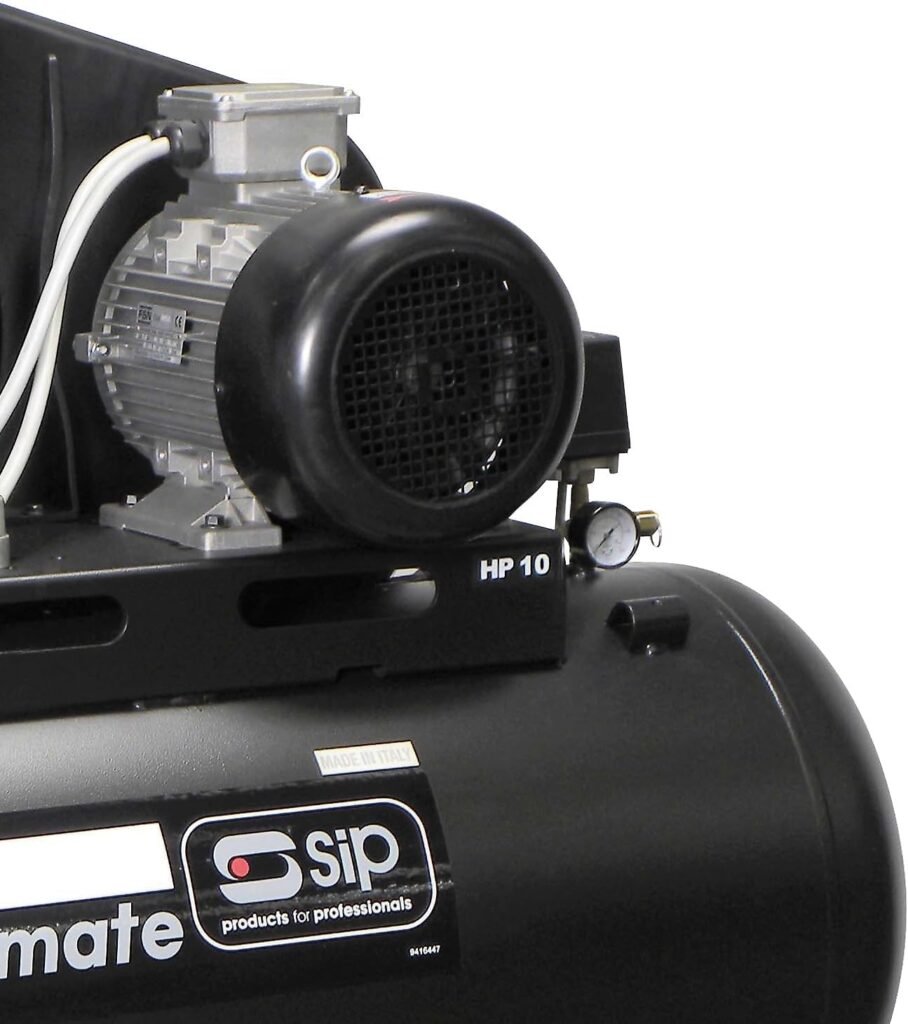
Ease of Use in Day-to-Day Operation
Power and capacity are great, but if a compressor is awkward to operate, we feel it quickly. The SIP Airmate TN10/270 is described as being designed with operational ease in mind, and that shows up in how we would use it every day.
This likely includes intuitive controls, clear gauges, and straightforward access points for daily checks. Once installed and wired in, operation becomes a routine part of starting our workday.
Practical Features That Matter to Us
While the full feature list is not detailed in the provided text, we can reasonably expect essential compressor features like:
- Clearly marked on/off switch
- Pressure gauges for tank and regulated output
- Safety valves and pressure relief
- Condensate drain on the tank
Combined with the belt drive and oil lubrication, the overall operational feel should be steady, predictable, and not overly noisy for its size and power.
Air Quality and Consistency for Paint Applications
Because the product description mentions paint spraying and airbrush use specifically, we know this compressor is aimed not only at mechanical and industrial work but also at finishing tasks where air quality plays a big role.
In paint shops, we care about three main factors: pressure stability, dryness, and cleanliness. This compressor primarily addresses the first one through its large tank and powerful motor, and it supports the others indirectly by using oil separation and by being compatible with external filtration.
Building a Reliable Painting Setup Around This Compressor
If our main focus is painting—automotive, furniture, or industrial coatings—we can use the TN10/270 as the backbone of our air system, while adding:
- A multi-stage air filter setup (particulate + coalescing)
- A refrigerated or desiccant dryer, depending on climate and budget
- Dedicated regulators near spray booths or working areas
With such a system, we get the benefit of large, stable air volume and pressure while protecting the finish from moisture and oil. That combination is what enables professional-level results on complex paint jobs.
Comparing the TN10/270 to Smaller Compressors
If we have only ever used smaller, portable compressors, moving to a unit like this will feel like a major upgrade. Instead of budgeting our air usage carefully and frequently waiting for recovery, we gain the capacity to work at a more professional rhythm.
Some of the differences we would notice include:
- Far less frequent pauses for tank recharge
- Ability to run multiple tools or larger guns without pressure collapse
- Greater suitability for multi-hour work sessions
When This Compressor Might Be “Too Much”
That said, there are situations where the TN10/270 might be more compressor than we actually need. For instance:
- A small home garage where we only occasionally inflate tyres and run a stapler
- Hobbyist setups without access to 3‑phase power
- Workflows where portability and compactness matter more than raw power
In those cases, the added cost and infrastructure might not be justified. But for a busy professional setting or a serious workshop that is growing fast, this model can be a future-proof foundation.
Noise, Comfort, and Workshop Environment
While no full-size compressor is truly quiet, belt drive units like this typically operate with a more controlled sound profile than many direct drive equivalents. We still need to plan for noise, but it should be more of a consistent hum and mechanical rhythm rather than harsh or high-pitched sounds.
In many workshops, the noise from tools like grinders and impact wrenches will actually be more intrusive than the compressor itself, especially if we house the compressor in a dedicated corner or room.
Considering Placement and Ventilation
To keep both noise and heat under control, we should think about:
- Positioning the compressor in a fixed spot away from main workstations
- Making sure the room has adequate ventilation so heat can dissipate
- Leaving clearance around the unit for airflow and maintenance access
By treating it like a stationary plant machine, we improve not only our comfort but also the service life of the compressor, as it will run cooler and cleaner.
Maintenance: What We Should Expect
Any oil-lubricated, belt drive compressor requires more involvement than a tiny oil-free portable, but the trade-off is longer life and more reliable performance. The key with the SIP Airmate TN10/270 is to build maintenance into our routine rather than treating it as an afterthought.
We can expect to handle tasks like:
- Checking and topping up compressor oil levels regularly
- Draining moisture from the tank daily (or using an automatic drain)
- Inspecting the belt for wear and correct tension
- Monitoring filters and replacing them as needed
How Regular Care Pays Off
By investing small amounts of time into these preventive tasks, we greatly reduce the chances of serious failures or unplanned downtime. A well-maintained compressor of this calibre can serve us for many years, which spreads its purchase cost across a long working life.
If we are running a professional shop, this reliability directly translates into fewer disruptions, better scheduling, and more predictable output.
Safety Considerations
Handling compressed air at 10 Bar / 145psi and working with a 400V 3‑phase motor calls for respect and proper safety practices. While modern compressors incorporate safety valves and protective features, final responsibility still lies with us.
Some basic practices that we should follow include:
- Ensuring all electrical work is done by qualified personnel
- Regularly testing safety valves and checking for leaks
- Not exceeding rated pressures or modifying safety systems
- Wearing appropriate hearing and eye protection when near tools and air outlets
Tank Safety and Longevity
The 270-liter tank is rated for the pressures involved, but over time condensation and corrosion can weaken any metal. This is why:
- Draining condensate daily is essential
- Visual inspections and scheduled professional checks matter
- We should never attempt unauthorized repairs to the tank itself
With that care, we maintain the structural integrity of one of the most critical components: the pressure vessel.
Cost, Value, and Long-Term Investment
While we do not have a specific price listed here, a compressor with 10hp / 7.5kW power, 270L capacity, and 42CFM output will naturally sit in a higher price bracket than smaller units. The real question for us is not just “How much does it cost?” but “What kind of value does it bring over time?”
If we are in an environment where air tools are core to our business—repairs, fabrication, painting, production—then a reliable, powerful compressor is not a luxury but essential infrastructure.
The Value of Reduced Downtime
Downtime caused by underpowered or unreliable compressors can quickly become more expensive than buying the right machine upfront. With a heavy-duty model like the SIP Airmate TN10/270, we are effectively buying:
- Fewer tool interruptions
- Less time waiting for recovery
- More consistent work quality
- Longer tool lifespan due to stable air supply
Viewed over several years, this can make the compressor feel less like a cost and more like a productive asset that supports every job we do.
Pros and Cons of the SIP Airmate TN10/270
To summarise things clearly, it is useful for us to weigh the advantages against the potential drawbacks, based on the features described.
What We Are Likely to Appreciate
- High power output (10hp / 7.5kW) for demanding tools and tasks
- Large 270-liter tank for steady airflow and reduced cycling
- Strong air delivery (around 42 CFM) suitable for paint spraying and industrial tools
- Belt drive design for smoother, quieter operation and better longevity
- Oil-lubricated system enhancing efficiency and reducing wear
- Designed for industrial, trade, and professional use, not just hobby work
- Versatility spanning from heavy air tools to more delicate airbrush work
Points We Need to Consider
- Requires 400V 3‑phase power, which not all premises have
- Physically larger and heavier than portable or mini compressors
- Needs regular maintenance (oil, belts, condensate drain) to stay in top shape
- Likely higher initial cost compared to hobbyist models
For many professional users, these drawbacks are acceptable trade-offs for the performance and reliability gained. For casual or light users, they may steer us toward a smaller, simpler compressor.
How This Compressor Fits into a Professional Workflow
If we picture a typical day in a busy workshop or body shop, we can see how the SIP Airmate TN10/270 would fit in. It is the machine that quietly builds and maintains the compressed air reservoir that every other tool depends on.
Throughout the day, we might:
- Run impact wrenches on multiple bays
- Use spray guns for priming and finishing
- Operate grinders, drills, and sanders
- Blow down parts and clean work surfaces
Building a System Around the TN10/270
To get the most from the compressor, we can think of it as the heart of an air system. Around it, we might add:
- Hard-piped main lines around the workshop
- Drop points with regulators and quick-connect couplings
- Centralized filtration and drying for paint zones
- Secondary small regulators for sensitive tools
With this configuration, we are not just owning a compressor; we are building a professional-grade compressed air infrastructure where every station can tap into consistent, powerful air when needed.
Our Overall Take on the SIP Airmate TN10/270
Putting all the details together, we end up with a clear picture: the SIP Airmate TN10/270 Belt Drive Air Compressor is designed as a robust, high-performance unit for serious users. It stands out through its combination of a 10hp / 7.5kW motor, a generous 270-liter tank, and approximately 42CFM air delivery at up to 10 Bar / 145psi.
We see it as a strong choice for workshops, garages, and professional environments that need dependable, heavy-duty compressed air every single day. Its belt drive and oil-lubricated design emphasize longevity and smoother operation, while its capacity and flow rate make it ideal for both air tools and paint-related work.
If our situation includes 3‑phase power availability and a steady demand for powerful, reliable compressed air, this compressor offers a compelling, long-term solution. It is not a casual purchase for occasional use, but for those of us running professional or ambitious workshop setups, it has the right blend of strength, stability, and versatility to form the backbone of our air system for years to come.
Disclosure: As an Amazon Associate, I earn from qualifying purchases.