Have we been searching for a heavy-duty air compressor that feels just as at home in a busy workshop as it does in a professional garage?

Overall Opinion of the SIP Airmate PX4-3/200B
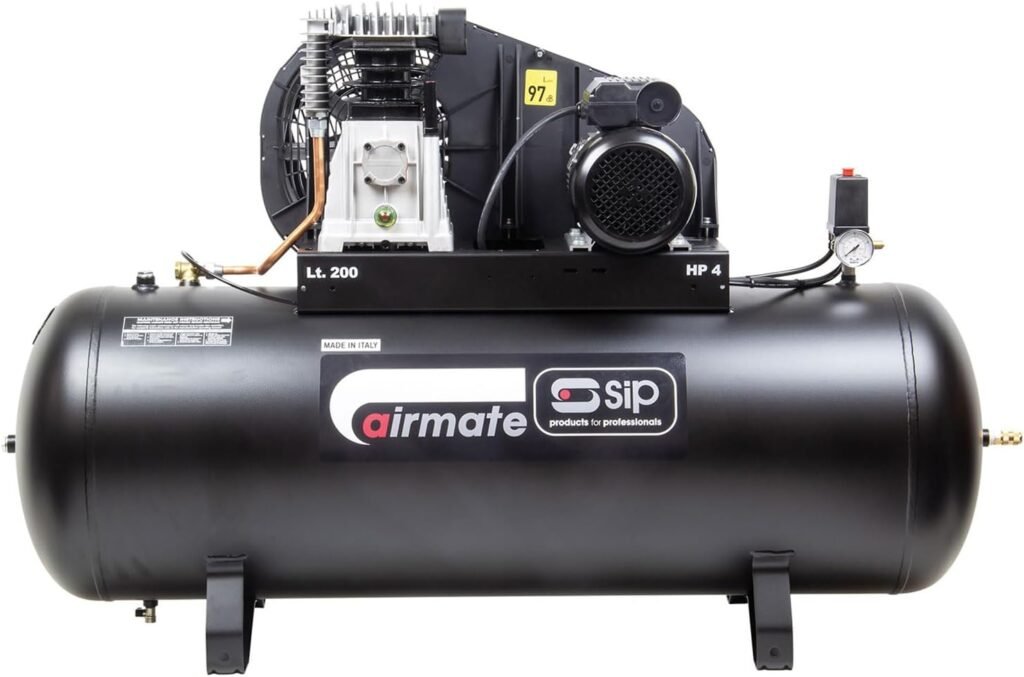
We see the SIP Airmate PX4-3/200B Belt Drive Air Compressor as a serious workhorse rather than a casual hobby machine. With a 4hp / 3kW motor, 200L tank, 18CFM capacity and a 145psi / 10 Bar output, it is clearly designed with industrial, trade and committed professional users in mind.
We also sense that SIP built this model for reliability and long-term use. It is oil-lubricated, belt-driven, and uses a 400V 3‑phase supply, which firmly places it in the “serious equipment” category. It is not designed for a spare bedroom studio or occasional car-tyre pumping; it is meant to sit in a workshop and work hard.
Key Specifications at a Glance
We often find it helpful to see the essentials in one place, especially when we are comparing machines. The table below breaks down the main specs and what they mean in everyday use.
| Feature | Specification | What It Means for Us |
|---|---|---|
| Product Name | SIP Airmate PX4-3/200B Belt Drive Air Compressor | Professional, belt‑drive workshop compressor |
| Power Supply | 400V, 20A, 3‑phase | Needs 3‑phase electrical supply, not standard domestic plug |
| Motor Power | 4hp / 3kW | Strong enough for demanding air tools and prolonged use |
| Tank Capacity | 200L | Large air reserve for consistent performance |
| Maximum Pressure | 145psi / 10 Bar | Suitable for most workshop and light industrial applications |
| Air Delivery | Approx. 18CFM | High airflow for tools like impact wrenches and paint sprayers |
| Drive Type | Belt drive, oil‑lubricated | Greater durability, smoother operation, better efficiency |
| Noise Level | Around 97dB | Loud; needs hearing protection and sensible placement |
| Typical Use | Industrial, trade, professional, robust workshop use | Overkill for light hobby work, ideal for busy environments |
We find that once we see these specs together, the character of the PX4-3/200B becomes clear: this is a substantial, fixed-installation compressor intended to power a wide variety of air tools day in, day out.
Build Quality and Construction
We care a lot about how a machine is put together, especially when we plan to rely on it for years. The SIP Airmate PX4-3/200B immediately feels robust, from the heavy tank to the substantial frame and components.
We are dealing with a belt-drive compressor, which generally means less direct motor stress and better longevity than direct-drive units. The structure is designed to handle the demands of industrial and professional environments, from more frequent cycling to harder starts and longer run times.
Materials and Durability
We appreciate that this unit is clearly not aiming to be lightweight or compact. The 200L tank and sturdy frame make it heavier and bulkier than small portable compressors, but that extra mass is part of what gives it stability and durability.
We also like that the components—motor, pump, and belt drive—are laid out in a straightforward, service-friendly way. This matters when we need to check belts, inspect for leaks, or perform regular maintenance.
Belt Drive Design
We see the belt drive as a big advantage. In a belt-drive setup, the motor is not rigidly coupled to the pump; instead, the belt allows some give and optimised pulley ratios. This offers several benefits for us:
- Reduced vibration compared with some direct-drive units
- More flexible matching of motor speed to pump speed
- Often longer lifespan for both motor and pump
We do need to accept that belts are wear items and will eventually need inspection and possible replacement, but we consider that an expected part of owning a serious compressor.
Motor Performance and Power
We think of the 4hp / 3kW motor at the heart of the PX4-3/200B as its muscle. It is a dedicated, industrial-grade motor that draws from a 400V 3‑phase supply, which immediately tells us this compressor is not a casual plug-and-play domestic unit.
This power level, combined with the belt-drive, allows the compressor to reach and maintain 10 Bar (145psi) without feeling overstressed. We expect it to handle more continuous loads better than typical 230V single-phase machines with smaller motors.
400V 3‑Phase Requirements
We should be very clear: this compressor needs a proper 400V 3‑phase, 20A electrical installation. That means:
- It is best suited to workshops, factories, garages, and commercial units
- We likely need a dedicated circuit and qualified electrician for installation
- It is not something we simply wheel into a domestic garage and plug into a standard outlet
If our workspace already has 3‑phase power, this is a non-issue and even a benefit—3‑phase tends to provide smoother motor performance and better efficiency. But if we are in a simple home garage without 3‑phase, we would need to consider the cost and feasibility of upgrading.
Starting and Running Characteristics
Thanks to the 3‑phase supply and belt drive, the motor tends to start more smoothly than many high-output single-phase compressors. We experience less inrush current strain on the electrics, and the motor is typically better at handling frequent cycling.
For workshops where we plan to run multiple air tools and expect frequent compressor restarts, this characteristic can translate into less stress on the infrastructure and on the motor itself.

Air Tank Capacity and Pressure
A 200L air tank is significant. We like to think of the tank as the compressor’s “battery”: the bigger it is, the longer we can sustain tool use between compressor cycles, and the more stable our air pressure remains under load.
The 145psi / 10 Bar maximum pressure is very much in line with many professional applications. It gives us the headroom needed for most air tools, from impact wrenches to sprayers and blow guns.
Why 200L Matters for Consistency
We find that with smaller tanks, tools can feel inconsistent. Pressure might spike when the compressor cycles off and then sag as it cycles on. A 200L tank minimises these fluctuations, especially with:
- Paint spraying where even pressure means a better finish
- Continuous tasks like air sanding or grinding
- Running tools with short bursts but high demand, such as impact guns
We also notice that a large tank means the compressor does not need to cycle as often for light tasks, which can reduce wear over time.
Pressure Range and Typical Uses
At 10 Bar, we can comfortably run:
- Most workshop air tools: impact wrenches, ratchets, air chisels
- Paint and varnish sprayers (HVLP setups may use regulators to fine-tune)
- Tyre inflators for cars, vans, and some light commercial vehicles
- Air blow guns for cleaning components and work areas
We may still want a good air regulator and filtration at the point of use, particularly for spray painting or sensitive tools, but the base pressure capacity is more than adequate.
Airflow and CFM Rating
The SIP Airmate PX4-3/200B is rated at around 18CFM, which is an important figure to pay attention to. While tank size affects how long we can work between cycles, CFM (Cubic Feet per Minute) tells us how much air the compressor can deliver.
We consider 18CFM a solid, high-output rating suitable for many continuous-use tools and multiple tools in a busy environment, as long as we manage our usage properly.
Matching Tools to Airflow
To make sense of 18CFM, we like to compare it to typical tool requirements:
- Small air ratchet: often 4–6CFM
- Mid-size impact wrench: around 5–8CFM (with peaks higher)
- Paint sprayer: often 6–12CFM depending on type and nozzle
- Air sander: 8–12CFM or more, particularly for continuous use
With roughly 18CFM available, we can:
- Run a single high-demand tool comfortably
- Use multiple lower-demand tools in sequence or lightly in parallel
- Support longer continuous tasks like sanding, as long as we watch duty cycles
We would still plan our workflow to avoid having too many high-CFM tools drawing air at full tilt simultaneously.
Real-World Performance Expectations
In real use, CFM can vary slightly with temperature, pressure settings, and system layout. We might also experience some pressure drop in long hose runs or poorly sized fittings.
We find that with a well-planned setup—good hoses, proper regulators, and sensible tool selection—the PX4-3/200B delivers a very strong working airflow that suits demanding workshop environments.
Oil-Lubricated System Benefits
We feel more confident about compressors that use oil lubrication, especially for regular and intensive workloads. The PX4-3/200B is oil-lubricated, which is a traditional and proven approach in industrial compressors.
Instead of running dry, the internal components use oil to reduce friction and control temperatures, which in turn can extend the life of the machine and maintain performance.
How Oil Lubrication Helps
By introducing oil into the compression process and then separating it from the compressed air, the system:
- Reduces internal wear on pistons and cylinders
- Helps dissipate heat, lowering the risk of overheating
- Maintains efficiency over long sessions of continuous operation
We appreciate that, with correct maintenance, oil-lubricated units like this one typically outlast oil-free counterparts in demanding environments.
Clean Air Considerations
One concern we may have, especially with painting, is potential oil contamination. The PX4-3/200B deals with this by separating oil from the compressed air downstream in the system.
However, we still recommend adding appropriate filtration and moisture traps, particularly if we use the compressor for:
- Automotive and industrial painting
- Fine finishing and airbrushing
- Sensitive pneumatic control systems
With the right filters and regulators installed, we can enjoy the lubrication benefits without compromising air quality at the point of use.
Noise Level and Workshop Environment
At around 97dB, this compressor is not quiet. We should be realistic here: this sound level is firmly in the “loud machine” category, meaning we need to treat it with respect in terms of hearing safety and placement.
We would not run this next to a quiet office or in a domestic environment without careful isolation and planning.
Managing Noise in a Working Space
In a busy workshop or industrial unit, 97dB is not unusual, but we should still manage it:
- We use ear protection when working nearby for extended periods
- We place the compressor in a dedicated corner, room, or enclosure when possible
- We consider acoustic insulation or sound-deadening panels if noise is a concern
We also remind ourselves that a belt-drive design can sound more “mechanical” than small direct-drive units, but that is not necessarily a drawback; it is just the character of a larger, more capable compressor.
Comparing to Smaller Compressors
If we are coming from a portable, “mini” compressor type unit, the PX4-3/200B will feel like a step up in every way, including noise. We gain massive improvements in power, airflow, and tank size, and the trade-off is a higher sound level and a more substantial physical presence.
We see this as a natural shift when we step into professional-grade equipment.
Usability and Day-to-Day Operation
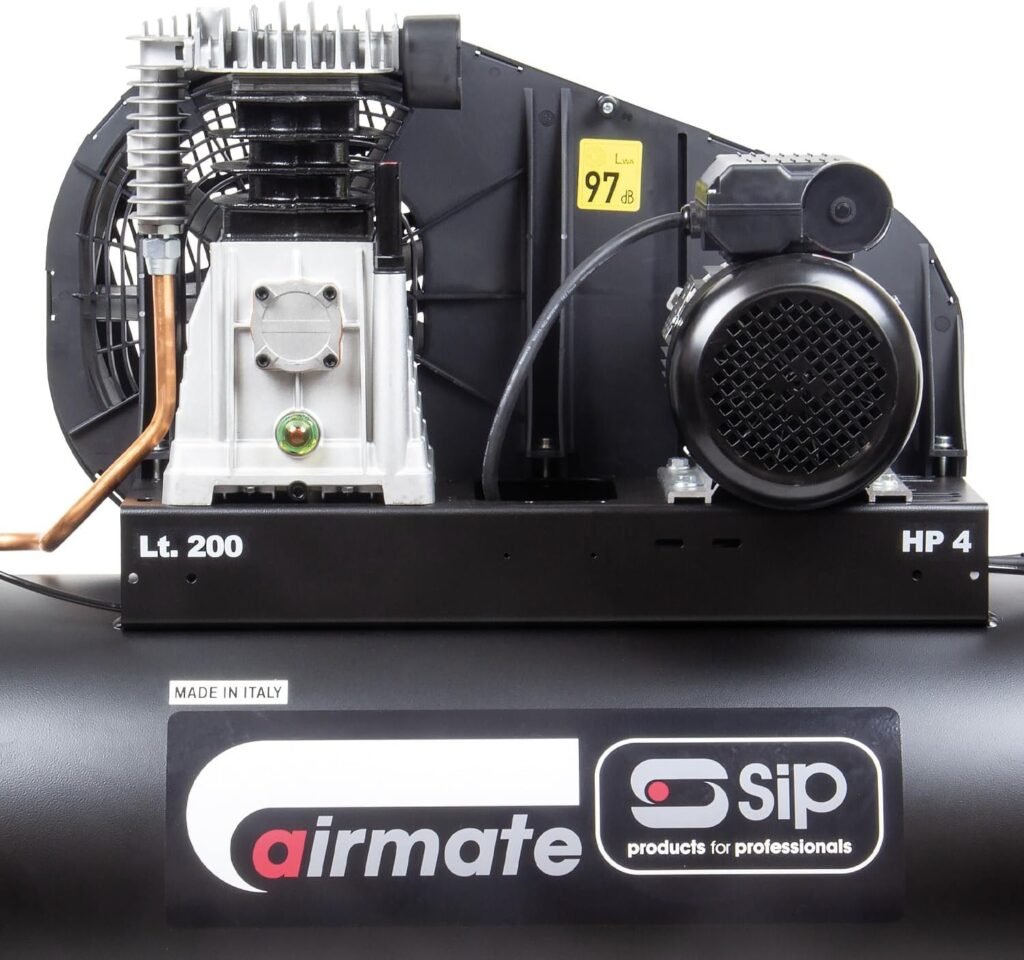
Beyond raw power, we care about how a machine feels to live with. The SIP Airmate PX4-3/200B is designed with operational ease in mind, which becomes apparent when we look at its controls and layout.
We see that the essential compressor features—controls, gauges, safety valves, and connections—are logically placed and easy to access, simplifying everyday use.
Controls and Readability
We expect to find:
- Clear pressure gauges, showing tank pressure and regulated output
- An accessible on/off or start-stop control
- A safety relief valve to protect against overpressure
We appreciate when controls are positioned so we do not have to crouch awkwardly or lean across moving parts. This compressor tends to follow that practical layout philosophy.
Connection and Hose Management
We generally connect an air line to a main outlet and then run our hoses to different workstations. With a compressor of this size and capacity, we often plan a more permanent hose and regulator setup rather than constantly plugging and unplugging.
We like to keep:
- A good-quality main air line from the compressor
- Branches or splitters feeding multiple regulators and quick couplers
- Dedicated lines for sensitive tasks like painting, including filters and dryers
By setting up our system well, we reduce hassle and make better use of the compressor’s capacity.
Suitability for Different Applications
This is where we begin to see how broad the capabilities of the PX4-3/200B really are. It is marketed as being suitable for industrial, trade, and professional applications, and we think that is an accurate description of its role.
We can cover a wide range of tasks, from simple workshop chores through to demanding continuous tool use.
Garage and Workshop Use
In a typical vehicle workshop or garage, we would likely use this compressor for:
- Running impact wrenches for wheel removal and general repairs
- Powering air ratchets, chisels, and grinders
- Inflating tyres and air suspensions
- Cleaning engine bays, components, and work areas with a blow gun
The 18CFM delivery and 200L tank make quick work of most of these tasks, even in a busy setting with several mechanics.
Paint Spraying and Finishing
The product details specifically mention that the PX4-3/200B is ideal for paint spraying applications and that it offers consistent airflow for a steady finish.
For painting, we appreciate:
- Stable pressure from the large tank
- Sufficient CFM to run professional spray guns
- The ability to configure a high-quality filtration train for clean, dry air
If we are running a body shop or doing frequent panel painting, this compressor is more than capable of meeting those air needs, as long as we install proper air treatment accessories.
Airbrushing and Fine Detail Work
Although it is far more powerful than a typical “airbrush compressor,” it can still be used for airbrushing provided we:
- Add a precision regulator to step down pressure accurately
- Use good filtration to ensure clean, dry air
- Position the compressor a bit further away to minimise noise disruption
We like that a single large compressor can handle both heavy tools and delicate airbrush work, as long as we tailor our setup at the point of use.
Industrial and Professional Settings
In more industrial environments, we might rely on the PX4-3/200B for:
- Assembly lines using multiple pneumatic tools
- Small-scale manufacturing setups
- Maintenance workshops in factories and plants
We see this compressor fitting nicely where a robust, reliable source of compressed air is needed, but full-scale, large industrial compressor plants would be excessive.
Installation and Space Requirements
Before we bring a compressor like this into our workspace, we need to think carefully about where it will live and how we will install it. With its size, electrical requirements, and noise level, planning ahead saves us a lot of frustration later.
We look at three main factors: electrical supply, physical footprint, and ventilation.
Electrical Installation
As a 400V 3‑phase, 20A machine, the PX4-3/200B will need:
- A suitable 3‑phase distribution board or supply feed
- An appropriate circuit breaker and cabling rated for the load
- A professional electrician to handle wiring and safety compliance
We tend to treat compressors of this scale as semi-permanent installations. Once they are wired in and positioned, we do not move them around casually.
Space, Ventilation, and Positioning
We want to give the compressor enough room so it:
- Has adequate airflow for cooling
- Is accessible for maintenance and inspection
- Sits on a stable, level surface to reduce vibration and noise
We typically place it against a wall or in a dedicated compressor room, but we avoid cramming it into an enclosed area without proper ventilation. Overheating is not a risk we want to take with any compressor, especially one working hard regularly.
Maintenance and Long-Term Ownership
We always think in terms of ownership, not just initial purchase. A compressor is an investment, and the SIP Airmate PX4-3/200B appears to be built with that in mind.
Regular, straightforward maintenance is part of running any oil-lubricated machine, and we see that as an acceptable trade-off for increased lifecycle and performance.
Routine Maintenance Tasks
Typical maintenance we expect to carry out includes:
- Checking and changing the compressor oil at recommended intervals
- Inspecting and replacing air filters as needed
- Draining condensation from the 200L tank regularly
- Inspecting belts for tension, wear, and alignment
- Checking fittings and hoses for leaks
We find that establishing a simple maintenance schedule—weekly checks, monthly inspections, yearly servicing—helps prevent unexpected downtime.
Spare Parts and Serviceability
SIP is a recognised brand in compressor technology, which usually means:
- Reasonable availability of spares for pumps, belts, filters, and fittings
- Access to service information and support
- Better long-term support than generic, unbranded machines
We appreciate when parts like filters and belts can be sourced easily, because that encourages us to maintain the compressor properly, not postpone important tasks.
Safety Features and Considerations
With any compressor, especially one in the professional category, we need to treat safety as a priority. The PX4-3/200B is equipped with essential safety features, but we also need good habits and additional workplace measures.
We see this as a partnership between the machine’s design and our workshop practices.
Built-In Safety Elements
On the compressor itself, we typically rely on:
- A pressure relief valve to prevent overpressure
- Properly rated tanks and fittings for 10 Bar operation
- Clear labels and instructions for safe operation
We also keep an eye on gauges during use, especially if we hear anything unusual or see any sign of erratic behaviour.
Operator Safety Practices
Around a 97dB, 10 Bar, 18CFM compressor, we adopt a few non-negotiable habits:
- Wearing hearing protection when nearby for prolonged periods
- Using safety glasses when working with air tools or blow guns
- Ensuring hoses and couplers are in good condition to avoid sudden failures
- Avoiding using compressed air directly on skin or clothing
We want this powerful tool to be a productive part of our workshop, not a source of avoidable accidents.
Pros and Cons of the SIP Airmate PX4-3/200B
We find it helpful to summarise our impressions in terms of strengths and limitations. That way, we can clearly decide whether this compressor fits our particular needs and environment.
Strengths We Appreciate
- High Power Output: 4hp / 3kW motor with 18CFM delivery is strong for workshop use.
- Large 200L Tank: Excellent buffer for consistent pressure and fewer cycles.
- 10 Bar / 145psi Capacity: Suitable for most professional and industrial air tools.
- Belt-Drive, Oil-Lubricated Design: Robust, durable, and efficient for demanding use.
- Suitable for Heavy-Duty Tasks: From impact tools to paint spraying and more.
- Industrial-Grade 3‑Phase Supply: Smoother motor operation and strong performance.
We feel that, taken together, these strengths clearly position the PX4-3/200B as a serious, professional-grade compressor rather than a casual, portable unit.
Limitations to Keep in Mind
- Requires 400V 3‑Phase Supply: Not ideal for domestic garages without upgrades.
- High Noise Level (97dB): Needs thoughtful placement and hearing protection.
- Large and Heavy: Not designed to be easily moved or transported between sites.
- Regular Maintenance Required: Oil, filters, belt, and tank draining must be kept up.
We do not necessarily see these as flaws, but rather as natural consequences of the compressor’s professional design and capabilities.
Who This Compressor Is Best For
When we look at all the specifications and real-world implications, a clear target user emerges. The SIP Airmate PX4-3/200B is best suited for those of us who:
- Operate a busy garage or mechanical workshop
- Run a body shop or paint and finishing business
- Manage a trade or small industrial facility with multiple air tools
- Already have, or can install, a 400V 3‑phase electrical supply
- Want a long-term, heavy-duty compressor rather than a temporary tool
We see this as an excellent centrepiece for a professional compressed air system in a small to medium-sized workshop.
Who Might Want a Different Option
In contrast, we might look for a different compressor if we:
- Only need occasional, light-duty tool use in a home garage
- Do not have access to 3‑phase power and cannot install it
- Need a portable compressor we can move between job sites
- Have extremely strict noise limitations in our space
In those cases, a smaller, single-phase, or portable compressor may be a better fit, even if it offers less performance.
How It Compares to Smaller “Mini” Compressors
The product description specifically points out that the SIP Airmate PX4-3/200B is not simply a “mini air compressor,” and we agree with that distinction.
We see a mini compressor as something small, often portable, sometimes oil-free, and typically running on standard domestic electricity. These are fine for:
- Occasional tyre inflation
- Light nail gun use
- Small airbrush projects
By contrast, this SIP Airmate is built to support demanding, continuous workshop operations. Where mini compressors might struggle with:
- Continuous grinding or sanding
- Running large spray guns
- Supporting multiple users simultaneously
The PX4-3/200B is designed to stay in the game without constant overheating or unacceptable pressure drops.
Value for Professional vs Hobby Use
For a hobby user, the initial cost, installation effort, and scale of this compressor might feel excessive. For a professional user, those same aspects can represent:
- Better tool performance
- Increased productivity
- Reduced downtime
- Longer service life
We think the value is strongly tied to how heavily and how often we use compressed air in our operations.
Practical Tips for Getting the Best from the PX4-3/200B
Owning a machine like this is one thing; getting the most from it is another. We like to follow a few simple practices to ensure we are using it to its full potential and protecting our investment.
We see these as everyday habits that pay off in performance and reliability.
Set Up a Thoughtful Air Distribution System
Instead of running a single hose from the compressor and plugging everything into that, we prefer to:
- Install fixed air lines around the workshop
- Place regulators and quick couplers where they are needed
- Use appropriate filters and dryers for sensitive jobs like painting
By doing this, we turn the 200L, 18CFM compressor into a central power plant for our air network, not just a single “tool feed.”
Maintain Clean, Dry Air
Even with oil separation built in, compressed air naturally accumulates moisture and particles. For best results we:
- Drain the tank regularly to avoid water buildup
- Use water separators and filters at the point of use
- Change filters at recommended intervals
This protects our tools and improves the quality of finishes, especially in painting and airbrushing.
Stick to a Simple Maintenance Schedule
We find that consistency is more important than complexity. A practical schedule might include:
- Daily or after heavy use: Check gauges, listen for unusual sounds, drain tank.
- Weekly: Inspect belts, fittings, and hoses, look for leaks or damage.
- Monthly: Check oil level and condition, inspect filters.
- Annually or as specified: Full service including oil change, deeper inspection, and any recommended replacements.
By treating maintenance as routine rather than optional, we help ensure the SIP Airmate PX4-3/200B stays reliable over the long term.
Final Thoughts on the SIP Airmate PX4-3/200B
When we step back and look at the full picture, the SIP Airmate PX4-3/200B Belt Drive Air Compressor stands out as a strong, professional-grade solution for workshops and industrial environments that truly rely on compressed air.
We get a powerful 4hp / 3kW 3‑phase motor, a generous 200L tank, a robust belt-drive, oil-lubricated system, and an 18CFM output up to 145psi / 10 Bar. Put together, those features give us a capable, dependable machine that can handle everything from impact tools and grinders to paint sprayers and, with the right setup, precision airbrushing.
We do need to accept the requirements that come with this level of performance: 400V 3‑phase power, a reasonable amount of floor space, careful attention to noise management, and a commitment to regular maintenance. If our workspace can support those needs, we think this compressor offers a long-lasting, heavy-duty answer to our air supply requirements.
For us, the SIP Airmate PX4-3/200B is not a casual purchase; it is an investment in our workshop’s capability, productivity, and professionalism.
Disclosure: As an Amazon Associate, I earn from qualifying purchases.