Have we ever wished our garage or workshop felt a little more “professional” every time we switched on the compressor?

Overall Thoughts on the SIP Airmate PX3/200-SRB
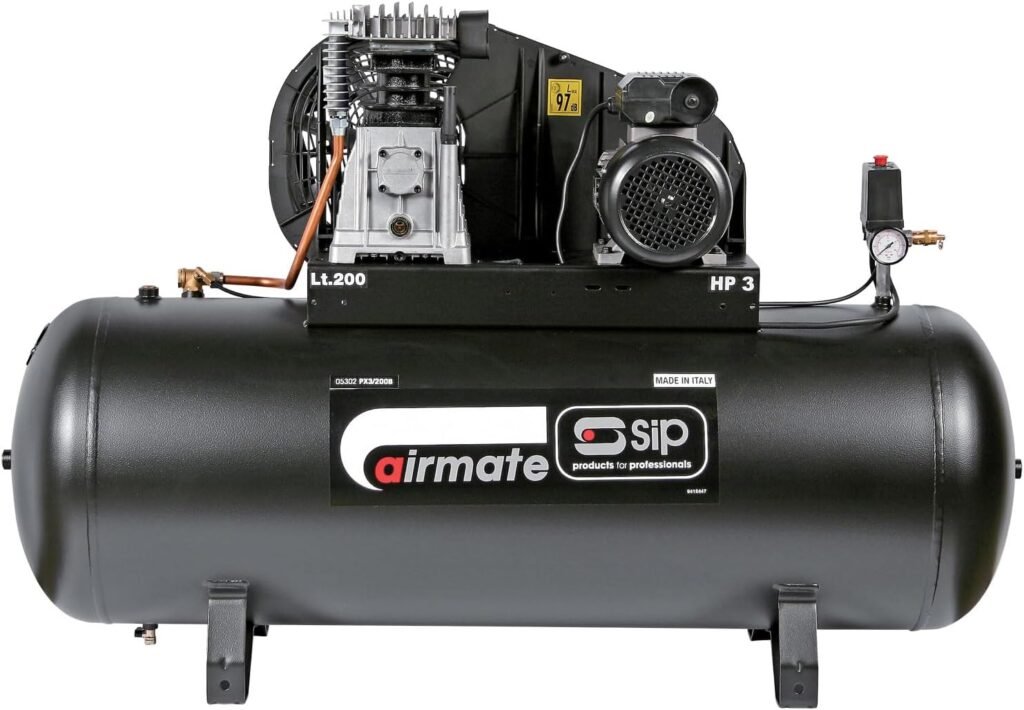
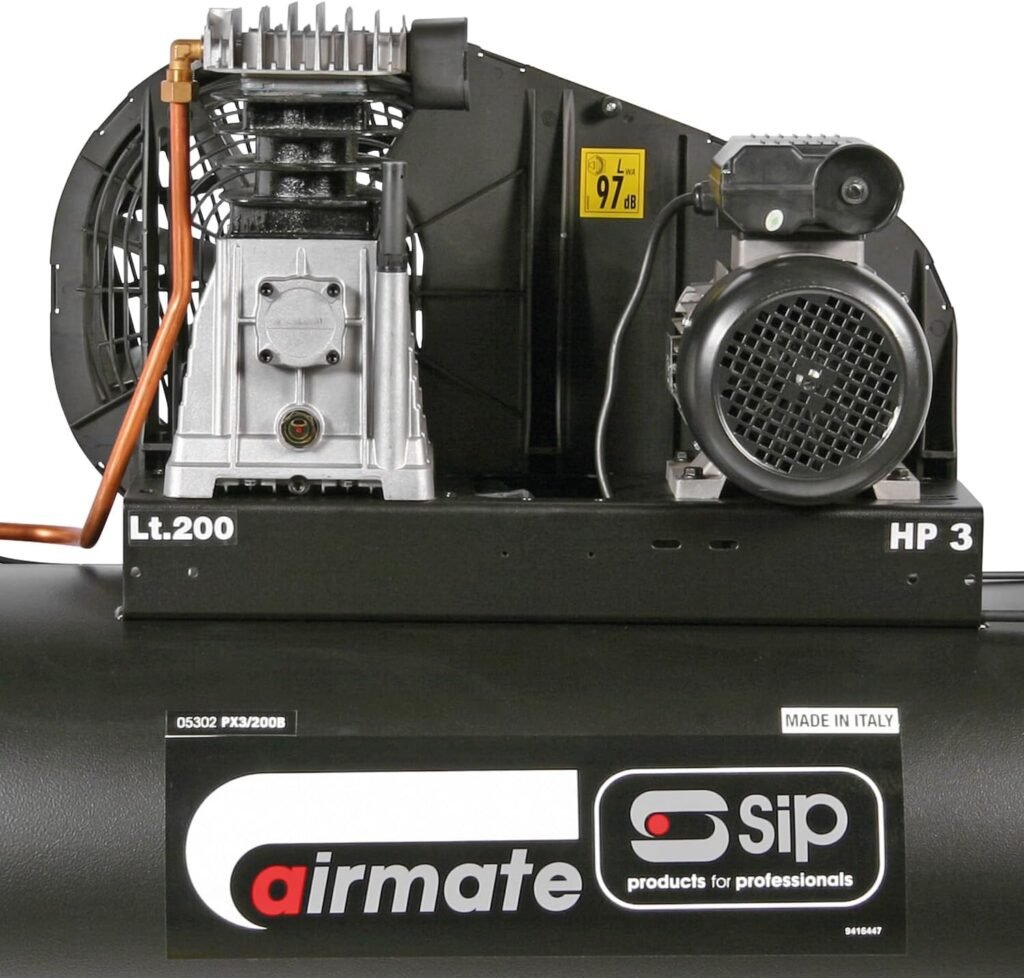
From our perspective, the SIP Airmate PX3/200-SRB Belt Drive Air Compressor, 230V 16A, 200L, 3hp / 2.2kW, 145psi / 10 Bar 16CFM 97dB feels like a serious bit of kit built for people who want more than a small hobby unit. It brings together power, capacity, and durability in a way that can genuinely transform how we work in a garage or workshop setting.
We see it as a compressor that bridges the gap between light DIY models and full-on industrial systems. It has the muscle to support air tools consistently, and the design clearly leans toward long-term use rather than occasional, gentle tasks.
Key Specifications at a Glance
It helps to see the main specs laid out clearly. Below is a breakdown of the most important details and what they mean for us in real use.
| Feature | Specification | What It Means for Us |
|---|---|---|
| Model | SIP Airmate PX3/200-SRB | A heavy-duty belt-driven compressor for garage, workshop, and light industrial use |
| Motor Power | 3hp / 2.2kW | Strong enough for a wide range of air tools and continuous tasks |
| Voltage / Current | 230V, 16A | Runs on standard UK 230V with a higher-amp supply for more power |
| Tank Capacity | 200L | Large storage for longer working cycles and fewer stops |
| Maximum Pressure | 145psi / 10 Bar | Suitable for most workshop tools, spraying, and inflating |
| Air Delivery (Approx.) | 16 CFM (Cubic Feet per Minute) | Good airflow for multiple tools or sustained use |
| Drive Type | Belt Drive | Smoother operation and better longevity than direct drive |
| Lubrication | Oil-lubricated | Less wear, cooler running, and more efficiency |
| Noise Level | 97dB (approx.) | Loud, as expected from a big compressor; hearing protection strongly advised |
| Application Range | Industrial, trade, professional, garage, workshop | Versatile use from DIY to business-level work |
These specs tell us we’re dealing with a robust, semi-professional machine rather than a basic portable compressor. It’s designed to be part of a serious working setup, not just an occasional helper.
Power and Performance in Everyday Use
The 3hp / 2.2kW motor is where this compressor really justifies its place in a workshop. It has enough grunt to run tools like impact wrenches, sanders, grinders, and spray guns with confidence. Rather than feeling like we must constantly pause and wait, the PX3/200-SRB is designed to keep up with us.
We also appreciate how the 16CFM airflow translates into real productivity. Running a single demanding tool feels smooth, and lighter tools barely make a dent in the compressor’s reserves. For anyone tired of “burst-only” compressors that never catch up, this is a noticeable step up.
The Advantage of a 200-Litre Tank
A 200L tank capacity fundamentally changes how we interact with compressed air. With smaller tanks, the motor is constantly cycling on and off, which can be distracting and inefficient. Here, we get more stored air, longer working stretches, and fewer interruptions.
In tasks like spraying or continuous sanding, the large tank helps maintain consistent pressure, which is especially important for quality finishes. A steady air supply means fewer pressure drops, less spluttering at the tool, and more predictable results.

Pressure and Airflow: What 145psi / 10 Bar and 16CFM Give Us
Many air tools are designed to run comfortably between about 90–115psi. With a maximum pressure of 145psi / 10 Bar, we have plenty of headroom to ensure the system can supply what our tools need without sitting right at its limit.
Combined with 16CFM air delivery, we can support:
- Impact wrenches and ratchets
- Air sanders and grinders
- Paint spray guns and airbrushes
- Blow guns and tyre inflators
This pairing of pressure and flow means the compressor is not just about short bursts. It’s particularly suitable where we need longer, continuous air demand, like bodywork or workshop production tasks.
Why Belt Drive Matters
The belt drive system is one of the main reasons we would place this compressor above many direct-drive models. Instead of the motor being connected directly to the pump, a belt transfers the power. That design gives us a few distinct advantages.
We usually see better longevity, smoother operation, and slightly more flexibility in tuning the speed of the pump vs the motor. It’s a more traditional “industrial” approach, aimed at durability and reduced stress on critical components.
Smoother Running and Reduced Wear
Because the belt absorbs some of the mechanical shock and allows the pump to run at a more controlled speed, wear and tear are reduced. The pump isn’t forced to spin at full motor speed all the time, which can shorten the life of direct-drive units.
This means that, over years of use, we can expect the SIP Airmate PX3/200-SRB to maintain performance more consistently and require fewer major repairs—assuming we carry out basic maintenance like belt inspection and tension checks.
Easier Maintenance and Potential Repairs
With a belt drive, replacing a worn belt is usually simpler and cheaper than replacing an entire direct-drive assembly. If we intend to use the compressor heavily, a design we can maintain makes a big difference to the total cost of ownership.
We are not locked into a “use it until it fails completely” situation. Instead, we can keep it running optimally by monitoring belts, pulleys, and lubrication levels. This is especially appealing for trade users or anyone planning to rely on the compressor for business.
Oil-Lubricated: Why That’s a Strength
This model is oil-lubricated, which is crucial for anyone who wants performance and longevity. During compression, mechanical parts generate heat and friction. By injecting oil into the compression process and then separating it from the compressed air, the system reduces wear and carries heat away.
Running cooler and smoother generally means fewer breakdowns and more stable performance. For us, that equals more time working and less time dealing with problems.
Clean Air Delivery Despite Oil Lubrication
Some of us might worry that oil lubrication means contaminated air, but in a well-designed compressor the oil is separated from the compressed air. We can still achieve clean output, especially when we pair the system with suitable filters and regulators at the outlet.
For paint spraying, airbrushing, or any application where air quality matters, adding water and oil separators or an air treatment setup will give us the finish and consistency we’re aiming for. The internal lubrication is about protecting the machine, not dirtying the air we use.
Build Quality and Robust Design
The SIP Airmate PX3/200-SRB is built as a heavy-duty machine, not a lightweight portable unit. The frame, tank, and fittings feel purpose-made for industrial and professional environments where equipment is expected to take some physical abuse.
We can treat it as a long-term investment rather than a consumable. With proper care, we’d expect it to outlast more basic models by a comfortable margin, especially under regular or demanding workloads.
Not Just Another “Mini” Air Compressor
Sometimes manufacturers loosely use the term “compressor” for small plug-in inflators or compact units. This is very different. The PX3/200-SRB is in a different category entirely.
It has the power, tank size, and construction typical of a serious workshop compressor. If we’ve previously used a tiny unit for inflating tyres or the odd nail gun, we should be prepared for a major step up in capability with this SIP model.
Use Cases: Where This Compressor Really Shines
To understand its value, we find it helpful to think about real-world tasks. The SIP Airmate PX3/200-SRB is suitable for a broad range of jobs across garages, workshops, and small industrial settings.
From panel beating and mechanical work to carpentry and metal fabrication, we can integrate it into many different workflows. It’s flexible enough for both occasional heavy jobs and routine daily tasks.
Ideal for Garage and Workshop Use
In a garage or workshop environment, this compressor can form the heart of our setup. Common tasks where it excels include:
- Removing wheels and suspension components with air impact wrenches
- Cleaning work areas, parts, and filters using blow guns
- Operating air ratchets, chisels, and drills
- Powering small sand-blasting or surface preparation tools
The reliable air supply makes the whole workspace feel more efficient. Instead of constantly switching between tools and waiting for pressure to build, we can keep our workflow steady and productive.
A Strong Option for Paint Spraying and Finishing
Paint spraying demands steady pressure and consistent airflow; fluctuations show up immediately in the finish. The 200L tank and 16CFM delivery make this model particularly attractive for spraying applications.
We can support typical HVLP or conventional spray guns as well as small airbrush systems. By pairing the compressor with a good regulator and moisture/oil traps, we can achieve smooth, even finishes on panels, furniture, machinery, or other projects.
Supporting Industrial, Trade, and Professional Applications
Because it’s robust and powerful, the PX3/200-SRB isn’t limited to hobby-level tasks. Trade users—mechanics, fabricators, body shops, and small manufacturers—can all integrate this model into their daily operations.
It is capable of supporting demanding tools and extended use, which makes it appropriate for professional settings. While it’s not the largest industrial compressor on the market, it hits a sweet spot where cost, performance, and size are all balanced.
Operational Ease and Everyday Convenience
Despite its power and capacity, the SIP Airmate PX3/200-SRB is designed to be straightforward to use. Operational ease is a key part of the appeal, especially when multiple people in a workshop will use the same machine.
We don’t need to be compressor experts to get good results. Once installed and correctly connected to the power supply, most of our daily operation comes down to simple controls, clear gauges, and basic safety awareness.
Controls, Gauges, and Adjustments
Typically, compressors of this type include:
- An on/off switch or control panel
- Pressure gauges for tank and outlet pressure
- A pressure regulator to set the working pressure for tools
- Safety valves and automatic cut-off systems
These features mean we can set up our desired working pressure, monitor the tank level, and allow the compressor to start and stop automatically as needed. The SIP design focuses on helping us optimise performance without adding unnecessary complexity.
Flexibility Across Different Tasks
Whether we are:
- Using it as a powerful source for a compressor air gun
- Running multiple tools over the course of a day
- Switching between airbrushing detail work and general workshop tasks
…the PX3/200-SRB is built to handle all of these scenarios. The large tank and continuous-duty focus give us the flexibility to change tools and tasks without constantly worrying about overloading the system.
Noise Levels: What 97dB Really Feels Like
The stated noise level is 97dB, which is unquestionably loud. That’s a level comparable to a motorcycle engine or a loud lawnmower operating nearby. We should consider noise as part of our planning, especially indoors.
In a busy workshop, that sound level may blend into the general background of tools and machinery, but it still calls for sensible hearing protection. For a home garage, we might want to locate the compressor away from the main working area if possible.
Managing Noise in Practical Ways
We can’t make a compressor of this size silent, but we can manage its impact:
- Wearing ear protection whenever the unit is operating
- Positioning it in a corner or a separate space if possible
- Ensuring the unit is properly mounted or placed on anti-vibration pads to reduce resonance
Understanding and planning around the 97dB rating helps prevent the noise from becoming a significant annoyance or, worse, a health issue over time.
Installation Considerations
Before buying, we should think about how and where we will install the SIP Airmate PX3/200-SRB. It’s a sizeable machine, with a 200L tank and a powerful motor, so it needs a stable base and the right electrical supply.
We want to ensure we can position it in a place that allows for safe access, adequate ventilation, and good hose routing to the areas where we’ll use the air tools.
Electrical Requirements: 230V, 16A
This compressor runs on 230V and draws up to 16A. That’s more than what standard 13A household plugs are designed for. In many cases, we’ll need a dedicated 16A socket or a professionally installed circuit.
It’s wise to consult a qualified electrician to confirm that our electrical system can safely support the compressor. Overloading existing circuits is not just inconvenient—it can be dangerous. With the right setup, though, the compressor will run efficiently and reliably.
Space, Ventilation, and Accessibility
Because it’s oil-lubricated and air-cooled, the unit needs room around it to allow heat to dissipate properly. We should avoid pushing it hard up against walls or enclosing it too tightly.
We’ll also want to ensure:
- The drain valve at the bottom of the tank is easy to reach
- We can access the oil fill and inspection points
- The belt guard and moving parts remain protected yet serviceable
Good positioning now pays off later, making routine checks and maintenance less of a chore.
Maintenance and Long-Term Care
Like all serious workshop equipment, the SIP Airmate PX3/200-SRB rewards those of us who look after it. A bit of regular maintenance helps keep performance strong and extends the life of not only the compressor but also the air tools it supports.
The core tasks are not complicated, but they are important. We can even schedule them along with other regular workshop maintenance to keep everything running smoothly.
Oil Checks and Changes
Because it uses oil lubrication, we need to:
- Check the oil level periodically
- Ensure we’re using the appropriate compressor oil type
- Change the oil at intervals recommended by the manufacturer or slightly earlier if the use is heavy
Clean oil helps maintain efficiency and reduces internal wear. Neglecting oil changes is one of the quickest ways to shorten a compressor’s life, so it’s worth making this a habit.
Draining the Tank and Managing Moisture
Compressed air always creates condensation inside the tank. If we never drain that moisture, rust can develop, which weakens the tank and contaminates the air supply.
We should:
- Open the drain valve regularly (often daily in humid environments or heavy use)
- Allow water and any sludge to escape fully
- Close the valve again before the next use
This simple act plays a big role in preserving the structural integrity of our 200L tank and keeping our air cleaner.
Belt Inspection and General Checks
For a belt-driven compressor, the belt is a key wear component. We should occasionally:
- Check belt tension and alignment
- Inspect for cracks, fraying, or glazing
- Listen for any unusual noise from the belt or pulleys
Alongside this, a quick overall visual and auditory inspection—looking for leaks, loose fittings, or abnormal vibrations—helps us catch issues early before they become costly problems.
Comparing It to Smaller Compressors
If we are upgrading from a compact or mini compressor, the PX3/200-SRB will feel like a huge leap forward. Smaller units tend to be limited to:
- Light inflating tasks
- Occasional nail gun use
- Very short bursts with low-demand tools
With this SIP model, we move into a different category. The 3hp motor and 200L tank unlock the ability to run “real” air tools properly and consistently, including for professional work.
We gain capacity, power, and endurance. Instead of working around the compressor, we can make the compressor work around us.
Who Is This Compressor Best For?
We can think about the ideal buyer for the SIP Airmate PX3/200-SRB in several categories. Matching our own needs with these scenarios can help us decide whether it suits our situation.
It is rarely the right tool for someone who just needs to pump a bicycle tyre once a month, but it can be perfect for those who are serious about workshop capability.
Great Fit for Enthusiast Garages and Workshops
If we are automotive enthusiasts with a well-equipped home garage, this compressor sits in a sweet spot. We can run bodywork projects, restoration tasks, and mechanical jobs with professional-level air supply.
We don’t have to limit ourselves to electric-only tools. With this unit, air tools become a realistic, everyday option, making many jobs faster and more satisfying.
Strong Choice for Trade and Small Business Use
For mechanics, fabricators, body shops, joiners, and other trades, this compressor offers a reliable backbone for daily operations. It is well suited to:
- Running multiple tools throughout the workday
- Supporting a small team using air at different times
- Handling more demanding applications like spraying, sanding, and grinding
We gain the robustness and design expected in a working environment without jumping to extremely large, complex compressed-air systems.
Possibly Overkill for Very Light Users
If we only need compressed air rarely—for example, inflating tyres or using a nail gun from time to time—this machine might be more than we realistically need. A smaller, simpler compressor would cover those tasks at lower initial cost and with less setup.
However, if we know we will grow into more serious projects over time, starting with a capable unit like this can save us from multiple upgrades in the future.
Strengths and Limitations Summarised
To make our decision easier, we find it helpful to pull together the main pros and cons of the SIP Airmate PX3/200-SRB as a workshop partner.
What We Are Likely to Appreciate
We benefit most from:
- Powerful 3hp / 2.2kW motor that can run demanding tools reliably
- Large 200L tank providing long working cycles and fewer interruptions
- Belt drive that promotes smoother operation and longer life
- Oil-lubricated mechanism for improved efficiency and reduced friction
- 10 Bar / 145psi pressure suitable for most automotive and workshop applications
- 16CFM airflow that supports continuous tool use and spraying
- Heavy-duty build designed for industrial, trade, and professional use
- Versatility across paint spraying, airbrushing, and general workshop or garage tasks
These strengths come together to create a compressor that feels at home in serious working environments.
Points We Need to Be Aware Of
We should also recognise potential limitations:
- Noise level at around 97dB is loud, so hearing protection and noise planning are important
- Electrical demand of 16A at 230V may require a dedicated circuit or socket install
- Physical size and weight mean we need a suitable fixed installation space rather than frequent moving
- Oil and belt maintenance require us to take basic care of the unit over time
None of these are unusual for a compressor of this capacity, but they are still practical details we must factor into our decision.
Getting the Most Out of the SIP Airmate PX3/200-SRB
Once we have the compressor installed and running, there are a few ways we can maximise its usefulness and ensure we’re getting full value from our investment.
Thinking about the whole air system—hoses, connectors, tools, and filtration—helps us turn the compressor into the heart of a truly capable workshop.
Pairing with the Right Air Tools and Accessories
To unlock its full potential, we can:
- Use quality hoses and fittings that can handle the pressure and flow
- Add regulators and filter units at key points in our system
- Choose air tools that match the compressor’s capabilities—especially for CFM demand
- Keep quick-connect fittings clean and in good condition to avoid leaks
By treating air as a system rather than just the compressor alone, we reduce waste, improve tool performance, and keep our working environment safer and more efficient.
Setting Up for Paint Spraying and Airbrushing
For spraying tasks in particular, a few additions make a big difference:
- Water separators to remove moisture
- Oil traps or coalescing filters to catch remnants of lubrication oil
- Fine regulators close to the spray gun for precise pressure control
With these in place, the SIP Airmate PX3/200-SRB can serve as a reliable core for a painting setup, delivering consistent air that supports high-quality finishes.
Final Verdict: Is the SIP Airmate PX3/200-SRB Right for Us?
When we look at everything together—the 3hp / 2.2kW motor, 200L tank, belt drive, oil lubrication, and suitability for industrial, trade, and professional use—the SIP Airmate PX3/200-SRB clearly positions itself as a heavy-duty workshop compressor rather than a casual tool.
We see it as an excellent fit for:
- Serious home garages and workshops
- Trade professionals and small businesses
- Anyone who needs reliable air for tools, spraying, and continuous workloads
If our needs are light and occasional, it may be more power and capacity than we truly require. But if we are building or upgrading a workspace where compressed air will be used regularly and seriously, this model offers impressive capability and value for its class.
In our view, the SIP Airmate PX3/200-SRB Belt Drive Air Compressor is a robust, hardworking choice that can anchor a proper workshop air system for years, provided we give it the straightforward care and installation it deserves.
Disclosure: As an Amazon Associate, I earn from qualifying purchases.