Have we ever wished our workshop air compressor could handle everything from delicate paintwork to demanding air tools without breaking a sweat?
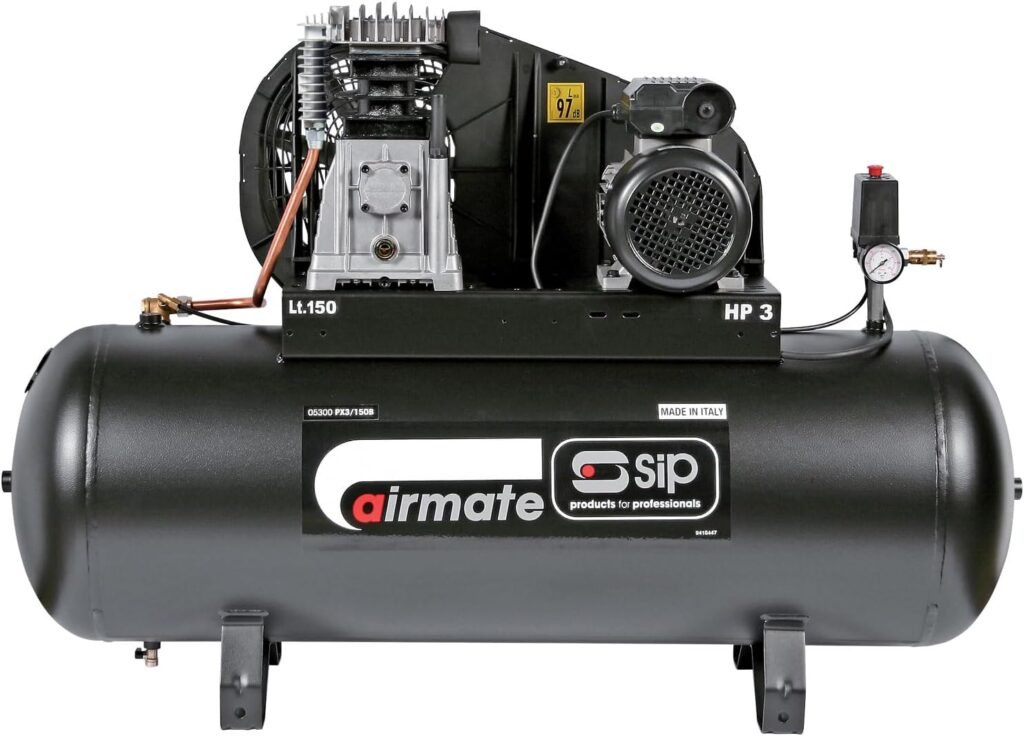

What Is the SIP Airmate PX3/150-SRB Belt Drive Air Compressor?
When we look at the SIP Airmate PX3/150-SRB, we are dealing with a serious workshop machine rather than a small DIY gadget. It is a belt-drive electric air compressor running on 230V, with a 3hp (2.2kW) motor, a 150-liter air tank, and a maximum pressure of 145psi (10 bar).
This model is clearly built with garages, workshops, and professional users in mind. At the same time, it remains accessible enough for serious DIY enthusiasts who want a reliable, long-term compressor that feels like proper industrial equipment.
Key Specifications at a Glance
Before we discuss how it behaves in real situations, it helps to see the core numbers. These tell us quickly if it fits our power supply, space, and performance needs.
Main Technical Specs
We often have to cross-check specs from multiple sources, so putting them together in a simple format can save time. Below is a summary table of the main details that matter for choosing the right compressor for our setup.
| Feature | Specification |
|---|---|
| Product Name | SIP Airmate PX3/150-SRB Belt Drive Air Compressor |
| Power Supply | 230V, 16A |
| Motor Power | 3hp / 2.2kW |
| Tank Capacity | 150 liters |
| Maximum Pressure | 145psi / 10 bar |
| Air Delivery (Approx.) | 16 CFM (cubic feet per minute) |
| Drive Type | Belt drive |
| Lubrication | Oil-lubricated |
| Intended Use | Garage, workshop, industrial, trade, and professional applications |
| Noise Level | Approx. 97 dB |
| Typical Applications | Air tools, paint spraying, air guns, airbrush work, general compressed air |
These specs immediately signal that we are not dealing with a tiny portable unit. The 150L tank, 3hp motor, and 16CFM capacity are aimed at tasks where continuous airflow and reliability really matter.
Design and Build Quality
Robust Construction for Demanding Work
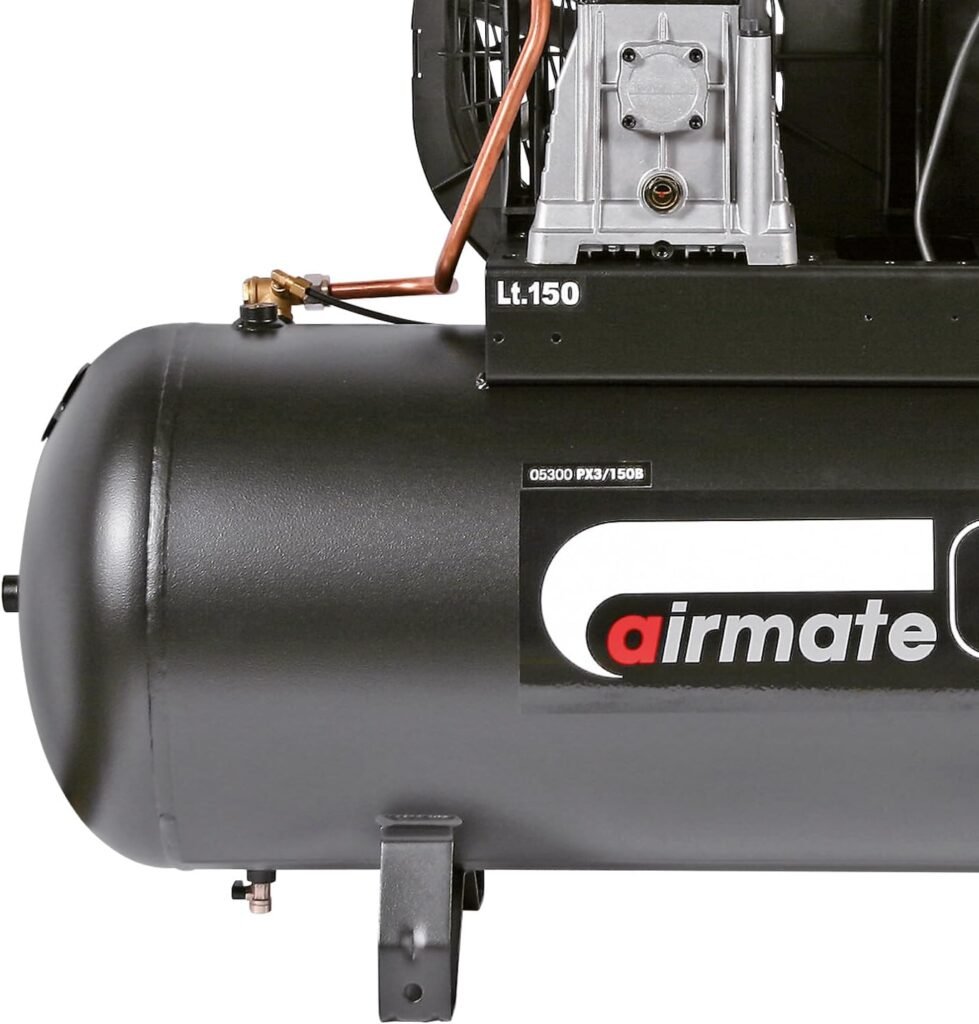
We usually judge an air compressor’s quality by how it feels in person: the sturdiness of the frame, the fittings, and the overall build. The SIP Airmate PX3/150-SRB is positioned as a heavy-duty machine, and the design reflects that.
The main tank is solid and substantial, with a layout clearly geared toward workshop floors rather than light household storage. It is the kind of compressor we roll into a corner of our garage or workshop and treat as a permanent fixture, not something we casually carry up a flight of stairs.
Belt Drive Layout
The belt drive design is a classic choice for compressors that need to balance power, efficiency, and longevity. Rather than having the motor directly connected to the pump, a belt connects the two.
This has several advantages for us:
- It allows the pump to run at a more optimal speed.
- It reduces strain on the motor.
- It contributes to smoother operation and improved lifespan.
The exposed or semi-guarded belt is usually housed in a protective cover, which we should keep in place for safety. The layout is easy enough to inspect for belt wear or tension checks, which is helpful in regular maintenance routines.
Power and Performance
3hp / 2.2kW Motor: Enough Muscle for Real Work
The 3hp / 2.2kW motor hits a sweet spot for workshop use. This is not a tiny motor that struggles with higher-demand tools, but it is also not so large that we need industrial three-phase power.
On a 230V 16A supply, we get plenty of power to run tools commonly found in small garages, body shops, and general workshops. When we pair this with the 150L tank, we get both a solid airflow delivery and a buffer of stored compressed air for demanding bursts.
16CFM Airflow: What That Means in Practice
The rated airflow at around 16CFM makes this model competitive for a wide range of air tools and pneumatic equipment. For many of us, CFM is the main figure we compare when choosing a compressor.
In day-to-day use, this level of airflow is suited to:
- Impact wrenches (within reasonable size ranges)
- Air ratchets
- Spray guns
- Nail guns
- Blow guns and air dusters
- Tyre inflators
- Many small to medium air tools
We still need to match each tool’s specific CFM requirements, but this compressor’s output should comfortably handle most light to medium professional tasks and extended DIY projects.
Tank Capacity and Pressure
150-Liter Tank: Why It Matters
The 150-liter tank is a key strength of the SIP Airmate PX3/150-SRB. Larger tanks provide:
- Longer run time for tools before the compressor cycles back on
- More stable pressure during continuous operations
- More flexibility for tasks like spraying and sanding
In practice, the 150L capacity allows us to run air tools for longer bursts without the motor running constantly. This can reduce wear and also makes for a smoother workflow because we are not stopping and starting as often.
145psi / 10 Bar Maximum Pressure
With a maximum pressure of 145psi (10 bar), we are looking at a compressor that comfortably supports most workshop tools and paint spraying setups. The 10 bar ceiling gives us enough headroom to maintain good working pressure even as the tank cycles.
For example, many tools are happy in the 90–115psi range, which this compressor can supply consistently once properly regulated. The pressure regulator and gauges (typically included on this kind of unit) help us fine-tune output for each job.

Oil-Lubricated Operation
How Oil Lubrication Helps
This model is oil-lubricated, which is a hallmark of higher-performance compressor designs that prioritize longevity and efficiency. Oil-lubricated compressors work by injecting oil into the compression process to reduce friction between moving parts.
For us, this brings several benefits:
- Lower friction, which means smoother mechanical motion.
- Better heat dissipation during operation.
- Increased efficiency and a longer service life when maintained correctly.
Clean Air Even with Oil
One common concern is whether oil-lubricated units produce oily air. In properly designed systems such as this, the oil is separated from the compressed air before it reaches our tools or spray guns.
We can further refine air quality using:
- Inline filters
- Water traps
- Regulators
This is particularly important for painting and airbrushing, where contamination can ruin finishes. So we get the reliability of oil lubrication while still producing clean air suitable for paint and finishing work, provided we use appropriate filtration.
Noise Level: 97 dB in Real Terms
What 97 dB Actually Feels Like
At around 97 dB, this is not a quiet compressor. In fact, this noise level is consistent with many traditional belt-drive workshop compressors. It is loud enough that we will want hearing protection if we are working near it for extended periods.
In a typical garage or workshop, 97 dB will sound like:
- A very loud conversation range at close distance.
- Similar to many standard industrial machines.
- Noticeable even from another room, depending on walls and distance.
Managing Noise in the Workshop
While the noise is part of the heavy-duty package, we can manage it with some basic habits:
- Positioning the compressor in a corner or a separate area if possible.
- Using anti-vibration mounts or pads under the feet.
- Wearing ear defenders during long sessions.
- Keeping doors closed when operating it in a dedicated room.
We accept the noise as a trade-off for solid performance, but it is something to be aware of if our working environment is small or shared.
Ease of Use and Everyday Handling
Controls and Basic Operation
The SIP Airmate PX3/150-SRB is designed with operational simplicity in mind. While we still need to follow safety and setup instructions carefully, the core controls are straightforward.
We typically find:
- An on/off switch positioned for easy access.
- Pressure gauges to show tank and regulated output pressure.
- An adjustable pressure regulator.
- Standard output fittings for quick-connect couplers.
This layout means that once we have it in place and properly wired or plugged into a suitable 16A supply, running it day to day is simple: power on, let it build up pressure, set our desired outlet pressure, connect the tool, and start working.
Mobility and Footprint
This is not a compact mini compressor, so we should expect some weight and size. Usually, a 150L belt-drive unit is mounted on wheels with a handle to help us move it around the workshop.
We should think of it as:
- Movable within a single workspace.
- Not ideal for frequent transport between sites.
- Better treated as a semi-fixed installation in a garage, unit, or shop.
If we plan to use it in just one space, this is ideal. For mobile tradespeople needing to carry compressors between vehicles and different sites daily, a smaller unit might be better suited.
Versatility for Different Applications
Garage and Workshop Tools
For general garage use, this compressor is very well suited. We can:
- Run impact wrenches for wheel nuts and suspension work.
- Use air ratchets for tight engine bay bolts.
- Operate air blow guns for cleaning filters, benches, or machinery.
- Power staplers or nail guns for carpentry work.
The 16CFM airflow and big tank mean we are not constantly waiting for the compressor to catch up, especially for tasks that demand high bursts of air.
Paint Spraying and Finishing
The product especially highlights paint spraying applications, and that makes sense given its combination of capacity, pressure, and oil-lubricated design.
For paintwork we can:
- Use conventional spray guns with steady, consistent pressure.
- Fine-tune outlet pressure for base coats, clear coats, and primers.
- Maintain a consistent airflow, which is critical for an even finish.
Paired with suitable filters and moisture traps, we can support automotive painting, furniture spraying, and general finishing tasks. The 150L tank helps avoid pressure dips that can cause inconsistent atomization.
Airbrush Work and Lighter Precision Jobs
It might sound like overkill, but we can also use it for smaller airbrush projects. This is where careful pressure regulation and good filtration matter.
For delicate work:
- We dial down the pressure to match airbrush specs.
- We use appropriate regulators and fine filters.
- We appreciate the large tank for ultra-stable delivery.
We gain rock-solid consistency compared with small hobby compressors, though we do trade off noise and physical size.
Industrial, Trade, and Professional Use
Built for Frequent Use
SIP positions the Airmate PX3/150-SRB firmly in the heavy-duty category. While not the largest compressor in the professional world, it is certainly capable of supporting:
- Small industrial units.
- Vehicle workshops.
- Fabrication shops.
- Trade users needing reliable compressed air daily.
The combination of belt drive, oil lubrication, and robust construction supports continuous or frequent cycling in a workday, assuming we follow the correct duty cycle and maintenance guidelines.
Not Just a “Mini” Compressor
Marketing for this model emphasizes that it is more than just a mini air compressor, and that is accurate. This is not the kind of lightweight, compact unit we grab for an occasional tyre top-up.
Instead, we are looking at:
- A machine that can anchor our air system.
- A foundation for multiple tools over the course of a typical workday.
- An upgrade path if we previously used smaller DIY compressors that struggled under load.
In short, if we are serious about our workshop and expect to rely on pneumatics, this is a machine designed to meet those expectations.
Reliability and Durability
Engineered for Longevity
The belt-drive and oil-lubricated design, combined with a solid tank and sturdy fittings, contribute to a compressor made to last. When we treat it as a long-term investment, we want something that will run reliably for years if maintained properly.
Key durability aspects we benefit from:
- Reduced strain on the motor due to belt drive.
- Improved lubrication of moving parts.
- A heavy-duty tank rated for 10 bar operation.
- Components chosen for frequent cycling.
Maintenance and Care
To keep it performing well, we need to follow a routine maintenance schedule. Typical tasks include:
- Checking and topping up compressor oil.
- Draining condensation from the tank regularly.
- Inspecting the drive belt for wear or cracking.
- Checking fittings, hoses, and connections for leaks.
- Keeping the unit clean and well-ventilated.
These steps do not take long, but they have a huge impact on how long the compressor will last and how well it performs over time.
Safety Considerations
Operating a 230V 16A Compressor
We should remember that this unit requires a 16A supply at 230V. This is higher than a typical 13A domestic plug in many regions, so:
- We may need a dedicated circuit or socket.
- We should consult a qualified electrician if we are unsure about our setup.
- We should avoid using long underspecified extension leads.
Proper electrical installation is vital for both safety and performance, as undervoltage or poorly rated circuits can lead to tripping, overheating, or even damage.
Pressure, Heat, and Moving Parts
Like all compressors of this class, the SIP Airmate PX3/150-SRB has components that get hot, parts that move, and a tank holding high-pressure air.
We protect ourselves by:
- Keeping guard covers on the belt and pulleys.
- Allowing the compressor to cool before touching hot surfaces.
- Never modifying safety valves or tampering with pressure switches.
- Using the unit only within recommended operating limits.
By following the user manual and treating the machine with respect, we can run it safely alongside other workshop equipment.
Pros and Cons of the SIP Airmate PX3/150-SRB
Main Advantages
From a practical standpoint, this compressor offers several strong benefits for us:
-
High capacity and strong airflow
The 150L tank and 16CFM output give us plenty of air for demanding work, making it a robust choice for serious users. -
Belt-drive and oil-lubricated design
These features contribute to durability, smoother operation, and an extended service life with proper maintenance. -
Suitable for a wide range of tools
From air guns and impact wrenches to spray guns and even airbrushes, we can use this as a universal workshop compressor. -
Professional-grade build quality
The overall construction is geared towards industrial and trade use, making it solid enough for daily use. -
Consistent air delivery for paintwork
The combination of power and tank size supports even, stable airflows needed for high-quality painting and finishing.
Potential Drawbacks
No compressor is perfect for everyone, and there are some considerations that might matter depending on our situation:
-
Noise level at around 97 dB
It is loud. We should be prepared to use hearing protection and plan the compressor’s placement carefully. -
Weight and size
The 150L configuration is not particularly portable. We can move it around the workshop, but frequent transport between locations is not ideal. -
Requires a 16A supply
This may require electrical work or a dedicated line in some setups, especially if we are upgrading from a small plug-in 13A unit. -
Maintenance needs
Oil changes, belt checks, and regular tank draining are essential. For us, this is standard for a serious compressor, but it is more than a simple plug-and-forget device.
Who Is This Compressor Best Suited For?
Ideal Users and Environments
The SIP Airmate PX3/150-SRB is best for those of us who:
- Run a garage or workshop and need reliable air every day.
- Carry out automotive repairs, restoration, or bodywork.
- Use air tools frequently and need enough airflow to prevent downtime.
- Work with paint spraying where consistency and pressure stability are essential.
- Prefer investing in a serious compressor once, rather than repeatedly upgrading from smaller units.
If we are building or upgrading a workshop and want a central compressor that can handle a variety of demanding tasks, this model fits that role well.
Less Ideal Use Cases
On the other hand, this compressor might not be the best fit if we:
- Only need to inflate tyres occasionally or use a blow gun once in a while.
- Work in a very small space where noise is a major issue.
- Need a truly portable unit for frequent site-to-site work.
- Do not have the ability to install or use a 16A 230V circuit.
In these cases, a smaller portable compressor or a quieter specialist model might be better aligned with our needs.
Comparing with Smaller “Mini” Compressors
Where Smaller Units Fall Short
Many of us have tried small, portable “mini” compressors before. They are great for light tasks, but they can struggle with:
- Sustained air tool use.
- Continuous paint spraying or sanding.
- Maintaining steady pressure under sustained load.
- Long sessions in professional environments.
We often end up waiting for the tank to refill, and the motor runs almost constantly when we ask too much of them.
How the SIP Airmate PX3/150-SRB Steps Up
By contrast, the Airmate PX3/150-SRB brings:
- A significantly larger tank, giving more runtime before refill is needed.
- A more powerful 3hp motor, so refills are faster and airflow is higher.
- A build quality that stands up to daily use in more demanding settings.
This machine occupies a different category entirely. It is not a gadget but a central piece of workshop infrastructure.
Using the Compressor for Paint Spraying
Consistent Pressure for Quality Finishes
Paint spraying is very sensitive to pressure and airflow. Inconsistent output can lead to issues like orange peel, runs, and uneven coverage. This compressor’s 150L tank and 16CFM capacity work together to deliver more stable pressure over extended spraying sessions.
We gain:
- Better control over atomization.
- Smoother layers and more uniform coats.
- Less risk of performance dropping mid-job.
Setting Up for Best Results
To get the most from this compressor for paintwork, we should:
- Use a good quality regulator and gauge near the gun.
- Install moisture and oil filters in the line.
- Set our working pressure according to the spray gun’s specifications.
- Allow the tank to reach full pressure before starting.
With these steps, we can transform the compressor’s raw power into a refined tool for high-quality finishing, from car panels to furniture.
Comfort and Workflow in Daily Use
Starting, Stopping, and Cycling
In normal operation, we:
- Switch on the compressor.
- Let it fill the tank to the pressure cut-out level.
- Use air until the pressure drops to the cut-in threshold.
- Allow it to cycle as needed while we keep working.
The pressure switch handles this automatically, so we are free to focus on our tools. The key is to let the compressor rest occasionally if we reach its duty cycle limits and to keep the area around it free from obstructions.
Integrating into a Tool System
Many of us use air as one part of a broader tool system. This compressor integrates cleanly with:
- Hose reels mounted on walls or ceilings.
- Quick-release connectors for switching tools.
- Multiple workstations fed from the same tank (within reason).
By organising our hoses and outlets thoughtfully, we can turn the SIP Airmate PX3/150-SRB into the backbone of a very efficient workshop layout.
Long-Term Ownership Considerations
Energy Use and Operating Cost
Running a 2.2kW motor repeatedly does use a noticeable amount of electricity. However, compared with constant strain on a small underpowered unit, a properly sized compressor like this can actually be more efficient for serious workloads.
We reduce wasted runtime by:
- Using the right pressure for our tools rather than always running high.
- Checking for leaks in hoses and fittings.
- Allowing the tank to reach pressure and switching off when not needed.
Over time, the reliability and productivity gains often outweigh the operating costs for users who rely on compressed air regularly.
Spare Parts and Support
A key advantage of choosing a brand with established workshop credentials is parts availability and support. Belts, filters, and oils are standard consumables, and having a well-known model makes it easier to find compatible components and service information.
This is not a throwaway device. With basic care, replacement parts, and periodic servicing, we can keep it working for many years.
Summary: Is the SIP Airmate PX3/150-SRB Right for Us?
When we assess the SIP Airmate PX3/150-SRB Belt Drive Air Compressor as a whole, we see a machine designed for serious, ongoing use in garages, workshops, and professional environments. Its combination of a 3hp / 2.2kW motor, 150-liter tank, 145psi (10 bar) maximum pressure, and around 16CFM airflow makes it suitable for a wide range of air tools and applications from impact wrenches to high-quality paint spraying.
We gain:
- Heavy-duty build and belt-drive reliability.
- Oil-lubricated performance with clean air output when properly filtered.
- Strong, consistent airflow and pressure for demanding tasks.
- Versatility spanning industrial, trade, and advanced DIY needs.
We need to accept:
- A high noise level of around 97 dB.
- A larger footprint and weight that favor fixed workshop use.
- The requirement for a 230V 16A supply and regular maintenance.
If our goal is to have a dependable, long-lasting compressor that can genuinely support serious workshop activity, this model is a compelling choice. It stands as a robust central machine for anyone who wants to step beyond small hobby compressors and run their air tools, paint spraying, and workshop operations with confidence and consistency.
Disclosure: As an Amazon Associate, I earn from qualifying purchases.