Have we ever had a perfectly good air compressor sitting useless because a small control part failed at the worst possible time?
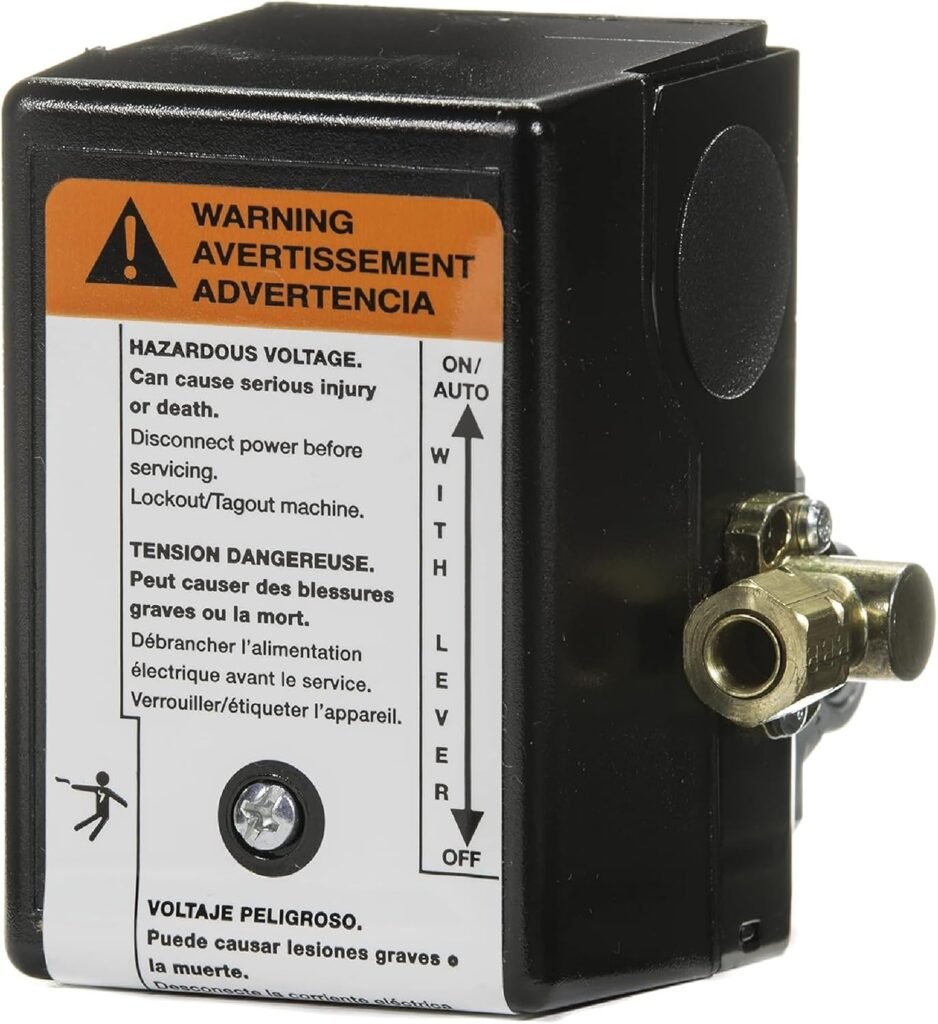

Why a Reliable Pressure Switch Matters More Than We Think
When we rely on a compressor for work, maintenance, or serious DIY projects, the pressure switch quietly becomes one of the most important parts on the entire unit. It tells the compressor when to start, when to stop, and helps protect the system from running beyond its intended pressure range.
The Ingersoll-Rand 23474570 Pressure Switch for Two Stage Compressor is built to step into that critical role, especially on certain Ingersoll Rand models. When it is installed correctly, it restores automatic operation, prevents over-pressurization, and helps the compressor run within safe and efficient limits.
What the Ingersoll-Rand 23474570 Pressure Switch Actually Is
This pressure switch is a factory-style replacement designed for many Ingersoll Rand reciprocating air compressor models. It is not a generic, one-size-fits-all part, but a component tuned for specific machines and operating ranges.
We use this part when we need our compressor to automatically start around a certain pressure and stop at a higher pressure. With this model, those thresholds are preset for common shop and industrial use, making it a straightforward solution when our original switch fails or wears out.
Compatible Compressors and Applications
Compatibility is the first thing we care about with any replacement part. The 23474570 switch is meant for a specific group of Ingersoll Rand compressors, mainly in the reciprocating, two-stage category.
It covers a range of three-phase units and some single-phase models, so we can often fit it to both small commercial shops and heavier-duty industrial setups.
Supported Ingersoll Rand Models
This switch is designed for use with most three phase Ingersoll Rand reciprocating air compressor models, including:
- 2340
- 2475
- 2545
- 7100
It is also compatible with 5–7.5 HP single phase 2475 models. That makes it especially useful for small to mid-size shop owners who run a 2475 unit on single phase power.
If our compressor falls into any of those model ranges, this pressure switch is very likely the correct replacement. That said, because motor sizes, voltages, and configurations can vary, we should always double-check our unit’s manual or contact support before ordering.
Quick Compatibility Overview Table
To make it easier to see where this switch fits in, here is a simple breakdown:
| Feature | Detail |
|---|---|
| Primary use | Reciprocating two-stage air compressors |
| Brand | Ingersoll Rand |
| Supported three-phase models | 2340, 2475, 2545, 7100 |
| Supported single-phase models | 2475 (5–7.5 HP versions) |
| Typical environments | Workshops, garages, small industrial shops, service facilities |
| Motor horsepower pairing | Commonly 5 HP to 7.5 HP on compatible units |
| Application type | Automatic pressure control (start/stop) for compressed air systems |
If our compressor is outside of these model families, we should plan on verifying compatibility or looking for a different Ingersoll Rand pressure switch part number.

Key Operating Specs: Cut-In and Cut-Out Pressures
The heart of any pressure switch is its cut-in and cut-out settings. These determine how much air pressure the tank holds and how often the motor cycles.
The Ingersoll-Rand 23474570 is factory-set for:
- 135 psig cut-in
- 175 psig cut-out
This pressure range is quite typical for many shop and industrial compressors, and it offers a good balance between air capacity and motor wear.
What 135/175 psig Means in Real Use
When tank pressure drops to 135 psig, the switch closes the electrical contacts and tells the compressor motor to start running. When the pressure reaches 175 psig, the switch opens the contacts and stops the motor. Our system will cycle between these two points during normal operation.
This range gives us:
- Enough pressure for most pneumatic tools (impact wrenches, grinders, nailers, etc.).
- Extra air storage in the tank due to the higher cut-out limit.
- A reasonable working window so the compressor does not constantly short-cycle.
We cannot usually adjust this switch for wide ranges like we might with a fully adjustable industrial controller. It is largely pre-calibrated to these values, which is ideal for those of us who just want plug-and-go behavior and factory-spec performance.
Enclosure and Safety Rating: NEMA Type 1
The 23474570 comes with a NEMA Type 1 enclosure. That sounds technical, but the idea is simple: it is made for indoor, relatively clean, dry environments where we need basic protection around electrical components.
Why the NEMA Rating Matters
A NEMA 1 enclosure provides:
- Protection against accidental contact with live components.
- Some protection from falling dirt or small debris.
- A suitable housing for general-purpose indoor use.
We would not use a NEMA 1 enclosure outdoors in the weather or in areas where there is exposure to heavy moisture, washdown, or corrosive materials. For typical shops, garages, and indoor plants, however, NEMA 1 is very standard for pressure switches like this.
If our compressor lives outdoors or in a very harsh environment, we would want to think about a different approach, such as a higher-grade enclosure or a properly protected compressor room.
Included Unloader Valve: Why It Is Important
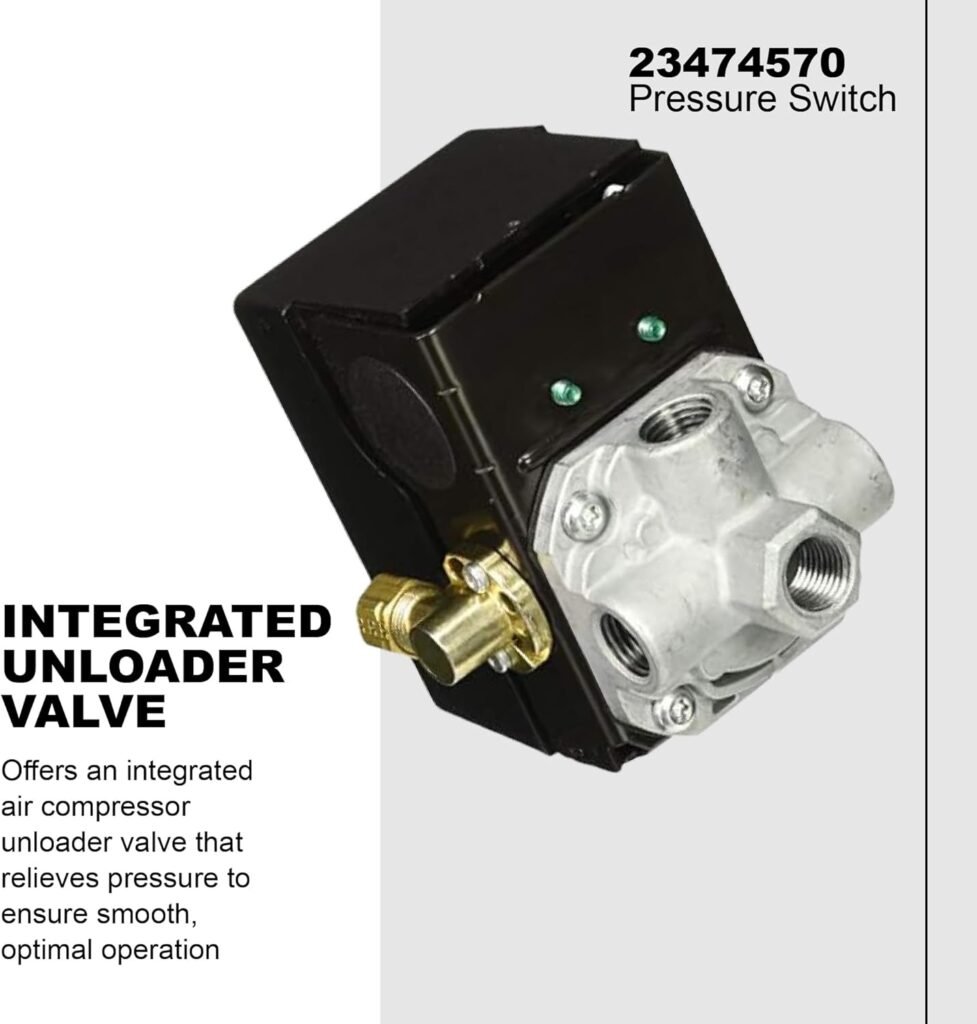
One of the most practical features on the Ingersoll-Rand 23474570 is the included unloader valve. We often overlook this small component, but it plays a big role in making our compressor start more easily and keeping strain off the motor.
What the Unloader Valve Actually Does
When the compressor reaches its cut-out pressure and shuts off, there is still compressed air sitting in the pump head and the discharge line. If the motor tries to restart against that trapped pressure, it has to work much harder and might even fail to start under some conditions.
The unloader valve solves that by:
- Releasing the trapped air from the pump head and line when the compressor stops.
- Allowing the next startup to happen “unloaded,” meaning with minimal back pressure.
- Reducing strain on the motor and extending its life.
With this switch, the unloader function is integrated, so we do not need to engineer a separate setup. As long as we hook up the unloader line correctly, we get smoother starts and less wear on our compressor.
One Crucial Note: No Built-In Shut-Off Switch
One of the most critical details about the 23474570 is that it does not have a separate on/off shut-off switch built into the pressure switch housing. This means we do not get a manual lever or toggle on the front of this unit to cut power.
What That Means for Our Setup
Because there is no shut-off switch on this pressure switch:
- We should already have a dedicated disconnect or breaker in our electrical system.
- To shut the compressor off, we will typically use that external disconnect or turn off the breaker.
- We cannot rely on a little switch on the pressure control box itself, because it is not there.
This design is not a defect; it is just how this particular model is configured. Many industrial or shop compressors rely on external disconnects rather than a small built-in toggle. We simply need to be aware of it, especially if we are used to units that have a switch right on the pressure control box.
Installation Considerations and Best Practices
Installing a pressure switch involves mechanical and electrical work. If we are comfortable and qualified, we can do it ourselves; if not, we should bring in a licensed electrician or compressor technician. The switch itself is straightforward, but it is tied to high voltage and pressurized air.
Teflon Tape: Not Optional Here
The manufacturer makes it very clear: it is extremely important to use Teflon tape when installing this switch on the compressor. That small note is more than a suggestion—it is key to a leak-free and reliable installation.
We should:
- Wrap the male threads of the fitting going into the pressure switch with proper Teflon (PTFE) tape.
- Wrap in the direction of the threads so the tape does not unravel as we tighten.
- Avoid letting bits of tape hang inside the port where they could get into the air system.
Without Teflon tape (or another approved thread sealant), air leaks can develop at the connection point. Over time, leaks can cause the compressor to cycle more often, waste energy, and run longer than it should.
Mechanical and Electrical Steps in Concept
We will not list a step-by-step wiring guide here, but in general, the process includes:
- Depressurizing the system fully and disconnecting electrical power at the breaker.
- Removing the old pressure switch and noting wiring connections, unloader line routing, and mounting.
- Mounting the new switch, using Teflon tape on all appropriate threaded fittings.
- Connecting the unloader line so that it correctly vents the pump head pressure.
- Wiring the new switch according to the diagram and our compressor’s manual.
- Restoring power, then re-pressurizing and checking for leaks and proper cut-in/cut-out operation.
Because there is mains voltage and high pressure involved, it is smart to contact Ingersoll Rand’s support or watch their official video before starting. They provide a help line at 800-247-7378, which connects us with their Air Tech team.
Working With Ingersoll Rand Support
One major advantage of using an OEM part like this is access to knowledgeable technical support. When we have questions about compatibility, wiring, or odd behavior after installation, talking to someone who handles these units all the time can prevent serious problems.
Resources Available to Us
Ingersoll Rand encourages us to:
- Review the installation video if one is available for our compressor model.
- Call the Air Tech team at 800-247-7378 for help with installation details.
- Provide our compressor model number, motor horsepower, and voltage when asking questions.
This support is especially valuable if we are dealing with three-phase power or if the existing wiring in our shop has been modified by previous owners. A quick call can clarify which terminals should be line-in, which should feed the motor, and how to handle the unloader line.
Build Quality and Durability Expectations
Because this pressure switch is made for Ingersoll Rand compressors, we can expect it to be oriented toward industrial or heavy-duty shop use. It is not a flimsy hobby-grade part. Instead, it is built to live on machines that may run daily, cycle frequently, and operate in demanding environments.
What We Can Expect Over the Long Term
With correct installation and proper electrical protection:
- The switch should withstand years of normal cycling between 135 and 175 psig.
- Contact wear will occur over time, as with any mechanical switch, but at a pace appropriate for industrial usage.
- The enclosure helps guard against dust and accidental contact, which prolongs service life.
As always, extremely dirty or hot environments can shorten the life of any electrical component. Keeping our compressor in a relatively clean, ventilated area will help the pressure switch and the entire machine last longer.
Performance in Day-to-Day Use
In everyday operation, the performance of the pressure switch shows up in the background. We mostly notice it when something goes wrong. With the Ingersoll-Rand 23474570, normal operation should feel very smooth and predictable.
How It Behaves Once Installed
Once installed on a compatible compressor:
- The motor starts when the tank drops to about 135 psig.
- The motor stops when the tank reaches about 175 psig.
- The unloader valve vents the pump head after each stop, easing the next start.
- We do not need to manually intervene during pressure cycles.
If we hear random short cycling, rapid on/off behavior, or the compressor failing to shut off at 175 psig, then something is not right—either with the installation, the pressure sensing port, or the wiring. In normal conditions, once the switch is properly set up, we rarely have to think about it.
Advantages of Using an OEM Ingersoll Rand Switch
We often have a choice between original equipment manufacturer (OEM) parts and universal, aftermarket parts. In this case, the 23474570 offers several advantages by being an OEM switch designed for Ingersoll Rand units.
Why OEM Makes Sense Here
With an OEM pressure switch, we gain:
- Correct pressure range for our compressor model.
- Built-in compatibility with Ingersoll Rand unloader systems.
- Consistent quality and testing matched to IR equipment.
- Support from Ingersoll Rand, since we are using the part intended for the unit.
A universal or cheaper substitute might appear similar, but could lack the exact cut-in/cut-out calibration, might not mate perfectly with the unloader, or could have a different enclosure standard. When we rely on a machine for work, that mismatch can lead to frustration, downtime, or even damage.
Possible Limitations and Trade-Offs
No part is perfect for every situation. While the Ingersoll-Rand 23474570 Pressure Switch for Two Stage Compressor is well-suited for its intended models, there are some aspects we should be aware of before we commit to using it.
Things We Need to Consider
Some limitations include:
- No on/off switch: We must rely on an external disconnect or breaker for shutting the unit off.
- Fixed pressure range: We cannot treat it as a highly adjustable control for custom pressure bands beyond its design.
- Model-specific compatibility: It is mainly for the 2340, 2475, 2545, and 7100 families and certain 2475 single-phase units; others may need different part numbers.
- Indoor, relatively clean environment: The NEMA 1 enclosure is not for washdown or harsh outdoor conditions.
None of these are flaws, but they do define where this switch fits best. If we need something with adjustable set points, a built-in switch, or an outdoor-rated enclosure, we should consider other models or configurations.
Comparing the 23474570 to More Generic Switches
Many of us have seen inexpensive, universal pressure switches sold for air compressors. While those can work in some cases, they do not always offer the same fit and reliability as a part built specifically for a known compressor line.
Where This Model Stands
Compared to generic switches, the 23474570 typically offers:
- Better integration with Ingersoll Rand compressors, especially around the unloader setup.
- Correct factory pressures, so we do not have to guess or adjust much.
- Consistent build quality, oriented toward industrial use rather than hobby-grade devices.
On the other hand, a universal switch might:
- Include an integrated on/off switch.
- Offer screw adjustments for pressures outside 135/175 psig.
- Be cheaper in some cases, but at the cost of potential headaches.
If our priority is a compressor that behaves like it did from the factory, especially on those specific IR models, then using this OEM unit is usually the smarter choice.
Practical Tips Before and After Installation
We can save ourselves trouble by treating the pressure switch installation as part of an overall compressor health check, not just a one-off repair.
Before We Swap the Switch
Before putting the new 23474570 on, it helps to:
- Inspect the tank gauge for accuracy (a faulty gauge can lead us to believe the switch is misbehaving).
- Check for air leaks at other fittings, hoses, and quick couplers.
- Confirm that the motor amperage and voltage match the nameplate and system wiring.
- Verify our model number to ensure this is indeed the correct switch.
If the old switch failed, it is worth asking why. Was it just age and normal wear, or were there signs of overheating, arcing, or severe contamination? Addressing those issues will help the new switch last longer.
After Everything Is Installed
Once we have the new switch wired and mounted:
- Run the compressor from empty and watch the gauge climb.
- Confirm that the motor shuts off around 175 psig and starts again at 135 psig.
- Listen for the unloader valve action when the motor stops (we should hear a short burst of air).
- Check for air leaks around the pressure switch connection and associated fittings.
- Monitor performance during the first few hours of use to ensure stable behavior.
If anything seems off, we can reach out to Ingersoll Rand support with our model number, wiring notes, and observations.
Who This Pressure Switch Is Best For
Not all compressor users have the same needs. Some of us run light-duty home garages, while others depend on these machines for production work. The Ingersoll-Rand 23474570 is clearly aimed at a certain group.
Ideal Users and Environments
This pressure switch suits us best if:
- We own a compatible Ingersoll Rand reciprocating compressor (2340, 2475, 2545, 7100, or specified 2475 single-phase).
- We need a reliable, factory-style replacement part to get back to work quickly.
- Our compressor lives in a shop, garage, or indoor work area where NEMA 1 is adequate.
- We are satisfied with the 135/175 psig operating range and do not need custom pressures.
For those running custom-built compressor systems, specialty low-pressure setups, or outdoor installations, we might want to look at more specialized control solutions.
Pros and Cons Summary
To help us judge whether the Ingersoll-Rand 23474570 Pressure Switch for Two Stage Compressor fits our situation, here is a quick side-by-side summary.
| Aspect | Pros | Cons / Considerations |
|---|---|---|
| Compatibility | Matches many IR models (2340, 2475, 2545, 7100; some 2475 1-phase) | Not universal across all compressor brands or IR models |
| Pressure range | Factory-set 135 psig cut-in, 175 psig cut-out | Not designed for wide custom adjustment |
| Unloader valve | Included, improves motor starts and reduces strain | Requires correct hookup to function properly |
| Enclosure | NEMA 1, suitable for indoor shop use | Not appropriate for harsh outdoor or washdown environments |
| Shut-off function | Automatic on pressure | No manual on/off switch built into the unit |
| Brand and support | Genuine Ingersoll Rand, with technical support available | OEM pricing can be higher than generic alternatives |
| Ease of installation | Straightforward for qualified technicians, clear design | Requires Teflon tape and proper electrical skill for safe setup |
This overview helps us match our needs to what the switch offers, rather than guessing later whether it will do what we want.
Mistakes We Want to Avoid
Pressure switch replacement seems simple, but there are some common missteps that can create frustration or even unsafe conditions.
Frequent Pitfalls
We should be especially careful to avoid:
- Skipping Teflon tape or using it incorrectly, leading to slow air leaks.
- Wiring mistakes, such as mixing line and load terminals, which can cause non-operation or damage.
- Ignoring voltage and phase details, especially on three-phase systems.
- Forgetting the unloader line, which can cause hard starting and strain the motor.
- Installing in harsh conditions where a NEMA 1 enclosure is not adequate.
By planning ahead and double-checking our work, we can avoid the kind of problems that lead to repeated failures or erratic compressor behavior.
How This Switch Affects Overall Compressor Health
A pressure switch might look like a small box on the side of the compressor, but it plays a large role in the system’s total lifespan and efficiency.
Long-Term Impact
With a properly working switch like the Ingersoll-Rand 23474570 in place:
- The compressor avoids over-pressurization, which protects the tank and fittings.
- The motor cycles at appropriate intervals, reducing heat and wear.
- The unloader reduces startup stress, helping the motor and belts last longer.
- Our air system stays in a consistent pressure band, which stabilizes tool performance.
Replacing a failing switch is not just about getting the machine to turn on and off again. It is about preserving everything else the compressor touches: tools, hoses, valves, and even energy costs.
Final Thoughts: When This Pressure Switch Is the Right Choice
If we own a compatible Ingersoll Rand two-stage reciprocating compressor and we want it to behave like it did when it left the factory, the Ingersoll-Rand 23474570 Pressure Switch for Two Stage Compressor is an appropriate and reliable solution.
We are getting:
- The correct 135/175 psig pressure band for common shop work.
- An integrated unloader valve for easier starts.
- A NEMA 1 enclosed, OEM-grade switch designed with these models in mind.
- Access to Ingersoll Rand technical support and guidance.
We do need to remember that this unit does not include a manual on/off switch and that we must use Teflon tape during installation. We also need to ensure compatibility with our exact compressor model. When we take those points into account, this pressure switch fits neatly into the role it was built for: quiet, dependable, automatic control over the pressure that keeps our work moving.
Disclosure: As an Amazon Associate, I earn from qualifying purchases.