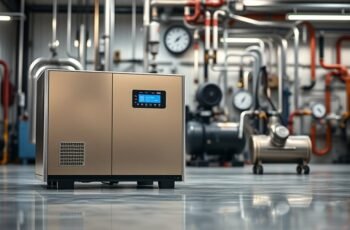
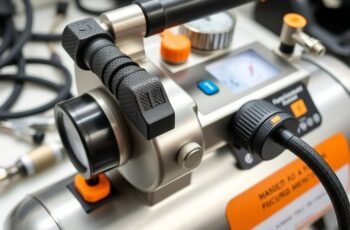
When selecting a high-pressure air compressor, we recognize the importance of finding the right fit for your specific needs. With so many models and features available, it can be challenging to know where to start. We’ll guide you through key considerations like pressure levels, airflow, and safety features, so you can make an informed decision—one that balances performance, reliability, and budget. Let’s explore what makes a compressor suitable for your application.
Key Takeaways
- Assess your required pressure and airflow capacity (CFM) to select the appropriate compressor type and size.
- Choose between portable or stationary models based on mobility needs and workspace constraints.
- Consider oil-lubricated versus oil-free compressors for durability or cleaner air, respectively.
- Evaluate safety features, maintenance requirements, and noise levels to ensure safe, efficient operation.
- Compare brands, warranties, and features to find the best value aligned with your budget and application needs.
What Is a High-Pressure Air Compressor and How Does It Work?
A high-pressure air compressor is a device designed to compress air to considerably higher pressures than standard compressors, often exceeding 300 psi. These compressors use powerful pistons or rotary screws to generate high-pressure airflow, crucial for demanding industrial applications. Proper pressure regulation is essential to ensure consistent output and safety, preventing over-pressurization that could damage equipment. Additionally, noise levels are a significant consideration; high-pressure compressors tend to be louder due to their robust operation. Many models incorporate noise-reduction features to minimize sound during operation, making them more suitable for various environments. Understanding how these compressors work helps in selecting the right model, balancing pressure regulation needs with acceptable noise levels for your specific application.
Key Features and Specifications to Consider When Buying
When selecting a high-pressure air compressor, we need to focus on key features like power and pressure ratings, air flow capacity, and portability. These specifications directly impact performance and suitability for your needs. Let’s explore what to look for to make an informed choice.
Power and Pressure Ratings
Understanding power and pressure ratings is essential because they directly impact a compressor’s performance and suitability for your needs. Higher pressure ratings guarantee the compressor can deliver the necessary air for demanding tasks, while sufficient power ensures consistent operation. When selecting a compressor, consider how these ratings influence air quality, as stable pressure helps maintain cleaner, more reliable air output. Noise levels also tie into power and pressure; more powerful units often generate more noise, which can affect your workspace comfort. Balancing these specifications ensures you choose a model that meets your pressure demands without excessive noise or energy consumption. Ultimately, paying close attention to power and pressure ratings helps you find a compressor that performs efficiently and suits your specific application.
Air Flow Capacity
Since air flow capacity directly affects how efficiently a compressor can handle your tasks, it’s crucial to carefully evaluate this feature before making a purchase. Higher airflow ensures consistent performance for demanding applications, while also influencing air quality and noise reduction. When choosing a compressor, consider:
- The cubic feet per minute (CFM) rating, matching your required airflow for specific tasks.
- The compressor’s ability to maintain steady airflow under load, preventing fluctuations.
- How airflow impacts noise levels—lower CFM often results in quieter operation.
- The design features that optimize air quality, reducing contaminants and ensuring cleaner output.
Prioritizing these factors helps you select a compressor that’s efficient, quiet, and delivers high-quality air for your needs.
Portability and Size
Choosing a compressor that fits your workspace and mobility needs can substantially impact how efficiently you use it. When considering portability and size, weight considerations are essential—lighter models are easier to transport and store, especially if you need to move the compressor frequently. Look for a handle design that offers a comfortable grip and balanced weight distribution, making portability easier. Compact units save space and are ideal for tight work areas or mobile jobsites. However, confirm that reducing size doesn’t compromise power or capacity. Weigh the trade-offs between size, weight, and performance to find a model that suits your specific needs. Ultimately, a well-designed handle and manageable weight make all the difference in handling and transporting your compressor with ease.
Different Types of High-Pressure Air Compressors Explained
There are several key types of high-pressure air compressors to contemplate, each with its own advantages. We’ll compare portable and stationary models, oil-lubricated and oil-free options, as well as single-stage and multi-stage designs. Understanding these differences helps us choose the right compressor for your specific needs.
Portable vs. Stationary Models
When deciding between portable and stationary high-pressure air compressors, it’s important to understand how each type fits different needs. Portable models are ideal for on-the-go tasks, small spaces, or temporary setups, while stationary units suit continuous, large-scale applications. Consider these factors:
- Mobility: Portable compressors are lightweight and easy to move, whereas stationary models are fixed in place.
- Maintenance tips: Portable units often require less complex upkeep but may need more frequent checks due to movement.
- Noise levels: Stationary compressors tend to be quieter, making them suitable for indoor use, while portable units can be noisier.
- Power and capacity: Stationary models generally offer higher pressure and longer runtime, supporting demanding tasks.
Choosing the right model depends on your specific needs, space, and noise considerations.
Oil-Lubricated vs. Oil-Free
High-pressure air compressors come in two main types based on their lubrication method: oil-lubricated and oil-free. Oil-lubricated compressors use oil lubrication to reduce friction, often requiring regular oil changes and maintenance. They typically provide longer-lasting durability and better cooling but may require more air filtration to prevent oil contamination. Oil-free models operate without oil, making them cleaner and easier to maintain. They are ideal for applications demanding contaminant-free air, like food or medical industries.
| Feature | Oil-Lubricated | Oil-Free |
|---|---|---|
| Maintenance | Regular oil changes | Less maintenance, no oil needed |
| Air Filtration | Essential to prevent oil carryover | Less critical, cleaner air |
| Durability | Generally longer-lasting | Suitable for lighter use |
| Contamination Risk | Higher without proper filtration | Minimal, ideal for sensitive tasks |
Single-Stage vs. Multi-Stage
Single-stage and multi-stage compressors are the two primary configurations used to generate high-pressure air, each suited for different applications. Single-stage models compress air in one step, offering simplicity, lower cost, and adequate efficiency for moderate pressures. Multi-stage compressors compress air in multiple steps, which markedly improves efficiency and reduces heat buildup, enabling higher pressure output. They also feature better noise reduction due to staged operation and improved cooling.
Consider these points:
- Multi-stage units provide greater efficiency improvements for high-pressure needs.
- Single-stage compressors are simpler and more affordable for lower pressures.
- Multi-stage designs often operate more quietly due to staged compression.
- Choose based on your required pressure, efficiency priorities, and noise considerations.
Understanding the differences helps select the ideal compressor for your application.
How to Determine Your Ideal Compressor Capacity and Pressure?
Choosing the right compressor capacity and pressure is vital to guarantee it meets your specific needs without overpaying or compromising performance. To do this, we start by evaluating your typical air demand—how much air and at what pressure your tasks require. Consider your work cycle and whether continuous or intermittent operation fits best. Energy efficiency is essential; selecting a compressor that matches your needs prevents unnecessary energy use. Additionally, noise levels can greatly impact your workspace comfort, especially in enclosed areas. If noise is a concern, opt for models designed for quieter operation. By accurately measuring your required CFM (cubic feet per minute) and pressure, you guarantee ideal performance, cost savings, and a quieter environment, giving you a well-suited compressor tailored to your needs.
Safety Features and Maintenance Tips for Longevity
Ensuring safety and proper maintenance is essential for extending the lifespan of your air compressor. Following safety protocols and adhering to maintenance schedules prevent accidents and equipment failure.
- Regularly inspect safety valves to ensure they release pressure properly.
- Keep filters clean to prevent overheating and damage.
- Schedule routine oil changes to maintain optimal lubrication.
- Check for leaks or worn hoses that could compromise safety or efficiency.
Implementing these steps reduces risks and enhances compressor longevity. Proper maintenance minimizes downtime and costly repairs, while safety features like pressure relief valves safeguard users. Staying consistent with maintenance schedules and safety protocols ensures your high pressure air compressor operates reliably over time.
Comparing Price Ranges: Finding the Best Value for Your Budget
When evaluating high pressure air compressors, it’s important to take into account how prices match features and quality. Budget options typically provide basic performance, suitable for light tasks, while mid-range models balance affordability with durability. Luxury features, such as advanced controls or extra safety measures, are usually found on higher-end units and come at a premium. To clarify, here’s a quick comparison:
| Price Range | Features | Ideal For |
|---|---|---|
| Budget Options | Basic, minimal accessories | Occasional or light use |
| Mid-Range | Enhanced durability, some extras | Regular professional use |
| Luxury Features | Advanced controls, safety | Heavy-duty, high-demand tasks |
Matching your budget with your needs ensures you find the best value.
Tips for Choosing a Reliable Brand and Model
- Check customer reviews and testimonials for real-world insights.
- Verify warranty coverage to guarantee support after purchase.
- Research the brand’s history of innovation and reliability.
- Compare technical specifications to make certain the model fits your needs.
Choosing a trusted brand with solid warranty coverage minimizes risks and guarantees support if issues arise. A reliable brand’s reputation reflects its commitment to quality, making your investment more secure and long-lasting.
Common Questions About High-Pressure Air Compressors Answered
Have questions about high-pressure air compressors? Many wonder about their energy efficiency and noise levels. High-pressure compressors can be energy-efficient when selected correctly, using advanced motor designs and proper maintenance to reduce power consumption. Noise levels vary between models; quieter units are ideal for environments where noise is a concern. It’s important to weigh how much noise you’re willing to tolerate and whether sound-dampening features are included. Additionally, ask about the compressor’s duty cycle and how it impacts continuous operation. Understanding these factors helps you choose a model that balances performance with energy savings and comfortable noise levels. Being informed ensures you select a compressor suited to your needs, saving money and reducing disturbance.
Frequently Asked Questions
What Are the Common Applications for High-Pressure Air Compressors?
We use high-pressure air compressors for applications like industrial manufacturing, scuba diving, and medical equipment. Always follow safety precautions and consider environmental impact to guarantee safe, efficient operation and minimize ecological effects.
How Energy-Efficient Are Different High-Pressure Compressor Models?
We find that many high-pressure compressor models are quite energy-efficient, especially those with advanced energy-saving features, which considerably enhance compressor efficiency. These improvements help reduce operational costs and environmental impact, making smarter choices easier for us all.
Can High-Pressure Air Compressors Operate Continuously?
Yes, high-pressure air compressors can operate continuously if properly maintained, with adequate lubrication and adherence to safety considerations, ensuring reliable performance and preventing overheating or damage during extended use.
What Are the Typical Maintenance Costs Associated With These Compressors?
We find maintenance costs typically include lubrication expenses and filter replacements, which are essential for peak compressor performance. Regular upkeep prevents downtime, ensuring efficiency and extending the compressor’s lifespan, making these costs a worthwhile investment.
How Do Noise Levels Vary Among Different High-Pressure Compressor Types?
We find noise levels vary considerably among high-pressure compressor types, with oil-lubricated models typically quieter due to sound mitigation features, while oil-free compressors tend to be louder, making noise comparison essential when choosing the right compressor.
Conclusion
In our experience, investing in the right high-pressure air compressor truly hinges on understanding your specific needs and doing thorough research. While some believe more expensive models always offer better performance, that’s not always the case. We’ve found that balancing quality, features, and price guarantees longevity and safety. Ultimately, choosing wisely can save you money and frustration, proving that informed decisions lead to the best results for your projects.