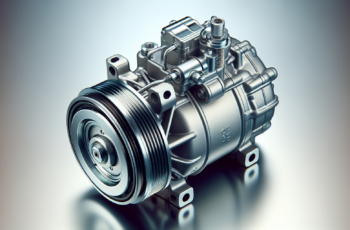
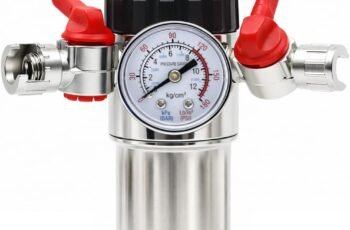
Have we been looking for a compact, dependable air compressor switch setup that actually matches the specs printed on the box?
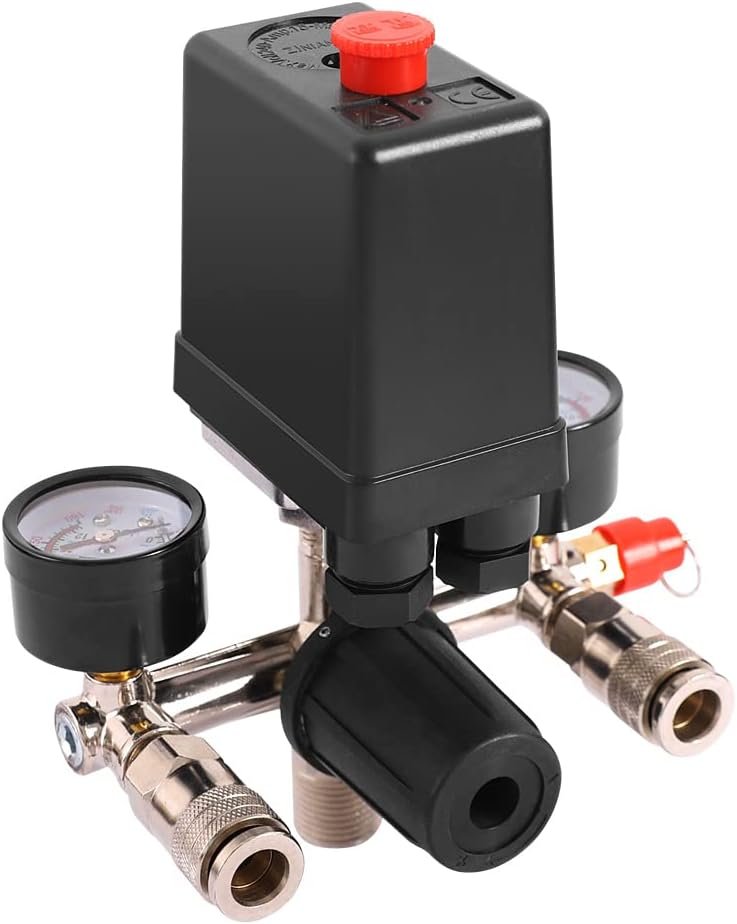

What Is the Dent-de-lion Air Compressor with Pressure Switch, 240V, 20A, 8kg Capacity?
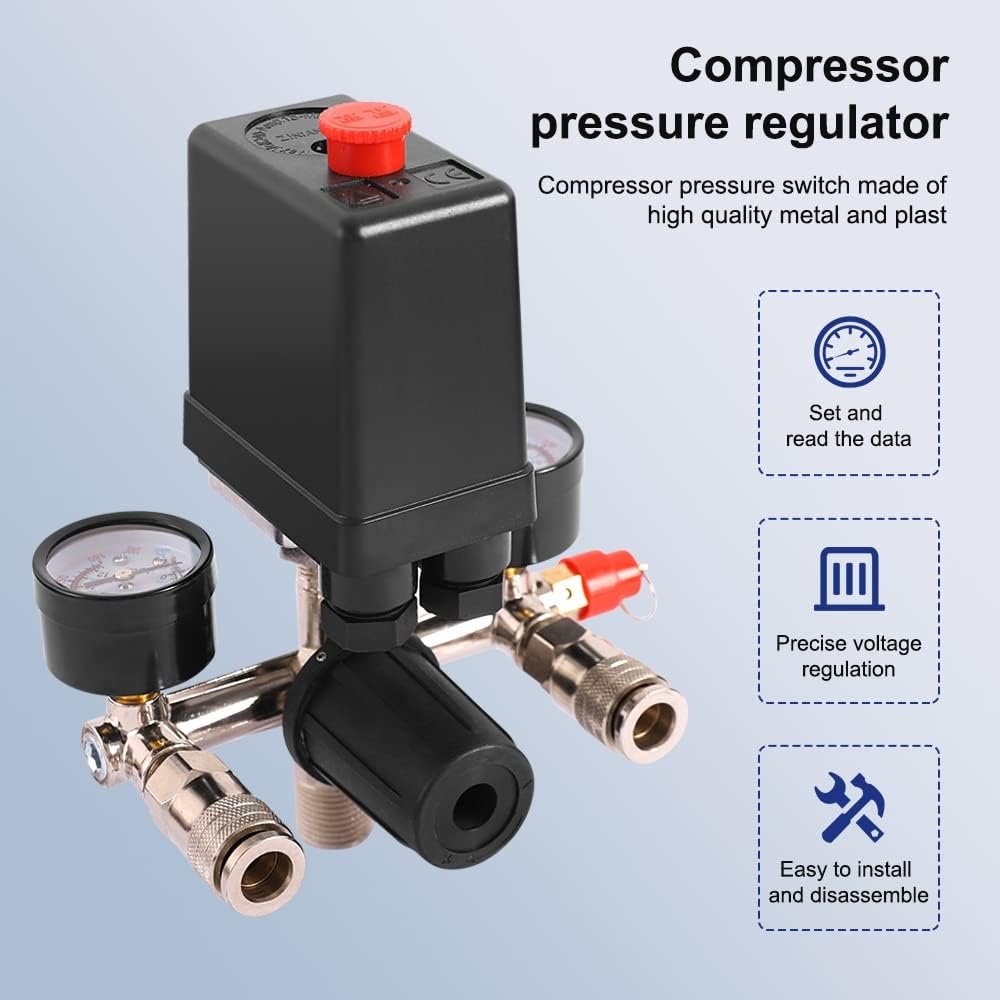
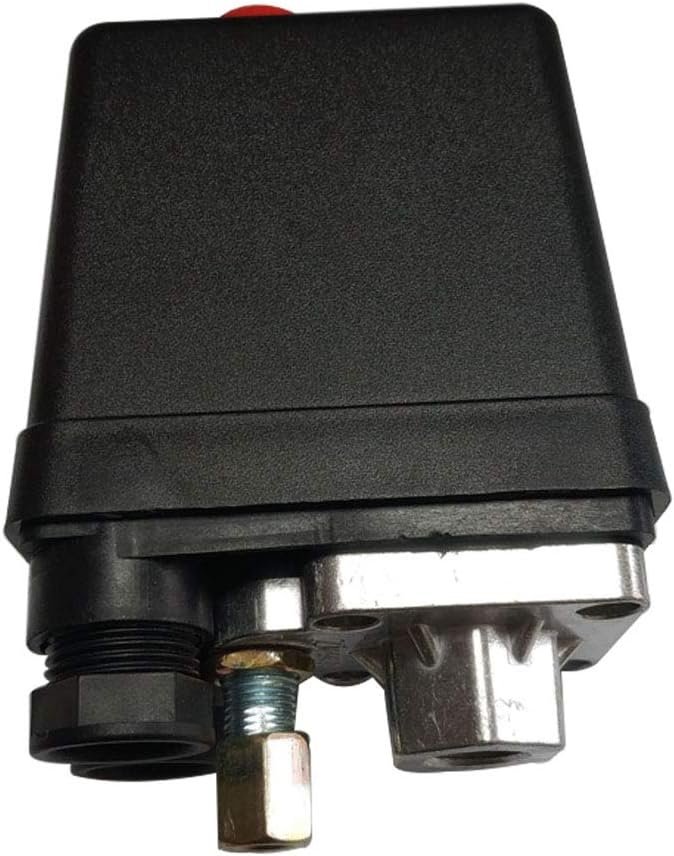
This Dent-de-lion model is essentially a pressure-control solution for an air compressor system, rather than a full, standalone compressor unit. We are getting a pressure switch assembly, gauge, and connections designed for 240V, up to 20A, and an operating pressure of 5–8 kg/cm² (about 90–120 PSI).
It is built from a combination of alloy and plastic, aiming to balance durability, corrosion resistance, and a lighter overall structure. We can treat this as a ready-to-fit replacement for our old or failing compressor pressure switch, rather than an entire new compressor.
Key Specifications at a Glance
Sometimes it is easier if we lay out the basics in one place. We can then compare these specs to our current compressor and see if this is a suitable match.
| Feature | Specification / Detail |
|---|---|
| Product Name | Dent-de-lion Air Compressor with Pressure Switch |
| Voltage | 240 V AC |
| Maximum Current | 20 A |
| Material | Alloy, Plastic |
| Pressure Gauge Material | Chrome-plated metal |
| Operating Pressure Range | 5 – 8 kg (90 – 120 PSI) |
| Switching Pressure Range | 0.5 – 0.8 MPa (5–8 bar / 90–120 PSI) |
| Maximum Rated Pressure (Control) | 12 bar / 175 PSI (printed on control unit) |
| Exhaust Hose Diameter | 6 mm |
| Bracket Connector Size | 20 mm |
| External Pressure Release Opening | 9.5 mm |
| Contact Method | Normally closed (NC) |
| Capacity Mentioned | 8 kg (practical working pressure band) |
| Intended Use | Air compressor pressure switch & control replacement |
This snapshot helps us verify compatibility. If our compressor runs on 240V, draws 20A or less, and typically works between 90–120 PSI, we are in the right territory with this unit.
Build Quality and Materials
The Dent-de-lion unit is made from a mix of alloy and plastic, with a chrome-plated metal pressure gauge. We are not dealing with a flimsy all-plastic toy; instead, it combines metal where it counts with plastic shrouding to keep everything compact and insulated.
We notice that this material choice is pretty standard for mid-range compressor controls. The plastic housing helps protect us from accidental contact with live terminals, while the alloy components take on the pressure, threading, and connection points that must be more robust.
Alloy and Plastic: How the Combination Feels in Use
When we mount and handle the unit, the alloy parts give a reassuring sense of solidity, especially around the connectors and threaded areas. These are the places that typically suffer stress from tightening, vibration, and occasional bumps.
The plastic shell feels light but functional, mainly serving to protect the internal switch mechanism and wiring. For a typical garage, workshop, or small industrial setup, this mix should hold up well under ordinary use and environmental conditions.
Pressure Gauge and Readability
The built-in pressure gauge is made from chrome-plated metal, which suggests decent resistance to rust and wear. We are likely to appreciate that if our compressor area is at all humid or dusty.
In daily use, we want to glance at the gauge and immediately know where our system pressure stands. With the printed range up to 175 PSI, and a working band of 90–120 PSI, the gauge should comfortably show our most common operating zone without feeling cramped or hard to read.
Practical Use of the Gauge in Routine Tasks
When we are using air tools—like impact wrenches, nail guns, blow guns, or spray equipment—having a clear gauge makes adjustment and monitoring easier. We can quickly see if the compressor is cutting in and out correctly as we work.
For example, as we run a nail gun, we will see pressure drop toward the lower limit, the switch engages, and the compressor refills the tank. Then the switch cuts out again around the upper limit. With this gauge, we can monitor that cycle and confirm it matches expectations.
Operating Pressure Range: 5–8 kg (90–120 PSI)
The headline operating range of 5–8 kg (we can think of this as kg/cm²) translates to about 90–120 PSI. This is the standard sweet spot for many small and mid-sized air compressors used in workshops and garages.
We can consider this pressure band very suitable for general-purpose air tools, inflating car and bicycle tires, light painting, and other everyday pneumatic applications.
Where 90–120 PSI Fits into Real-World Use
Most pneumatic tools are rated for something around 90 PSI as a typical working pressure. This means the lower end of the range is perfect for keeping them in their comfort zone. As the compressor cycles between 90 and 120 PSI, we get a buffer to ensure tools receive consistent pressure.
At the same time, the maximum rated pressure printed on the control unit is 12 bar (about 175 PSI), which gives the device some overhead. We should still stick to the intended working band unless we are absolutely certain about our whole system’s rating.

Electrical Specs: 240V and 20A
This unit is designed for 240V and a maximum current of 20 A. That matters a lot for safety and compatibility. If our compressor motor pulls more than 20A, this switch is not appropriate; we would need a higher-rated control solution or a separate contactor.
If our compressor is a typical domestic or light commercial model running on 240V with a motor under roughly 3–4 hp (depending on efficiency and startup load), the 20A rating will fit many use cases.
Why Electrical Matching Is Critical
We want our pressure switch to safely interrupt the motor’s current whenever the cutoff pressure is reached. If we exceed the current limit, we risk overheating, burned contacts, or premature failure.
In many setups, we also integrate this with a proper circuit breaker or fuse in our main electrical panel. The switch is part of a chain of protection mechanisms, and we want all of them to be correctly rated and coordinated.
Switching Pressure Range: 0.5–0.8 MPa (5–8 bar / 90–120 PSI)
The switching pressure range describes where the unit turns the compressor on and off. It is printed as 0.5–0.8 MPa, which corresponds to roughly 5–8 bar, or about 90–120 PSI.
That means the compressor will typically cut in near the lower threshold (about 90 PSI) and cut out at the upper threshold (around 120 PSI), assuming the factory settings are used and the system is installed correctly.
How This Helps Us Save Energy
By letting the compressor rest between 120 and 90 PSI, the switch prevents continuous running and needless compression. The result is lower power consumption overall, less heat, and reduced wear on our compressor.
If we are used to a faulty or misadjusted switch that causes constant short cycling or over-pressurizing, we will probably notice an improvement in both noise levels and energy use once this unit is installed and working correctly.
Normally Closed Contact Method
The Dent-de-lion pressure switch uses a normally closed (NC) contact method. That means that, when there is no pressure forcing it open, the contacts are closed and allow current to pass through.
As the tank pressure rises to the cutoff threshold, the mechanism opens the contacts and interrupts power to the motor. Once pressure drops back down to the cut-in level, the contacts close again and restart the compressor.
Why Normally Closed Makes Sense Here
In air compressor systems, a normally closed configuration is standard. It ensures that we do not have to send a separate “start” signal; the compressor motor automatically runs when pressure is low and stops when it is high.
For us as users, it means a largely hands-off experience. Once we wire the switch properly and set up our compressor, the system should manage pressure autonomously according to the switch’s mechanical settings.
Connection Details and Fittings
The product notes some specific connection sizes: a 6 mm exhaust hose, a 9.5 mm external pressure release opening, and a 20 mm bracket connector size. These are critical when we are deciding if the unit will physically fit our setup.
We want our existing compressor lines and fittings to match or be easily adapted to these dimensions. Otherwise, we may need reducers, adapters, or new hoses to complete the installation.
Exhaust Hose and External Pressure Release
The 6 mm exhaust hose size suggests a relatively compact bleed line for pressure relief. This line usually helps release pressure from the compressor head or unloader valve, making motor restarts easier.
The 9.5 mm external pressure release opening provides a path to vent pressure safely and consistently. Both features contribute to smooth cycling, easier starts, and less stress on the motor and mechanical parts.
Installation Experience
When we install a pressure switch on an existing compressor, we usually want everything to be straightforward: clear mounting points, sensible connection locations, and intuitive wiring.
The Dent-de-lion unit is described as a “good replacement” for old or broken parts, and all parts are stated to be included as shown in the first picture. That strongly implies this is a fairly complete assembly ready to be mounted where our old control unit sat.
General Steps We Can Expect
Without going into a wiring diagram, we can outline the kind of steps we would typically take:
- Disconnect power to the compressor entirely.
- Relieve tank pressure to avoid any accidental blowouts.
- Remove the old pressure switch and associated fittings carefully, noting how everything was connected.
- Install the Dent-de-lion unit on the mounting bracket (20 mm connector size) and tighten appropriately.
- Connect the air lines, matching the 6 mm exhaust hose and 9.5 mm release opening as needed.
- Wire the switch in accordance with the compressor motor’s current and local electrical regulations.
- Test the system by slowly pressurizing the tank and observing cut-in and cut-out behavior around 90–120 PSI.
We still want to refer to a wiring guide or consult a qualified electrician if we are not entirely confident. Correct installation is essential for a safe and reliable system.
Everyday Performance in a Workshop Setting
Once installed, what we are really interested in is how the switch behaves day to day. Does it cycle predictably? Does it prevent over-pressurizing? Does it feel sturdy enough to last under normal conditions?
For a workshop or garage setting, the 90–120 PSI band suits most tasks: car tire inflation, bicycle maintenance, blow-off cleaning, running air ratchets, impact wrenches, and many common air tools.
Noise, Cycling, and Reliability
While the switch itself does not generate major noise, the compressor it controls does. A reliable switch helps avoid short, frequent starts and stops that can be both loud and hard on the motor.
We want it to:
- Start the compressor when the pressure drops below about 90 PSI.
- Stop the compressor when the pressure hits around 120 PSI.
- Avoid excessive chattering or rapid on-off cycles.
When all of that happens as expected, we can focus on our tasks instead of constantly checking the tank for overpressure or worrying about the compressor running endlessly.
Energy Efficiency and Cost Savings
The description mentions that this pressure switch can help save electrical energy. That is not a vague marketing claim; it stems from the fundamental role of the switch in preventing unnecessary runtime.
If our old switch was faulty and allowed the pressure to climb too high, or never fully stopped the compressor, our power consumption would be higher than needed. Over weeks and months, that wasted energy adds up.
The Role of a Good Cut-In/Cut-Out Band
By maintaining a defined 5–8 bar (90–120 PSI) working band, this unit ensures:
- We do not compress air beyond what we reasonably need.
- The motor gets rest periods, reducing heat and wear.
- The system avoids frequent, rapid cycling that can spike current draw.
All of these help keep our power use more efficient and our compressor less prone to breakdowns, which can indirectly save money on repairs or early replacements.
Safety Considerations
Any component that handles 240V electricity and up to 175 PSI needs to be taken seriously. We have to respect both the electrical and pneumatic sides of the system.
This Dent-de-lion pressure switch is designed to keep pressure within a set band and to shut down the motor when pressure approaches the upper threshold. That is a primary safety function.
Important Safety Practices We Should Follow
We should always:
- Ensure the power is off before working on the switch or compressor.
- Verify that pressure is fully released before removing fittings.
- Avoid exceeding the rated current (20A) or rated pressure (12 bar / 175 PSI).
- Use proper cable sizing and overcurrent protection in our electrical circuit.
- Check local codes or consult a professional where required.
Used with these precautions, the Dent-de-lion switch can be a reliable safeguard against over-pressure and uncontrolled motor operation.
Compatibility with Different Compressors
Since this is a general replacement pressure switch assembly, our key questions are: does it fit the mechanical connections, does it match the electrical rating, and is the pressure range suitable?
If we have a small to mid-sized compressor using 240V, drawing 20A or less, and normally working around 90–120 PSI, chances are good that this will be a workable replacement.
When This Might Not Be Ideal
We might run into issues if:
- Our compressor is a large industrial unit drawing more than 20A.
- Our system works at unusually low pressures, such as below 60 PSI.
- Our existing fittings use significantly different thread sizes or incompatible connectors.
- We need fine-tuned adjustable settings outside the 90–120 PSI band.
In these cases, we may need to look for a specialty switch or a higher-grade industrial controller.
Pros and Cons of the Dent-de-lion Pressure Switch Assembly
To get a balanced view, it helps to weigh advantages and potential drawbacks side by side. That way, we can decide whether this device matches our own priorities.
Advantages We May Appreciate
- Appropriate operating range for many general air compressor uses (90–120 PSI).
- 20A, 240V rating that fits a wide segment of light to medium duty compressors.
- Chrome-plated metal gauge for improved durability and corrosion resistance.
- Normally closed design, standard and predictable for compressor control.
- Energy-saving role by controlling compressor runtime and pressure band.
- Alloy and plastic construction giving durability with manageable weight.
- Intended as a direct replacement with all parts shown in the first picture.
These points make it a practical choice if we are looking to restore an older compressor or stabilize unreliable pressure control.
Potential Limitations to Keep in Mind
- The 20A cap means it is not suitable for heavier, high-horsepower compressors.
- The fixed working band of 90–120 PSI may not suit specialized low- or high-pressure systems.
- Depending on our existing compressor, we may need adapters for the 6 mm and 9.5 mm connections.
- We still must handle 230/240V wiring safely, which may require professional help for some users.
Recognizing these limits helps us avoid using the unit in an unsuitable context, which is the fastest path to disappointment or safety issues.
Who Will Benefit Most from This Product?
Our best use case for the Dent-de-lion pressure switch assembly is a user who already owns a compressor but needs to replace a failing or inconsistent pressure control unit.
If we fit any of these scenarios, we are likely within the target audience:
- We have a garage or home workshop compressor that has begun to overrun or fail to start and stop at the right times.
- We manage small business equipment, such as in an auto repair shop or woodworking facility, where a moderate-size compressor supports day-to-day tasks.
- We maintain spare parts for a fleet of light-duty compressors and want a standardized switch solution for units in the 90–120 PSI range.
In those contexts, this product might help restore reliable function without requiring us to replace the entire compressor.
Long-Term Durability and Maintenance
We usually think about a pressure switch as a set-and-forget component, but it does experience mechanical and electrical stress over time.
The alloy and plastic build, plus chrome-plated metal gauge, suggest the manufacturer expects the unit to handle normal compressor environments. Still, we can extend its life with a bit of basic care.
How We Can Help It Last Longer
A few simple habits can improve longevity:
- Keeping the area around the pressure switch reasonably clean and dry.
- Avoiding heavy impacts or knocks to the housing or gauge.
- Verifying that the compressor does not routinely run above 120 PSI if we can help it.
- Checking electrical connections for signs of overheating or looseness over the years.
By treating the switch as a critical component instead of a forgotten box, we give ourselves a better chance at stable, long-term compressor performance.
Comparing to Typical Alternatives
If we compare this Dent-de-lion unit to generic switches in the same category, we notice a fairly standard set of specs: 240V, around 20A, NC contact method, similar pressure band, and mixed metal/plastic construction.
Where it distinguishes itself a bit is in the clearly defined band of 5–8 kg (90–120 PSI) and the mention of complete parts as shown in the first image. That suggests a more plug-and-play focused offering rather than a bare switch requiring separate acquisition of fittings and gauge.
When We Might Look Elsewhere
We might consider alternative devices if:
- We want an adjustable switch with different pressure bands for a variety of tasks.
- Our local supply requires specific certifications or industrial ratings not mentioned here.
- We run highly specialized pneumatic equipment that needs a narrower tolerance or more advanced monitoring.
For most everyday compressor users, though, a straightforward, 90–120 PSI switch is more than enough.
Practical Example Scenarios
To better understand how this fits into real life, we can imagine a couple of typical setups in which we might use this product.
Home Garage: Tire Inflation and Basic Tools
Suppose we have a mid-size 240V compressor in our garage, used to inflate car and bike tires, blow dust off surfaces, and occasionally run a modest air impact wrench. Our old switch has started to misbehave, either not shutting off at the right time or refusing to restart without manual coaxing.
We install the Dent-de-lion pressure switch, observe it cycling between 90 and 120 PSI reliably, and find that our tools perform consistently while the compressor no longer runs on and on. In this scenario, we get exactly what we need: stable pressure control and peace of mind.
Small Workshop: Continuous Light Use
In a woodworking shop or light fabrication workspace, the compressor might support brad nailers, staple guns, and small blow-off operations. The system runs often but not at extreme duty cycles.
The Dent-de-lion switch can help keep everything humming along at a comfortable working pressure, making sure we do not inadvertently exceed safe limits while also avoiding constant on-off cycles. Here, we benefit from the balance between performance, safety, and simplicity.
Our Overall Impressions
Putting all these pieces together, our impression is that the Dent-de-lion Air Compressor with Pressure Switch, 240V, 20A, 8kg Capacity, Alloy and Plastic is intended as a solid, practical replacement pressure switch assembly for many common 240V compressors.
We see it as neither a high-end industrial controller nor a cheap disposable gadget. It occupies that useful middle ground where we get adequate durability, clear specs, and straightforward function at a reasonable level of complexity.
Final Thoughts: Is It Right for Our Compressor?
If our compressor:
- Runs on 240V,
- Draws 20A or less,
- Typically operates around 90–120 PSI,
- And uses fittings we can match or adapt to 6 mm, 9.5 mm, and 20 mm connection sizes,
then this Dent-de-lion pressure switch assembly is a strong candidate for our next replacement part.
We should always confirm our own system’s technical specifications before buying or installing anything, but once we do, we can reasonably expect this product to provide dependable pressure control, help us save energy, and bring some order back to an air system that might have become inconsistent or unreliable over time.
Disclosure: As an Amazon Associate, I earn from qualifying purchases.