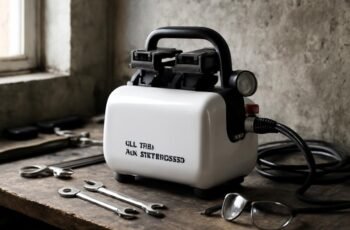
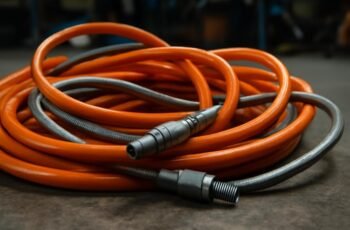
Imagine a scenario where a poorly chosen fitting causes a sudden air leak during a critical task, leading to delays and safety concerns. This highlights the importance of selecting the right hoses and fittings for your air compressor setup. Ensuring compatibility, proper installation, and maintenance can greatly impact system performance and safety. Understanding these components thoroughly helps prevent common issues and optimizes your equipment’s lifespan, making it essential to explore the specifics of hose types, materials, and accessories in detail.
Key Takeaways
- Select compatible hoses and fittings based on diameter, material, and pressure ratings to ensure safety and performance.
- Use quick-connect fittings for easy setup and secure connections, reducing leaks and disconnections.
- Incorporate accessories like regulators and moisture traps to optimize system efficiency and protect tools.
- Regularly inspect and maintain hoses and fittings to prevent wear, leaks, and system failures.
- Proper installation techniques, including correct tightening and alignment, are essential for secure and safe connections.
Understanding the Different Types of Air Compressor Hoses
Have you ever wondered how to choose the right air compressor hose for your specific needs? Understanding the different types of hoses requires examining their construction, especially regarding durability testing and chemical resistance. Rubber hoses offer excellent flexibility, high durability testing outcomes, and strong chemical resistance, making them suitable for demanding environments. Reinforced hoses, with added fibers or mesh layers, provide enhanced strength and burst resistance, ideal for high-pressure applications. PVC hoses are lightweight and resistant to many chemicals, but may have lower durability testing results under extreme conditions. When selecting a hose, consider chemical resistance to prevent degradation from exposure to oils or solvents, and durability testing to ensure longevity under operational stresses. Precise matching of hose type to application conditions is essential for safety and efficiency.
How to Choose the Right Fitting Accessories for Your Needs?
Selecting the appropriate fitting accessories requires ensuring compatibility with your hose type to prevent leaks or disconnections. We also prioritize material durability and quality to withstand operational stresses over time. Additionally, application-specific features, such as pressure ratings and connector styles, are essential for optimal performance and safety.
Compatibility With Hose Types
How do you guarantee your fittings are compatible with your hose types? First, identify the hose’s diameter, material, and pressure rating, ensuring fittings match these specifications precisely. Compatibility hinges on correct sizing and connection type—such as quick-connect or threaded fittings—similar to the precision needed in space exploration. Avoid assumptions driven by conspiracy theories that suggest incompatible fittings won’t cause issues; instead, rely on technical standards. Different hose materials, like rubber or thermoplastic, require specific fittings to prevent leaks or failures under pressure. Confirm the fitting’s seal design aligns with your hose’s properties for secure attachment. Proper matching ensures safety, efficiency, and longevity, just as meticulous planning is crucial in space missions. Compatibility is fundamental to optimal compressor performance.
Material Durability and Quality
Ever wondered why some fittings fail prematurely while others stand the test of time? The key lies in material durability and sourcing. A thorough durability comparison reveals that fittings made from high-grade stainless steel or brass typically resist corrosion and mechanical wear better than lower-quality alternatives. Material sourcing is critical, as reputable manufacturers ensure consistent quality, reducing the risk of failure. In contrast, poorly sourced materials may contain impurities or inconsistencies, compromising longevity. When selecting fittings, prioritize those with proven durability ratings and transparent sourcing information. This approach ensures your equipment maintains optimal performance, minimizes downtime, and reduces replacement costs. Ultimately, investing in high-quality, well-sourced materials guarantees a reliable connection that withstands demanding usage conditions.
Application-Specific Fitting Features
Have you considered how specific operational requirements influence the choice of fitting accessories? When selecting fittings, factors like pressure ratings, compatibility with power tools, and ease of connection are critical. Application-specific features ensure optimum performance, especially in powering motors or conducting DIY repairs. For example, high-pressure fittings are essential for demanding tasks, while quick-connect mechanisms streamline frequent setup changes. Compatibility with different hose diameters and materials prevents leaks and ensures safety. Additionally, durability against environmental factors like vibration and temperature fluctuations maintains long-term reliability. Properly chosen fittings reduce downtime and improve efficiency. Understanding these features helps tailor your setup precisely to your needs, ensuring secure connections and optimal airflow for both professional applications and DIY repairs.
Installation Tips for Secure and Leak-Free Connections
To ensure secure, leak-free connections, proper hose alignment is essential to prevent stress and movement that can cause leaks. Applying an appropriate thread sealant enhances sealing integrity, especially on threaded fittings. Tightening techniques should balance sufficient torque with caution to avoid damaging components or compromising the seal.
Proper Hose Alignment
How can we guarantee a secure and leak-free connection when installing an air compressor hose? Proper hose alignment is crucial to prevent leaks and minimize noise levels. First, ensure the hose’s ends are correctly oriented, matching the fittings’ threading and coupling design. Checking the hose color can help identify the correct side during installation, reducing misalignment errors. Next, verify the hose is free of twists or kinks, which can cause pressure drops and increase noise levels. Finally, tighten fittings securely using appropriate tools, avoiding over-tightening that could deform the hose or fittings. Key points include:
- Aligning hose ends precisely with fittings before tightening
- Using consistent hose color coding for correct orientation
- Ensuring a smooth, kink-free path for optimal airflow and noise reduction
Use of Thread Sealant
Applying thread sealant during installation is essential to ensure a secure, leak-free connection between hoses and fittings. Proper application prevents air leaks that can compromise air quality and reduce system efficiency. Using the correct sealant minimizes the risk of moisture ingress, which can lead to corrosion and deteriorate the fittings over time. Additionally, a well-sealed connection helps reduce noise caused by air escaping, contributing to quieter operation. It’s crucial to select a compatible sealant designed for compressed air systems and apply it evenly to avoid excess that could affect airflow or clog fittings. Ensuring airtight connections enhances system performance, maintains air quality standards, and minimizes noise levels, creating a safer and more efficient working environment.
Tightening Techniques
Proper tightening of hose fittings and connectors is essential to maintaining a leak-free compressed air system. Correct torque ensures secure connections that facilitate ideal airflow regulation and minimize pressure drops. Over-tightening can deform fittings, causing leaks or damage, while under-tightening risks disconnections and airflow inconsistency. Use a calibrated wrench to tighten fittings to manufacturer specifications, ensuring uniform compression. Additionally, proper tightening reduces noise generated by vibrations and air leaks, contributing to quieter operation.
- Visualize fitting threads aligning precisely, avoiding cross-threading or overtightening.
- Imagine smooth, consistent airflow with no hissing or whistling sounds.
- Consider how proper torque minimizes vibrations, reducing noise and improving system longevity.
Common Problems With Hoses and Fittings and How to Fix Them
Hoses and fittings in air compressor systems are susceptible to a range of common issues that can compromise performance and safety. Dusty workshop environments accelerate wear, leading to leaks or blockages. Improper storage solutions, such as leaving hoses exposed or kinked, cause premature deterioration. The following table summarizes typical problems and fixes:
| Problem | Cause | Solution |
|---|---|---|
| Leaks | Worn or damaged fittings | Replace or tighten fittings |
| Kinks | Improper storage or bending | Use proper storage solutions and avoid sharp bends |
| Reduced airflow | Blockages or debris | Clean hoses thoroughly |
| Burst hoses | Age or material fatigue | Replace with high-quality hoses |
| Disconnections | Loose fittings | Regularly check and tighten connections |
Addressing these issues ensures wholesome system performance and safety in any workshop.
Materials and Durability: Which Hoses Last the Longest?
Selecting the right hose material is essential for ensuring longevity in an air compressor system. Different materials offer varying resistance to wear, chemicals, and environmental factors, directly impacting durability. Reinforced rubber hoses excel in flexibility and abrasion resistance, making them ideal for heavy-duty applications. PVC hoses are lightweight and resistant to corrosion, but may degrade faster under UV exposure. Silicone hoses provide excellent temperature tolerance and longevity, especially in demanding conditions. Proper adherence to branding policies, such as color coding, helps identify hose types quickly, reducing misapplication risks. Additionally, selecting hoses based on material properties ensures longevity and safety, ultimately reducing replacement frequency and maintenance costs. Prioritizing high-quality materials aligned with operational needs guarantees longer-lasting performance in demanding environments.
Compatibility and Size Considerations for Fittings and Hoses
Ensuring compatibility between fittings and hoses is critical for maintaining an efficient and safe air compressor system. Proper sizing prevents leaks, pressure drops, and potential system failure. Fittings must match the hose diameter and thread type precisely; mismatched sizes lead to inefficiencies and safety hazards. When selecting fittings, consider the pressure ratings and material compatibility, as these influence overall system integrity. An unrelated topic, like the tangential subject of connector standards, highlights the importance of adhering to industry specifications to avoid incompatibilities. Incorrect sizing or incompatible fittings can cause damage, downtime, and increased costs. Consequently, verifying dimensions and specifications before installation is essential for optimal performance and safety in any pneumatic setup.
Essential Accessories to Enhance Your Air Compressor Setup
To optimize your air compressor setup, incorporating essential accessories can markedly improve efficiency, safety, and ease of operation. These accessories streamline workflow and reduce downtime, much like applying color theory to achieve optimal contrast in visual design. Incorporating a regulator ensures precise pressure control, preventing system overloading. Quick-connect fittings facilitate rapid setup and breakdown, minimizing operational delays. Additionally, using a moisture trap is critical for removing water vapor, protecting tools and extending equipment lifespan. These accessories collectively enhance performance, safety, and reliability, similar to how understanding free dive techniques improves safety and efficiency underwater. Proper selection and integration of these components ensure your compressor operates at peak capacity with minimal risk. This deliberate approach results in a more effective, safe, and cohesive system.
Maintenance and Safety Tips for Air Compressor Hoses and Fittings
Regular maintenance and safety checks are essential to keep air compressor hoses and fittings functioning reliably and to prevent accidents. We recommend inspecting hoses for signs of wear, such as cracks or bulges, and replacing damaged components immediately. Ensure fittings are tightly secured, avoiding leaks that could lead to pressure drops or hazardous conditions. Periodic cleaning of fittings prevents debris buildup, which can compromise integrity. During operation, monitor for unusual noises or vibrations, indicating potential issues unrelated to airflow, such as misalignment or loose connections. Always depressurize the system before maintenance to prevent injury. Proper storage of hoses in a dry, cool environment extends their lifespan. These proactive measures promote safety, optimize performance, and reduce costly downtime.
Frequently Asked Questions
How Do I Identify Compatible Fittings for Different Hose Types?
To identify compatible fittings for different hoses, we use identification methods like measuring diameter, checking pressure ratings, and matching thread types. We ensure fittings match specific hose types to prevent leaks and ensure secure, efficient connections.
What Are Signs of Wear Indicating a Hose Needs Replacement?
Like a worn-out tire, a hose shows signs of wear indicators such as cracks, bulges, or leaks, revealing its age and deterioration. These signs signal it’s time to replace the hose to maintain safety and performance.
Can I Connect Multiple Hoses for Extended Reach?
Yes, you can connect multiple hoses using compatible hose fittings, but ensure the connecting hoses are rated for your compressor’s pressure. Properly secure fittings prevent leaks and maintain system integrity during extended reach connections.
Are There Specific Safety Precautions During Hose Installation?
We prioritize safety during hose installation, noting that 80% of accidents involve improper fittings. We follow safety training, use PPE, consult compatibility guides, and adhere to maintenance schedules to prevent hazards and ensure optimal system performance.
How Often Should I Inspect Hoses and Fittings for Damage?
We recommend inspecting hoses and fittings at least weekly, following our safety checklist to detect any damage or wear early. Regular inspections ensure ideal performance and safety, preventing potential failures and maintaining efficient air compressor operation.
Conclusion
In the end, selecting the right hoses and fittings might seem straightforward—until leaks, crashes, or pressure drops remind us just how unforgiving poor choices can be. While proper installation, maintenance, and compatibility are essential, the truth is, even the most advanced accessories won’t save us from neglect. So, we’d better stay vigilant, follow best practices, and remember: a well-chosen, well-maintained setup is the best insurance against costly failures. Irony, indeed.