Have we ever wished our workshop had the kind of reliable, steady airflow that makes every task smoother, faster, and more professional?
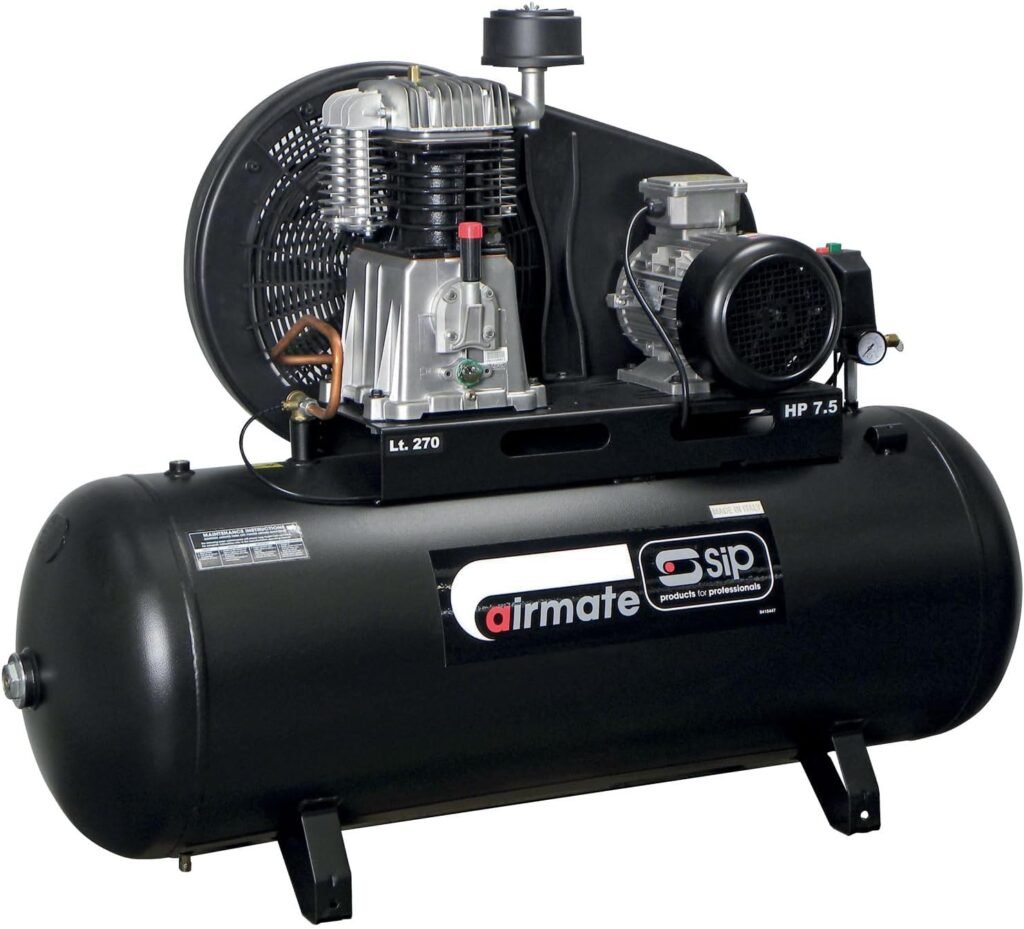

What Is the SIP Airmate TN7.5/270 Belt Drive Air Compressor?
When we look at the SIP Airmate TN7.5/270 Belt Drive Air Compressor, we are clearly dealing with a serious, heavy-duty machine rather than a compact hobby unit. It is designed for garages, workshops, and professional environments where we need consistent, powerful compressed air day in and day out.
This model is built around a 7.5hp / 5.6kW motor, feeding a generous 270L tank and delivering up to 145psi / 10 bar and around 34CFM. In practical terms, that means we can run demanding air tools, larger spray guns, and multiple operations with confidence.
Key Specifications at a Glance
When assessing whether a compressor will suit our needs, the raw numbers help us understand its true capabilities. Below is a breakdown of the core specs in a clear format so we can quickly compare them with our current or planned tools.
| Feature | Specification |
|---|---|
| Product Name | SIP Airmate TN7.5/270 Belt Drive Air Compressor |
| Motor Power | 7.5hp / 5.6kW |
| Power Supply | 400V, 20A, 3-phase |
| Tank Capacity | 270 liters |
| Maximum Pressure | 145psi / 10 bar |
| Air Delivery (Approx.) | 34CFM (Cubic Feet per Minute) |
| Drive Type | Belt drive |
| Lubrication | Oil-lubricated |
| Intended Use | Garage, workshop, industrial, trade, and professional applications |
| Typical Applications | Air tools, spray painting, air guns, airbrushing, general workshop tasks |
These figures show us that this is a large, permanent-style workshop compressor, meant to be a central air supply rather than a portable unit we move around casually.
Build Quality and Design
We want a compressor that feels solid, stable, and ready for years of use. The SIP Airmate TN7.5/270 fits that description well, with a robust construction that reflects its professional focus.
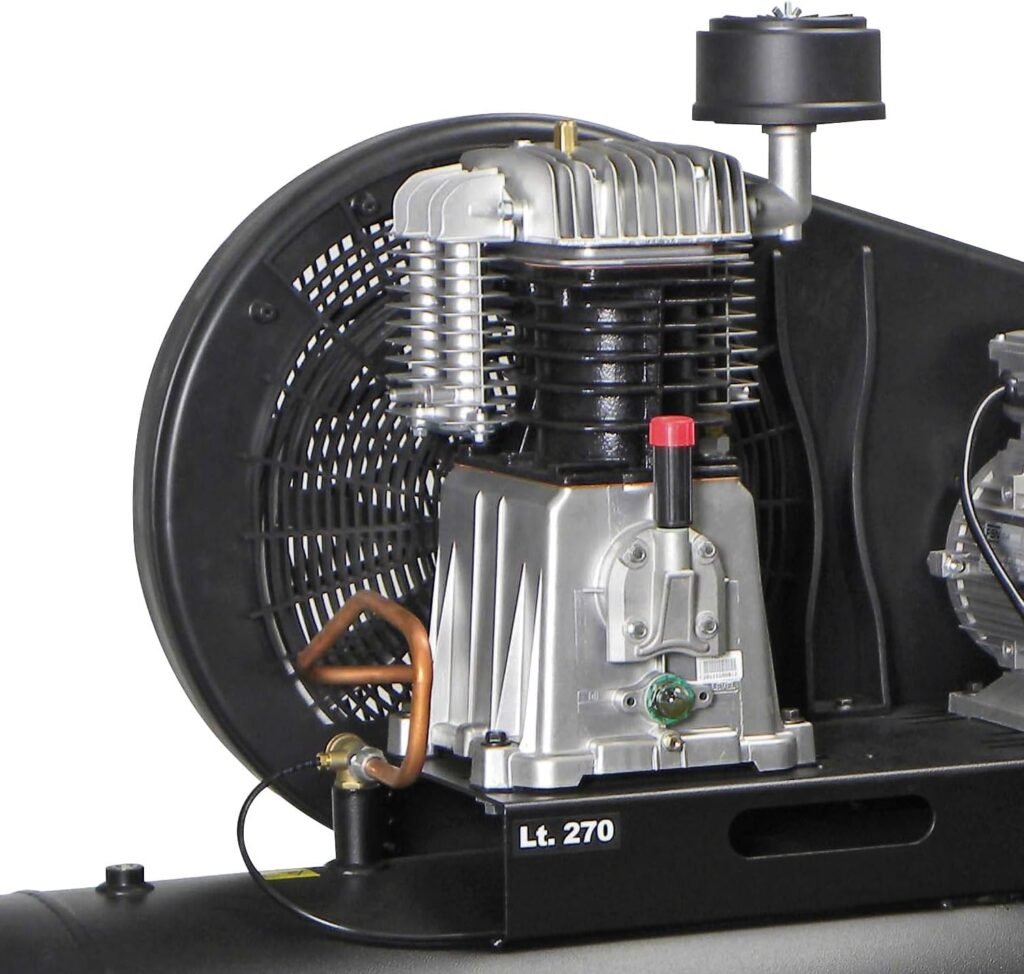
The belt drive design contributes to smoother operation and can extend the life of the motor and pump compared with many direct-drive units. The 270L horizontal tank gives a stable base, and the overall design indicates it is built to sit in a workshop corner and become a permanent part of our setup.
Belt Drive System: Why It Matters
The belt-driven setup separates the motor from the pump via a belt and pulleys, rather than coupling them directly. This type of design is standard in many professional compressors because of how it balances performance, noise, and longevity.
We appreciate that a belt drive usually allows the pump to run at a more optimal, often slower speed, which can reduce wear and help the unit work more quietly compared with high-speed direct-drive designs.
Oil-Lubricated Pump Construction
The SIP Airmate uses oil lubrication in its pump, which is typical of heavier-duty compressors. During compression, oil is injected around moving parts to reduce friction, carry away heat, and protect internal components.
For us, this translates into better efficiency and durability, as long as we stay on top of oil checks and changes. The compressor then separates the oil from the compressed air, so we get clean air suitable for tools and many spraying tasks, especially when paired with suitable filters.
Power and Performance
Performance is where this compressor stands out. With a 7.5hp / 5.6kW electric motor, we are in the realm of serious workshop power. This is not just for inflating tires or running a small nail gun; it is for heavy air demand.
We should see consistent air output for more demanding tools, and the 34CFM rating indicates the system is designed to maintain air flow rather than constantly struggle to catch up, which is vital if we work with continuous-use equipment.
Airflow and Pressure: What 34CFM and 10 Bar Mean for Us
With up to 34CFM and a maximum pressure of 145psi / 10 bar, we can handle a wide range of tools and tasks. Many typical air tools require around 4–10CFM at 90psi, which puts this compressor in a strong position for supporting:
- Standard impact wrenches
- Air ratchets
- Sanding and grinding tools
- High-demand spray guns
We can comfortably use continuous tools, such as spray guns or DA sanders, for extended periods without waiting around for the tank to refill every few minutes, assuming we match our setup and usage correctly.
270L Tank Capacity: Why Size Helps
The 270-liter tank makes a significant difference in how the compressor behaves. A larger tank acts like a buffer or reservoir, smoothing out air delivery under heavy load.
With a smaller tank, the motor and pump cycle on and off frequently, creating more wear and disruption. Here, the 270L volume gives us longer work intervals between cycles, which is especially beneficial when we are spraying, running multiple tools, or working on big projects.

Power Requirements and Installation Considerations
We must pay close attention to the electrical requirements with a compressor of this size. The SIP Airmate TN7.5/270 runs on a 400V, 20A, 3-phase power supply, which is typical of industrial and commercial equipment.
This is not plug-and-play in a standard domestic single-phase environment. We need a suitable 3-phase supply, correctly fused, and installed by a qualified electrician in line with local regulations and safety standards.
Workshop Space and Positioning
Because the compressor has a large 270L tank and industrial motor, we need enough floor space and proper ventilation. It is intended as a static unit, so we should plan its location carefully from the start.
We want it on a flat, solid surface, with enough clearance for airflow around the motor and pump, and enough room for us to carry out routine maintenance like checking oil, draining the tank, and inspecting belts.
Everyday Usability
Even powerful equipment should be simple for us to operate. The SIP Airmate TN7.5/270 is aimed at professionals and serious users, but it does take everyday tasks into account so we can use it smoothly without frustration.
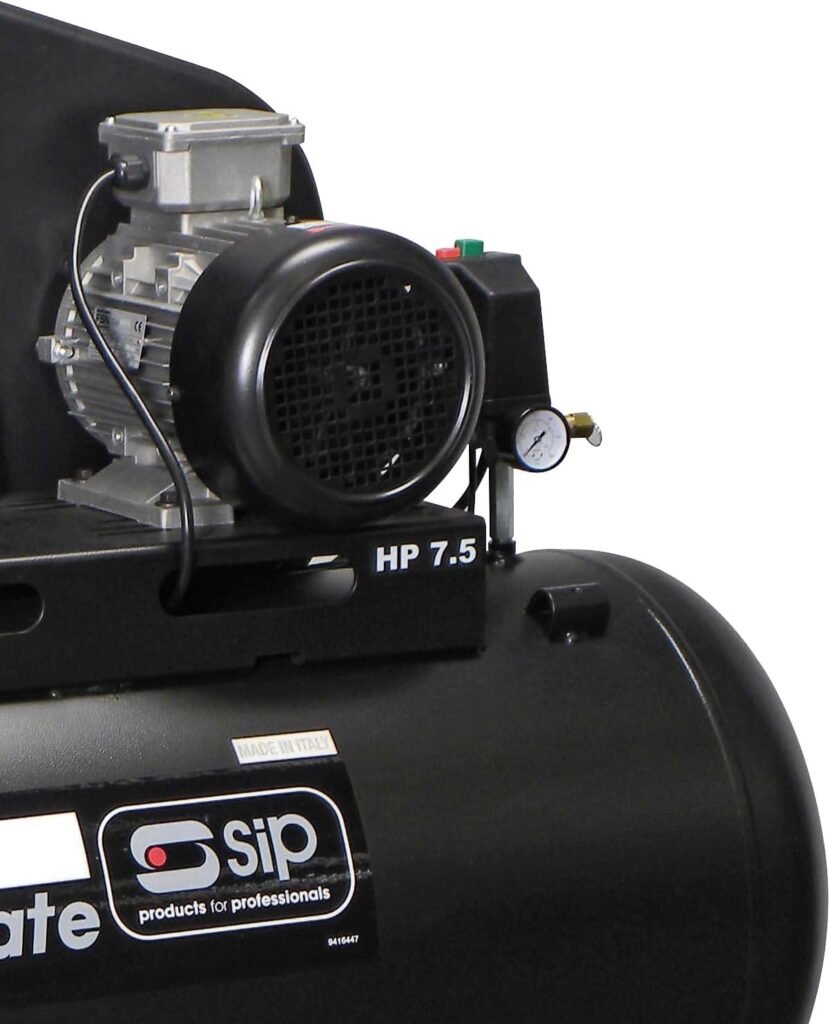
We can expect clearly laid-out controls, pressure gauges, and basic safety features that are typical in a professional compressor, helping us manage pressure, monitor tank status, and operate it safely.
Starting, Stopping, and Basic Controls
With 3-phase equipment, starting and stopping functions are usually straightforward. We switch the unit on, allow it to build pressure, and it will cycle automatically between its cut-in and cut-out pressure levels.
We should always verify the control panel layout and read the manual, but in general we will see at least:
- A power or on/off switch
- One or more pressure gauges (tank and regulated outlet)
- A safety valve and possibly a pressure regulator
Once set up, we can focus on our work while the compressor manages its own pressure cycling.
Noise Levels and Working Environment
Although belt-driven compressors are generally quieter than many direct-drive units, they are still not silent, especially at this size. We must assume a reasonable level of noise when the pump is running.
If we operate in a smaller workshop or share space with other activities, we might consider placing the compressor in a corner, a separate room, or using sound-deadening measures. Ear protection is advisable for long periods around any large compressor, and we should check the exact dB rating if noise is critical in our environment.
Suitability for Different Users
This compressor may be overkill for some and perfect for others. We should match its capacity and power with our own usage profile, whether we run a professional business or we are serious hobbyists with ambitious projects.
From the manufacturer’s positioning and specs, the SIP Airmate TN7.5/270 is intended for garages, workshops, trade users, and industrial applications. That tells us a lot about where this machine feels most at home.
Is It Right for Hobby or Home Use?
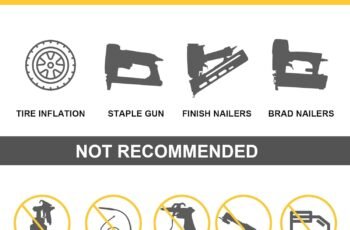
If we are occasional DIYers who only need to inflate tires, use a small brad nailer, or run simple tools occasionally, this compressor is likely too large and complex. It demands 3-phase power and permanent installation, which many home environments do not provide.
However, if we have a well-equipped home workshop or a small business on our property with proper 3-phase supply, and we run air tools regularly, this compressor can absolutely fit a high-end enthusiast or semi-professional setup.
Ideal for Professional Garages and Workshops
Where this unit really shines is in busy, professional garages and workshops. If we are regularly:
- Removing wheels with impact wrenches
- Operating spray painting gear
- Running air-powered sanders and grinders
- Supplying air to multiple stations
then this compressor’s 34CFM airflow and 270L tank will be valuable. It is designed to provide sustained air for demanding tasks rather than short bursts.
Performance with Air Tools
The whole point of a large compressor is its ability to support a wide range of air tools. The SIP Airmate TN7.5/270 is suitable for both occasional heavy bursts and continuous applications, as long as we match our total air consumption to its output.
We can think in terms of CFM demand: if our tools together require less than the compressor’s effective output, we can run them efficiently and continuously. With 34CFM on tap, we have enough for one or more tools in steady use in many workshop scenarios.
Running Impact Wrenches, Ratchets, and General Tools
Air impact wrenches and ratchets are common in garages. Typical 1/2″ impact wrenches might use around 4–8CFM at 90psi, while some heavy-duty ones go higher. This compressor can supply them easily and still have spare capacity.
We will feel the benefit of quick recovery and consistent torque because the tank and pump work together to avoid big drops in pressure. For general shop air tools like blow guns, tire inflators, and simple air chisels, the compressor will not even break a sweat.
Continuous Use Tools: Sanders, Grinders, and Spray Guns
Continuous-use tools are usually the real test. DA sanders, air grinders, and many spray guns draw substantial air constantly, rather than in short bursts, which can quickly drain smaller systems.
With 34CFM, we can support high-demand tools and spray equipment more effectively. This makes the SIP Airmate particularly attractive for body shops, fabrication workshops, and any environment where we are operating at high output for long periods.
Paint Spraying and Finishing Work
The product details highlight that this compressor is well suited for paint spraying. That makes sense: spraying requires a reliable, consistent supply of air to ensure even coverage and a smooth finish.
If the air supply fluctuates widely, we get inconsistent atomization, poor finish quality, and potentially more rework. The combination of 270L capacity and strong motor output helps us avoid these pitfalls.
Supporting Professional Spray Guns
Professional spray guns, whether conventional, HVLP, or compliant types, can vary quite a bit in air consumption. Many lie between 6 and 15CFM, though there are some that demand more.
With this compressor’s capacity and flow rate, we can comfortably run most professional spray guns with stable pressure, provided we match our regulator and hose setup properly. This can be crucial for automotive refinishing, furniture finishing, or any detailed painting tasks.
Using It as an Airbrush or Detail Compressor
Interestingly, the product is also described as suitable for use as an “airbrush compressor.” That might sound surprising at first, given the size, but what this really means is that it can be regulated down to the lower pressures and flows that airbrushes need.
For intricate work, we would usually pair the compressor with a proper filtration and regulation setup to ensure dry, clean, and well-controlled air at the lower PSI ranges. While small hobby units can power airbrushes, this compressor gives us far more stability and the ability to handle both detailed work and heavy spraying from the same central source.
Clean Air and Oil-Lubricated Design
Oil-lubricated compressors are often the go-to choice for professional workshops because they tend to last longer and run cooler when properly maintained. However, we still want clean air for spraying and tools.
The product description explains that oil is injected into the compression process to reduce friction and help with heat dissipation. After compression, the system separates the oil from the air so the output is suitable for practical use.
Air Quality for Spraying and Sensitive Tools
Even though the compressor separates oil, many professional setups still add external filters, water traps, and sometimes dryers to ensure ultra-clean air, especially for paint spraying. This becomes more critical if we are working on high-end automotive finishes or delicate coatings.
We can combine the SIP Airmate with:
- Moisture separators
- Coalescing filters
- Regulators
to build a professional air system that maintains consistent quality at the point of use.
Reliability and Durability
We want our compressor to be a long-term investment. The SIP Airmate TN7.5/270 is framed as a heavy-duty machine capable of supporting industrial and professional work, which implies attention to durability and long service life.
The solid construction, oil lubrication, and belt drive are all typical design choices for machines that are expected to handle frequent or continuous use.
Components Built for Heavy-Duty Use
A compressor in this range usually incorporates higher-grade materials and components designed to handle repeated thermal cycles and higher operating pressures. The belt drive arrangement also allows flexibility in matching motor speed to pump requirements, reducing mechanical stress.
For us, this means fewer breakdowns and less worry over whether the compressor can handle a busy day in the workshop. With appropriate maintenance, we can reasonably expect this machine to be a central part of our setup for many years.
Maintenance and Care
Even the best compressor needs routine attention. The SIP Airmate’s oil-lubricated design and belt-driven system introduce a few key maintenance tasks that we should incorporate into our regular workshop routine.
If we are comfortable performing basic mechanical checks, the ongoing care is quite straightforward. Consistent care goes a long way toward preventing unexpected downtime.
Oil Checks and Changes
Because this unit uses oil lubrication, we need to check the oil level regularly and top it up when required. The manufacturer will specify the type and viscosity of oil we should use, along with recommended change intervals.
Regular oil changes help:
- Keep the internal components protected
- Remove contaminants and sludge
- Maintain efficiency and prevent wear
We should also watch for any signs of contamination or foaming in the oil, which can indicate deeper issues that need attention.
Belt Inspection and Tension
Another maintenance point is the belt that connects the motor to the pump. Over time, belts can stretch or develop wear, especially if the compressor is heavily used.
We should check belt alignment and tension at intervals, adjusting as needed so it stays snug but not over-tight. If we notice cracks, fraying, or glazing, it is wise to replace the belt promptly rather than waiting for a failure during an important job.
Draining Condensate from the Tank
All compressors produce moisture as air is compressed, and that moisture ends up in the tank. Draining condensate regularly is essential for preventing corrosion and maintaining internal tank integrity.
We should get into the habit of opening the drain valve at the bottom of the tank after a day’s use (or as recommended). This simple step can significantly extend tank life and help keep our air supply cleaner.
Safety Features and Best Practices
A large compressor stores a significant amount of energy in its tank, so safety is not a trivial concern. The SIP Airmate TN7.5/270 incorporates safety features that are standard on professional units to help protect us and the equipment.
We should still follow established best practices: read the manual, respect pressure ratings, and ensure our electrical installation is up to standard.
Built-In Safety Measures
We can expect the compressor to include:
- A pressure relief (safety) valve to prevent over-pressurization
- Pressure switches that control motor start/stop points
- Gauges that show tank and possibly outlet pressure
These systems help ensure that the compressor does not exceed safe limits. It is important that we avoid tampering with them and seek professional help if they appear faulty.
Safe Operation in Daily Use
In daily use, safety involves our habits as much as built-in mechanisms. We should:
- Wear appropriate hearing and eye protection
- Keep hoses and cables away from trip hazards and moving parts
- Avoid exceeding the rated pressure of our tools and accessories
Ensuring proper ventilation is especially important, as compressors generate heat and can raise ambient temperature in a small room. If we operate in a confined area, good airflow becomes even more important.
Advantages of the SIP Airmate TN7.5/270
This compressor offers a range of benefits that make it attractive to workshops and professionals who rely on compressed air. Understanding these strengths helps us see where it can fit into our work.
We benefit from strong performance, professional-grade construction, and a design philosophy focused on reliability under heavy load.
Major Strengths
Some of the main advantages we gain with this compressor include:
- High Airflow (34CFM): Enough capacity for heavy-duty tools and continuous use in many professional contexts.
- Large 270L Tank: Provides a stable air supply and reduces frequent cycling.
- 7.5hp / 5.6kW Motor: Powerful 3-phase drive capable of handling sustained workloads.
- Belt Drive and Oil Lubrication: Promotes smoother operation and longer service life.
- Versatile Applications: Suitable for garages, workshops, spraying, air tools, and professional tasks.
For us, this combination means we can approach demanding jobs with confidence, knowing our compressor is unlikely to become the bottleneck.
Limitations and Considerations
No piece of equipment is perfect for everyone, and the SIP Airmate TN7.5/270 is no exception. Its strengths for professional environments also create some trade-offs, especially for smaller or less-equipped spaces.
By acknowledging these limitations up front, we can make a more informed buying decision and avoid surprises during installation and use.
3-Phase Power Requirement
Probably the biggest limitation for many potential users is the requirement for a 400V, 20A, 3-phase power supply. Many homes and smaller workshops simply do not have 3-phase available without substantial electrical work.
We must verify our electrical capacity before considering this compressor. If we do not already have 3-phase power, we will need to discuss upgrades with a qualified electrician, which adds cost and complexity.
Size, Weight, and Mobility
The large 270L tank and industrial motor mean this is not a lightweight or easily portable unit. It is intended to stay in one place, so we should not expect to move it between locations or job sites casually.
We need enough space in our workshop and a clear plan for where and how it will be installed. If we work across multiple locations or on-site away from fixed power, this compressor may not be suitable as a mobile solution.
Noise and Environmental Impact
While the belt drive usually makes the compressor quieter than many direct-drive units, it is still a powerful machine. If we are sensitive to noise or share a space with other noise-critical activities, we may need additional sound management measures.
Also, larger compressors naturally increase power consumption. We should factor ongoing electricity costs into our decision, especially if the compressor will run frequently in a busy professional setting.
Comparison with Smaller Compressors
We might be wondering how this compressor compares with smaller, more compact units, particularly the so-called “mini air compressors” or portable designs. The difference is significant in both capability and intended use.
Smaller units serve occasional and low-demand applications; the SIP Airmate TN7.5/270 is built for heavy, professional workloads where downtime and inconsistent airflow carry real costs.
When a Smaller Compressor Might Be Enough
If our needs are limited to:
- Occasional tire inflation
- Small nailers or staplers
- Very light, intermittent tool use
then a smaller, portable compressor could be more appropriate. Such units are more affordable, run off standard single-phase domestic power, and are straightforward to store.
However, they do not provide the consistent, high-volume air delivery that larger industrial compressors offer, and they can be frustrating if we push them beyond their comfort zone.
Where the SIP Airmate Clearly Stands Out
The SIP Airmate TN7.5/270 stands out in workshops that need:
- Continuous or near-continuous use of high-demand tools
- Support for multiple air stations or multiple users
- Consistent pressure for professional spraying and finishing
In these contexts, a small compressor would constantly run, struggle to keep up, and wear out faster. This large belt-drive compressor, on the other hand, is meant to thrive in exactly those kinds of demanding conditions.
Who Will Benefit Most from This Compressor?
To summarize its intended audience, we can think in terms of the types of work we do and our expectations from a compressed air system. This helps us decide whether it is a good match.
We should consider whether we want a central, long-term air solution or a lighter and more casual tool.
Ideal User Profiles
The SIP Airmate TN7.5/270 is particularly well suited for:
- Automotive workshops and garages that regularly use impact tools, spray guns, and air-powered equipment.
- Body shops and refinishing businesses that depend on consistent airflow for high-quality spraying.
- Fabrication and engineering workshops where grinders, sanders, and air drills see heavy use.
- Industrial and trade environments requiring centralized, reliable compressed air across multiple stations.
If we operate in one of these domains, the compressor could become a core part of our workshop infrastructure.
Less Suitable Scenarios
This compressor may not be the best choice if we:
- Lack 3-phase power and do not plan to upgrade
- Have very limited space or need a truly portable solution
- Only require compressed air for occasional, light tasks
In these situations, a smaller, single-phase compressor will likely be more practical and economical.
Our Overall Verdict on the SIP Airmate TN7.5/270
Taking all these factors into account, we can confidently say that the SIP Airmate TN7.5/270 Belt Drive Air Compressor is a powerful, professionally oriented machine with a strong focus on durability and performance.
It is not meant to be a small, casual accessory; it is intended as a central piece of workshop infrastructure that provides reliable airflow for a wide range of industrial, trade, and professional applications.
Strengths in Real-World Use
In real-world usage, we expect this compressor to stand out through:
- Consistent, high-volume air delivery suitable for demanding tools
- Strong support for paint spraying and finishing tasks
- Robust build quality designed for long-term reliability
- A design that favors heavy-duty, daily use in professional environments
When these strengths align with our needs and we have the right electrical and physical environment, the compressor becomes an excellent long-term investment.
Final Thoughts: Should We Choose This Compressor?
If we run or are building a serious workshop with 3-phase power, and we depend on compressed air across many tasks, the SIP Airmate TN7.5/270 deserves serious consideration. Its 7.5hp motor, 270L tank, 34CFM output, and oil-lubricated, belt-driven design place it firmly in the professional category.
On the other hand, if our needs are modest or we are limited to single-phase domestic power, it may be more compressor than we realistically require. Matching tool demands, electrical supply, and budget will guide our decision.
When those pieces align, this compressor has the potential to become a reliable workhorse that supports our garage or workshop through years of demanding, everyday use.
Disclosure: As an Amazon Associate, I earn from qualifying purchases.