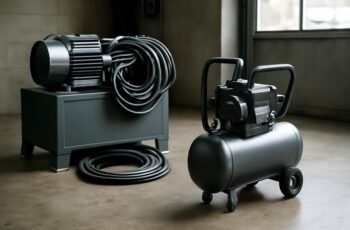
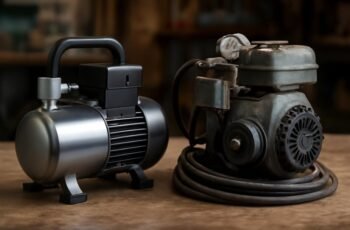
When selecting an air compressor, understanding the fundamental differences between oil-lubricated and oil-free models is critical, as each offers distinct operational benefits and limitations. We recognize that application requirements, maintenance considerations, and long-term costs all influence the optimal choice. To make an informed decision, it’s essential to analyze how each type performs under various conditions and what trade-offs they entail—details that could substantially impact your equipment’s reliability and efficiency.
Key Takeaways
- Oil-lubricated compressors use circulating oil for cooling and reducing wear, offering durability for heavy-duty applications.
- Oil-free compressors operate without internal oil, providing cleaner air suitable for medical, food, and sensitive environments.
- Oil-lubricated units typically have higher maintenance and operational costs due to oil management and filter replacements.
- Oil-free models generally have lower maintenance needs, but may have higher initial costs and higher wear rates under prolonged heavy use.
- The choice depends on application requirements, including air purity, noise sensitivity, durability, and long-term operating costs.
Understanding the Core Differences Between Oil-Lubricated and Oil-Free Compressors
Have you ever wondered what fundamentally distinguishes oil-lubricated compressors from oil-free ones? The key differences lie in their design and maintenance requirements. Oil-lubricated models use oil to reduce friction, resulting in generally quieter operation, which impacts noise comparison favorably. However, this lubrication introduces additional components and maintenance, leading to higher cost variability over time. Oil-free compressors, on the other hand, operate without oil, often making them noisier but more straightforward and economical upfront. Their simpler design minimizes ongoing maintenance costs, influencing overall cost variability positively. Understanding these core distinctions helps in selecting the right compressor based on noise sensitivity, operational costs, and maintenance preferences, ensuring an optimal balance between performance and expense.
How Oil-Lubricated Compressors Work and Their Key Benefits
Oil-lubricated compressors operate through a system where oil is circulated within the compression chamber to reduce friction between moving parts. This lubrication ensures smoother operation, prolongs component life, and maintains efficiency. Critical to this process is effective oil filtration, which removes particulates and contaminants, preventing damage and ensuring optimal performance. Additionally, selecting lubricant compatibility is essential; using the correct oil type prevents corrosion and degradation of internal components. The continuous circulation of oil also aids in heat dissipation, maintaining stable operating temperatures. These key benefits—reduced wear, enhanced durability, and consistent performance—make oil-lubricated systems suitable for demanding applications, where long-term reliability outweighs initial maintenance considerations.
Exploring the Mechanics and Advantages of Oil-Free Air Compressors
Oil-free air compressors operate through a design that eliminates the need for internal lubrication by using specialized sealing and bearing systems. This approach minimizes contamination risks associated with oil-lubricated units, ensuring cleaner compressed air. The mechanics involve non-metallic or specially coated components that reduce friction without oil, enhancing reliability and reducing maintenance. The key advantages of oil-free systems include lower operational costs, less downtime, and improved air purity—critical for applications like food processing or pharmaceuticals. By avoiding oil, these compressors also decrease environmental impact and eliminate concerns about oil leaks or residual oil in the air stream. In summary, oil-free compressors leverage advanced engineering to deliver efficient, clean, and maintenance-friendly performance, making them advantageous where air purity and system simplicity are paramount.
Which Compressor Type Is Better for Heavy-Duty Industrial Use?
When evaluating heavy-duty industrial applications, durability and longevity are critical factors that influence compressor selection. We also consider maintenance and operating costs, as these impact long-term operational efficiency. Ultimately, the choice hinges on which compressor type best meets the demands of intensive tasks while balancing cost and reliability.
Durability and Longevity
Which type of compressor offers superior durability and longevity for heavy-duty industrial applications? Oil-lubricated compressors generally provide enhanced durability due to their effective cooling and reduced wear, making them more suitable for continuous, demanding use. The oil’s ability to maintain oil purity over time helps protect internal components from corrosion and excessive friction. Additionally, these compressors tend to operate at lower noise levels, which reduces stress on mechanical parts and extends service life. Oil-free compressors, while maintenance-friendly, often experience higher wear rates because of increased friction and less effective cooling, limiting their longevity under heavy-duty conditions. Overall, the combination of superior durability, better oil purity management, and noise level control makes oil-lubricated compressors the preferred choice for long-term heavy-duty industrial operation.
Maintenance and Operating Costs
Considering the ongoing operational expenses, oil-lubricated compressors typically incur higher maintenance and energy costs compared to their oil-free counterparts. Maintenance costs are elevated due to the need for regular oil changes, filter replacements, and more complex component servicing. Additionally, oil-lubricated models often produce more noise, which can impact operational efficiency and worker safety.
Key factors include:
- Maintenance costs: Higher for oil-lubricated units because of oil management and additional components.
- Energy consumption: Generally greater due to increased friction and cooling requirements.
- Noise considerations: Oil-lubricated compressors tend to generate more noise, impacting workplace environment and compliance.
These elements make oil-free compressors more cost-effective for continuous, heavy-duty use where operational expenses are critical.
Suitability for Heavy-Duty Tasks
Determining the most suitable compressor for heavy-duty industrial applications hinges on evaluating their durability, performance stability, and ability to withstand continuous operation under demanding conditions. Oil-lubricated compressors typically excel here due to enhanced durability and consistent performance under prolonged use. They also offer better noise reduction, which is crucial in noisy industrial environments. Oil-free compressors, while more portable, often lack the same robustness for continuous heavy-duty tasks but benefit from lower maintenance and improved portability factors.
| Feature | Oil-Lubricated | Oil-Free |
|---|---|---|
| Durability | High | Moderate |
| Noise Reduction | Superior | Lower |
| Portability Factors | Less portable | Highly portable |
Choosing the right type depends on balancing longevity, noise considerations, and mobility needs.
Is an Oil-Free Compressor the Right Choice for Cleanroom and Medical Environments?
In cleanroom and medical environments, minimizing contamination risks is critical, and oil-free compressors inherently reduce the chance of oil carryover. These units often simplify compliance with strict safety standards, ensuring product integrity and patient safety. Evaluating whether an oil-free compressor aligns with specific contamination control and regulatory requirements is essential for informed decision-making.
Contamination Risks Reduction
Are oil-free compressors truly the optimal choice for minimizing contamination in cleanroom and medical environments? Their appeal lies in reducing risks associated with contaminant ingress and oil carryover. To evaluate their effectiveness:
- They eliminate oil carryover, preventing oil-based contaminants from entering the process stream.
- They reduce the likelihood of contaminant ingress since they lack oil reservoirs that could harbor particulates.
- They diminish the chance of oil-related microbial growth, crucial for sterile applications.
However, despite these advantages, oil-free systems still require strict maintenance to prevent particle buildup and ensure compressor purity. Overall, their design inherently minimizes contamination risks, making them a compelling choice for environments with strict cleanliness standards. Still, operational integrity is essential to sustain these benefits.
Compliance and Safety Standards
When considering the adoption of oil-free compressors in cleanroom and medical environments, compliance with industry standards and safety regulations becomes a primary concern. Oil compatibility is critical, as these environments demand contaminant-free air, ensuring that materials and equipment remain unaffected by oil residues. Additionally, safety standards often specify noise mitigation measures, as high noise levels can compromise sterile settings and worker safety. Oil-free compressors generally meet these stringent requirements due to their design, which eliminates oil emission risks and reduces airborne particulates. Certification to standards such as ISO 8573-1 and CSA ensures adherence to safety and purity guidelines. Ultimately, selecting an oil-free compressor aligns with regulatory expectations for contamination control, safety, and environmental considerations.
Maintenance Requirements and Long-Term Costs of Oil-Lubricated vs Oil-Free Compressors
Have you considered how maintenance demands and long-term expenses differ substantially between oil-lubricated and oil-free air compressors? Oil-lubricated models typically require regular oil changes, filter replacements, and monitoring for leaks, which increase maintenance costs over time. In contrast, oil-free compressors generally demand less ongoing maintenance, reducing downtime and labor expenses. From a long-term perspective:
- Oil-lubricated units often incur higher costs due to oil replenishment and component wear.
- Oil-free compressors tend to have lower maintenance expenses but may need more frequent part replacements to sustain noise reduction and energy efficiency.
- Although initial investments for oil-free models might be higher, their lower upkeep can offset these costs over the lifespan.
Careful consideration of these factors informs the total cost of ownership and operational efficiency.
Common Applications and Use Cases for Each Compressor Type
Different applications demand different compressor characteristics, making the choice between oil-lubricated and oil-free models essential for operational efficiency. Oil-lubricated compressors are well-suited for industrial applications such as manufacturing, where durability and continuous operation are crucial. They often use oil miscible lubricants, which provide effective cooling and reduce wear but require careful filtration to prevent contamination. Conversely, oil-free compressors are preferred in medical, food processing, and electronics industries, where purity standards are strict. These units typically avoid noncompliant oils, ensuring contaminant-free air. Use cases like precision instrumentation or clean-room environments benefit from oil-free models due to lower maintenance and reduced risk of oil carryover. Selecting the appropriate compressor hinges on understanding these application-specific demands and the impact of lubricant type on air quality.
Making the Right Choice: Factors to Consider When Selecting Your Air Compressor
What critical factors should we evaluate to ensure we select the most suitable air compressor for our specific needs? First, capacity and pressure requirements are paramount; an irrelevant comparison like horsepower alone can mislead if it doesn’t align with operational demands. Second, consider the air quality needed; oil-free models excel in environments requiring ultra-pure air, unlike some oil-lubricated options with unrelated features that add complexity without benefit. Third, maintenance and operational costs influence long-term efficiency. Choosing a compressor with minimal downtime and predictable expenses is essential. Avoid focusing solely on irrelevant comparisons or features that don’t impact performance, such as noise levels or size, unless they are specifically critical for your application. Prioritize functional factors to make an informed, technically sound decision.
Frequently Asked Questions
What Are the Environmental Impacts of Oil-Lubricated Versus Oil-Free Compressors?
We find oil-lubricated compressors pose higher environmental risks through potential oil spills, and contribute to plastic packaging waste, whereas oil-free units reduce contamination and waste, making them more sustainable in terms of environmental impact.
How Do Noise Levels Compare Between Oil-Lubricated and Oil-Free Air Compressors?
We find that oil-free compressors are dramatically quieter, with noise levels often halving those of oil-lubricated units, and their lower maintenance frequency further reduces operational noise, making them ideal for noise-sensitive environments.
Are Oil-Free Compressors More Energy-Efficient Than Oil-Lubricated Models?
We believe oil-free compressors often offer better energy efficiency due to reduced friction and maintenance needs, while oil-lubricated models may consume more energy over time; however, efficiency depends on specific application and operational conditions.
Can Oil-Free Compressors Operate Continuously Without Maintenance?
Can oil-free compressors operate continuously without maintenance? Yes, they’re designed for continuous operation with minimal maintenance, but regular inspections are still essential to guarantee optimal performance and prevent potential issues over time.
What Are the Safety Considerations for Using Each Compressor Type?
We assess safety hazards and maintenance protocols for oil-lubricated compressors, ensuring proper handling to prevent hazards, while oil-free units require seal integrity checks to avoid contamination risks, emphasizing meticulous operation for safe, reliable performance.
Conclusion
In the end, choosing between oil-lubricated and oil-free compressors is like picking a dance partner—one offers a smooth, quiet waltz with ongoing maintenance, while the other promises a cleaner, fuss-free jig at the risk of more wear. We must weigh long-term costs, application demands, and environmental factors. Remember, no matter the choice, it’s all about balancing performance with practicality—because in the world of air compression, there’s no such thing as a free lunch.