Have we ever struggled with moisture, oil, and debris ruining our air tools or downstream equipment?
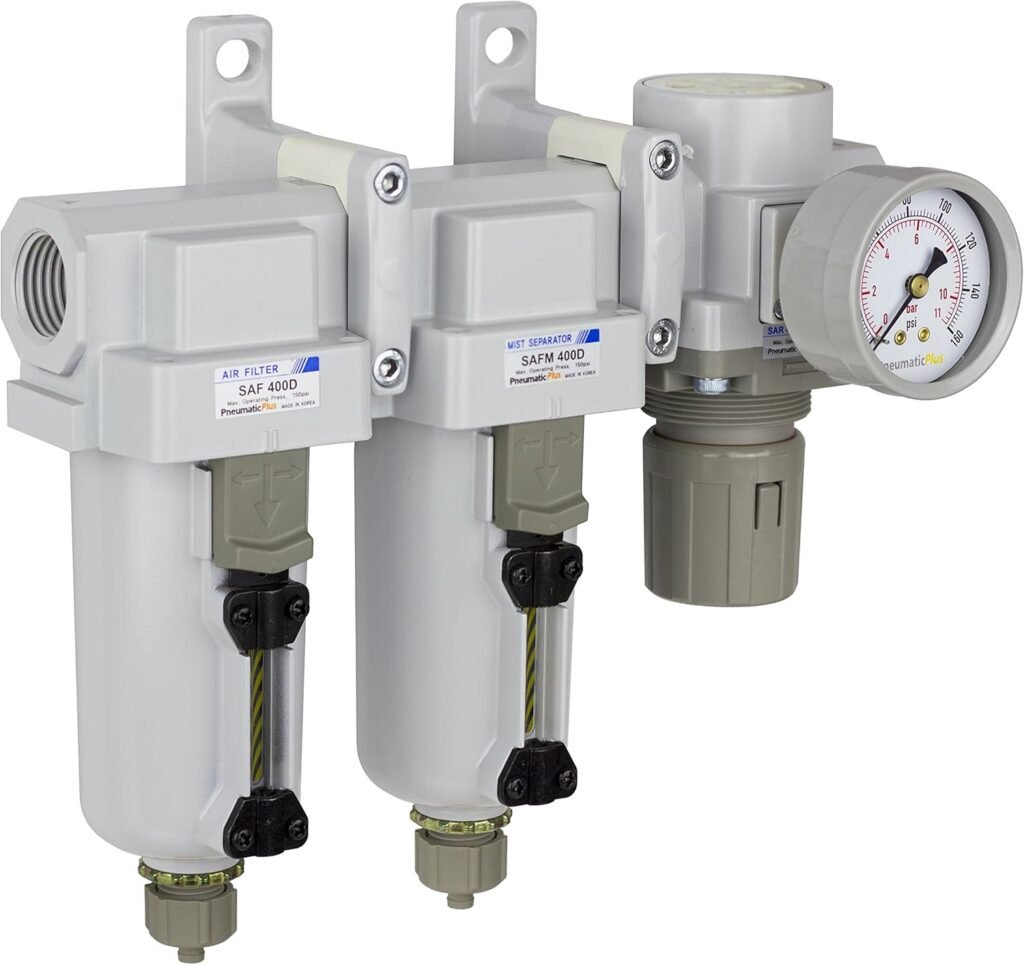

What Is the PneumaticPlus SAU430-N06G-MEP System?
This PneumaticPlus SAU430-N06G-MEP Three Stage Air Drying System is a combined particulate filter, coalescing filter, and air pressure regulator with gauge and bracket, using 3/4″ NPT ports and metal bowls with manual drains. It is designed for serious compressed air setups where we want cleaner, drier, and more stable air for our tools and machinery.
In simple terms, this unit sits in our air line and helps protect everything downstream from water, oil mist, and particles while giving us precise pressure control.
Key Specifications at a Glance
Before we get into our experience and impressions, it helps to look at the core specs. These numbers tell us whether this system fits our compressor and air usage.
| Feature | Specification |
|---|---|
| Product Name | PneumaticPlus SAU430-N06G-MEP Three Stage Air Drying System |
| Stages | Particulate Filter, Coalescing Filter, Air Pressure Regulator |
| Port Size | 3/4″ NPT |
| Max. Supply Pressure | 250 PSI |
| Max. Operating Pressure Range | 0–150 PSI |
| Particulate Filter Element (SAF) | 10 micron |
| Coalescing Filter Element (SAFM) | 0.1 micron |
| Rated Flow Rate | 37 SCFM @ 90 PSI |
| Bowl Material | Metal bowl with sight glass |
| Drain Type | Manual drain |
| Recommended Bowl Use | Metal bowl for pressures over 150 PSI or with solvents harmful to plastic |
| Included Accessories | Pressure gauge and mounting bracket |
These specs clearly position this system for small to mid-sized shop compressors, home workshops, and light industrial setups that demand consistent air quality.
Build Quality and Construction
We care a lot about how well something is built, especially when it is dealing with pressurized air. The PneumaticPlus unit feels robust and thought-through in terms of materials and design.
Metal Bowls with Sight Glass
The use of metal bowls instead of polycarbonate is a major plus for safety and longevity. Metal bowls handle higher pressures and stand up better to harsh environments and certain chemicals.
The sight glass on each bowl lets us see what we are capturing—water, oil, or particulates—without disassembling anything. That makes it much easier to know when it is time to drain or service the unit.
Solid Manifold and Connections
The 3/4″ NPT ports offer a good balance between flow capacity and versatility. We are not dealing with tiny undersized ports here; 3/4″ is suitable for many shop-level systems and tools.
The manifold body feels substantial, with threaded metal ports that take sealant or tape well. When we tighten our fittings correctly, we can achieve reliable, leak-free connections.
Three-Stage Filtration and Regulation System
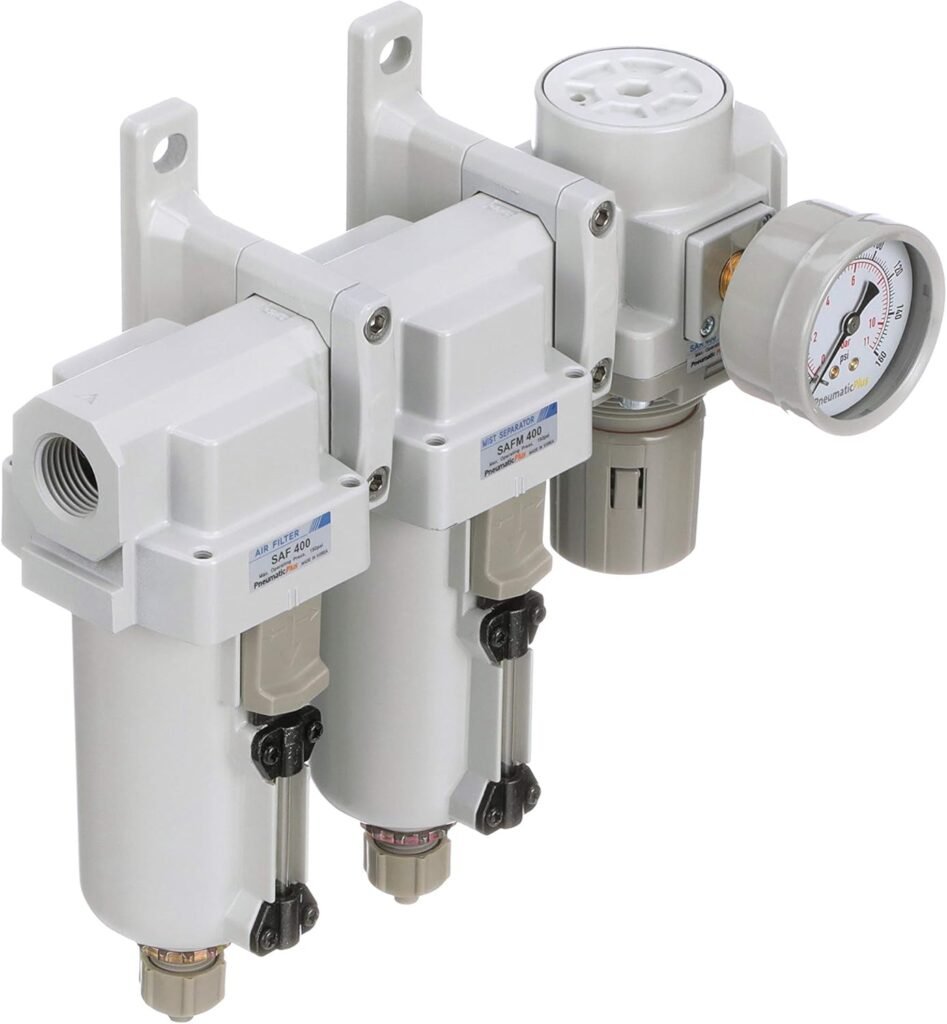
The main reason we would buy this unit is the three-stage setup: particulate filtering, coalescing filtering, and regulating pressure. Each stage plays a crucial role in improving our air quality.
Stage 1: 10 Micron Particulate Filter
The first stage is the SAF particulate filter with a 10-micron element. This is our primary barrier against solid contaminants in the air stream.
It blocks:
- Larger dust particles
- Rust flakes from old pipes
- Scale from the inside of our compressor tank
By catching the bigger debris early, this filter helps protect the finer coalescing element and our downstream tools. It is easier and cheaper to change this filter than to repair a damaged tool or clogged coalescing element.
Stage 2: 0.1 Micron Coalescing Filter
The second stage is the SAFM coalescing filter, rated at 0.1 micron. This is where the serious air cleaning happens.
A coalescing filter works by capturing tiny oil and water aerosols and forcing them to merge into larger droplets. Those droplets then drain down into the bowl so we can remove them manually.
This stage helps us when we:
- Run paint guns that are sensitive to oil mist
- Use air tools where lubricants must be controlled or kept separate
- Operate automation equipment or instruments that need clean, dry air
A 0.1 micron rating is quite fine for a unit in this class, giving us significantly cleaner air than a basic single-filter setup.
Stage 3: Air Pressure Regulator with Gauge
The third stage is the regulator, which helps us maintain a stable outlet pressure between 0 and 150 PSI. The included gauge shows our set pressure clearly.
We can set the regulator to a pressure suitable for:
- General air tools (often around 90 PSI)
- Paint spraying or delicate tools (often lower ranges around 30–60 PSI)
- Specialized equipment with specific pressure requirements
Stable, consistent pressure improves both performance and safety. We are less likely to over-pressurize sensitive tools, and we reduce stress on hoses and fittings downstream.

Pressure and Flow Performance
Pressure capacity and airflow matter a lot when we are choosing an air treatment system. The PneumaticPlus unit is designed with a broad pressure range and a respectable flow rate.
Max Supply and Operating Pressure
This system is rated for:
- Max supply pressure: 250 PSI
- Operating pressure range: 0–150 PSI
That means it can safely sit in a line where incoming pressures can be fairly high, as long as the regulated output remains within the operating range. Many shop compressors run around 135–175 PSI, so this rating is more than sufficient for that kind of use.
Flow Rate: 37 SCFM at 90 PSI
The flow rate is rated at 37 SCFM at 90 PSI. For context, common air tools like impact wrenches or spray guns often use between 5 and 15 SCFM. With 37 SCFM available, we can often run multiple tools or one high-demand tool without starving it of air.
We should still match the flow rating to our compressor and expected usage. If we are operating a heavy industrial line with extremely high continuous usage, we might need an even larger system. For most small shops and serious DIY users, 37 SCFM at 90 PSI is a solid figure.
Manual Drain Function
Moisture accumulation in the bowls needs to be managed. This unit uses manual drains, which some of us prefer for simplicity and control.
Why Manual Drains Matter
Manual drains give us:
- Direct control over when we release water and collected oil
- A very simple mechanism with fewer parts to fail
- Easy checks during regular shop routines
The tradeoff is that we need to remember to drain regularly. In humid environments or with heavy compressor use, we will want to check the bowls frequently. The sight glass helps us see at a glance when draining is needed.
When to Drain
As a practical rule, we can:
- Check the sight glasses at the start or end of each workday
- Drain whenever we see a noticeable accumulation of liquid
- Increase frequency in high humidity or continuous operation
Regular draining keeps our filters operating efficiently and helps prevent moisture from making it further downstream.
Safety and Bowl Material Considerations
Compressed air systems can be dangerous if not handled properly. The bowl material and pressure ratings affect both safety and longevity.
Using Metal Bowls Above 150 PSI
The manufacturer specifically notes that we should use the metal bowl setup when:
- Pressures exceed 150 PSI, or
- We are using solvents harmful to polycarbonate
In this system, we already have metal bowls, which gives us a margin of safety for higher pressure applications. Metal is more resistant to cracking or shattering under stress compared to clear plastic bowls.
Compatibility with Solvents and Environments
Certain solvents and chemicals can weaken polycarbonate over time, potentially leading to failure. Since these bowls are metal, we are better protected in environments where:
- Cleaning solvents are present in the air stream
- There are harsh chemicals around the equipment
- We need long-term reliability in tough shop conditions
We still want to avoid direct chemical exposure beyond what the unit is designed to handle, but metal gives us extra robustness.
Installation and Setup
Installing the PneumaticPlus SAU430-N06G-MEP is fairly straightforward, but planning the location and orientation matters. We want to get the most out of the three-stage design.
Mounting with the Included Bracket
The included bracket makes it easier to mount the unit to a wall or a solid surface near our compressor or main manifold.
We typically:
- Choose a vertical surface close to our main air line.
- Mount the bracket securely using appropriate anchors or hardware.
- Attach the air unit to the bracket, ensuring it is upright for proper drainage.
Having the unit fixed to a wall or sturdy support helps prevent strain on the pipes and fittings.
Connecting the 3/4″ NPT Ports
With 3/4″ NPT ports, we generally:
- Use pipe sealant or Teflon tape rated for compressed air
- Ensure proper tightening, but avoid over-torquing the fittings
- Connect the compressor line to the inlet side and our shop distribution line or hose reel to the outlet side
We want to follow standard plumbing practices and verify that the arrow markings or flow direction indicators on the unit align with the direction of air flow.
Initial Pressure and Leak Check
Once everything is physically installed, we can:
- Slowly pressurize the system while listening for leaks.
- Use a soapy water solution on joints and threaded fittings to spot bubbles.
- Set the regulator to our desired operating pressure and confirm the gauge reading.
Address any leaks before we start regular use. That way, we avoid wasted energy and ensure our tools get consistent pressure.
Maintenance and Filter Care
Any filtration system will only keep performing if we maintain it properly. Fortunately, this unit is pretty straightforward to look after.
Checking and Replacing Filter Elements
Over time, the 10 micron and 0.1 micron elements will gradually clog with particulates and aerosols. Signs that elements may need replacement include:
- Noticeable pressure drop across the unit at normal flow
- Reduced tool performance even when the regulator is set correctly
- Visual contamination in the bowls that persists after draining
We can often find replacement filter elements from PneumaticPlus or compatible suppliers. Replacing the elements at recommended intervals—or when performance drops—is cheaper than running dirty or starved air to our equipment.
Routine Service Schedule
A practical routine might look like this:
- Daily or weekly: Check sight glass and drain bowls as needed.
- Monthly: Check for leaks, inspect bowls for corrosion or damage, verify gauge accuracy.
- Every 6–12 months (depending on usage and air quality): Replace filter elements, thoroughly inspect seals and O-rings, and clean bowls.
We can adjust this schedule based on how heavily we use our compressed air and how dirty our environment is.
Performance in Real-World Use
On paper, a product may look solid, but what matters is how it behaves in daily use. Our impression of the PneumaticPlus SAU430-N06G-MEP in a working setup is quite positive.
Air Tools and General Shop Use
For typical shop tools such as impact wrenches, ratchets, grinders, and nailers, we notice:
- More consistent torque and speed due to stable pressure
- Less visible moisture coming out of exhaust ports
- A general reduction in contamination-related issues
With 37 SCFM at 90 PSI, we can run one high-demand tool or multiple lighter tools without significant drop-off, assuming our compressor can keep up.
Painting and Finishing Operations
For painting, clean, dry air is absolutely crucial. The combination of particulate and coalescing filtering at 10 micron and 0.1 micron helps to:
- Reduce fish-eyes and surface defects caused by oil and moisture
- Prevent visible water or oil spit from the gun
- Improve consistency in finish quality
We may still want a final-stage desiccant dryer or specialized filter for super-critical finishing, but this unit provides a strong foundation for most automotive and woodworking finishing jobs.
Automation, CNC, and Precision Equipment
For CNC machines, pneumatic cylinders, and other precision devices, cleaner air contributes to:
- Fewer stuck valves and sticky actuators
- More reliable operation of pneumatic controls
- Longer intervals between maintenance on air-driven components
The pressure regulator ensures we are not overdriving delicate components, while the filters reduce wear from debris and oil contamination.
Strengths of the PneumaticPlus SAU430-N06G-MEP
When we evaluate the strengths, a few standout features distinguish this unit from simpler filters or regulators.
Comprehensive Three-Stage Protection
Having particulate filtering, coalescing filtering, and pressure regulation in one integrated package simplifies our air system. We do not need to piece together separate components, which reduces potential leak points and saves time.
This all-in-one approach gives us:
- Better protection for our tools and equipment
- Cleaner finishes in painting and spraying tasks
- More reliable performance from everything downstream
High-Quality Air Filtration Levels
The combination of 10 micron and 0.1 micron elements means we are capturing both large particles and ultra-fine aerosols. That is a significant upgrade from a single-stage 40 micron filter that many basic systems rely on.
We can expect noticeably cleaner air and fewer contamination complaints, especially if we are coming from a bare compressor with no treatment.
Strong Construction and Safety Margin
Metal bowls, high supply pressure rating (250 PSI), and sensible design choices give this unit a robust feel. We can install it with confidence in a professional shop or heavy-duty home workspace.
The sight glasses are a practical touch; instead of wondering what is going on inside, we can see the collected liquids and contamination directly.
Potential Limitations and Things to Keep in Mind
No product is perfect for every situation. It helps to be aware of a few practical considerations with this system.
Manual Versus Automatic Drains
The manual drains are simple and reliable, but they require discipline. If we forget to drain in a humid environment, the bowls may fill more quickly than we expect.
If our shop runs unattended or we need a truly low-maintenance system, we might wish for automatic drains. That said, many users prefer manual drains for cost and control.
Flow Capacity and Very Large Systems
While 37 SCFM at 90 PSI is generous for most shop environments, extremely large or continuous industrial operations might exceed that, especially with multiple high-demand tools or machines running simultaneously.
We want to match this unit with:
- Compressors whose rated SCFM does not vastly exceed the filter’s capacity
- Air lines and usage patterns that do not demand more flow than the unit can supply
In oversized systems, we might need multiple units or a larger-capacity air treatment solution.
Maintenance Responsibility
Because this unit offers fine filtration, we must stay on top of element replacements and bowl draining. If we treat it as a set-and-forget device, performance will gradually degrade.
For shops that already have maintenance routines, this is not a major issue. For casual users, it is just something to keep in mind.
Ideal Use Cases for This System
This PneumaticPlus three-stage system shines in certain environments and applications. Understanding where it fits best can help us decide if it is right for our setup.
Small to Medium Auto and Fabrication Shops
For auto repair, body shops, and fabrication spaces, this unit offers:
- Good flow for multiple air tools
- Filtration suitable for painting and cleaning
- Robust construction that holds up in demanding environments
We can mount it near our main manifold and feed multiple hose reels or workstations.
Serious Home Workshops and Garages
If we are hobbyists or professionals working from home, running:
- HVLP spray guns for cars or woodworking
- Impact tools, grinders, and sanders
- Small CNC machines or air-assisted jigs
this system is a big step up from a simple in-line filter. It helps us get more from our compressor and reduces the risk of moisture ruining workpieces or tools.
Light Industrial and Production Lines
For small production lines or light industrial applications where clean air matters—but we do not need massive multi-hundred SCFM systems—this PneumaticPlus unit fits nicely.
It provides:
- Reliable regulation for consistent processes
- Filtration that protects valves, cylinders, and instrumentation
- A compact three-stage format that is easier to integrate than multiple separate components
Comparison to Simpler Filter-Regulator Units
We might be wondering why we would choose this three-stage system over a typical single or dual-stage filter-regulator-lubricator (FRL) unit.
Higher Filtration Precision
Most budget FRL combos use something like a 40 micron or occasionally a 5–10 micron filter. While that is helpful, it will not catch the fine oil aerosols that a 0.1 micron coalescing filter grabs.
For painting, sensitive equipment, or cleanliness-focused setups, that extra filtration level is worth it.
Dedicated Air Drying Focus
This unit is specifically configured as a three-stage air drying and regulation system without a built-in lubricator. That matters when:
- We do not want added oil in the line (for painting, electronics, or instrumentation).
- We prefer to lubricate specific tools manually or with separate in-line oilers.
By separating lubrication from the main line, we retain more control over where oil goes.
Better Safety with Metal Bowls
Some low-cost units use polycarbonate bowls, which may be fine at lower pressures and clean environments, but are more vulnerable to chemicals and high-pressure damage. Metal bowls offer greater peace of mind.
Tips for Getting the Most from This System
To make sure we truly benefit from the PneumaticPlus SAU430-N06G-MEP, it helps to adopt a few practical habits and setup choices.
Place It After the Compressor and Before Distribution
An effective location typically is:
- After the compressor tank and any primary moisture separator
- Before our main manifold or distribution branches
By placing this three-stage system near the start of our distribution, we clean and regulate the air before it reaches tools and workstations.
Use Appropriate Line Sizes
We should match our plumbing to the unit’s 3/4″ NPT ports or larger. If we choke the upstream or downstream line with small-diameter piping or hoses, we can still experience pressure drop.
Using 3/4″ or 1″ main lines and reducing closer to the tool as needed will give us better performance than running long stretches of narrow hose.
Document Maintenance Intervals
We can keep a simple log noting:
- When we installed the unit and filters
- When we last replaced elements
- Any performance changes we noticed
This helps us avoid running with clogged filters and reminds us to check for wear before issues appear.
Overall Value and Suitability
When we weigh the features and performance against the effort and cost of running without proper air treatment, this system offers strong value for many users.
We gain:
- Cleaner, drier air that protects expensive tools
- Better finishes and more predictable results in painting and spraying
- A safer and more robust setup with metal bowls and solid construction
For shops and serious home users who are tired of water in lines, inconsistent pressure, and dirty air ruining work, this PneumaticPlus unit addresses several problems at once.
Summary: Who Should Choose the PneumaticPlus SAU430-N06G-MEP?
We should consider this three-stage air drying and regulation system if:
- Our compressor runs at or below the 37 SCFM @ 90 PSI range and up to 250 PSI supply.
- We need significantly cleaner air for tools, painting, or precision equipment.
- We value metal bowls, a clear sight glass, and a comprehensive three-stage design.
- We are willing to do basic maintenance—draining bowls and occasional filter replacement.
If our needs are minimal, and we only occasionally run a single nailer, this unit may be more than we strictly need. But if we rely on compressed air daily and care about reliability and quality, this PneumaticPlus SAU430-N06G-MEP system offers a thoughtful combination of filtration, drying, and pressure control that can transform the way our entire air setup performs.
Disclosure: As an Amazon Associate, I earn from qualifying purchases.