Have we ever wished our workshop had enough clean, consistent air to run everything from paint sprayers to impact wrenches without breaking a sweat?
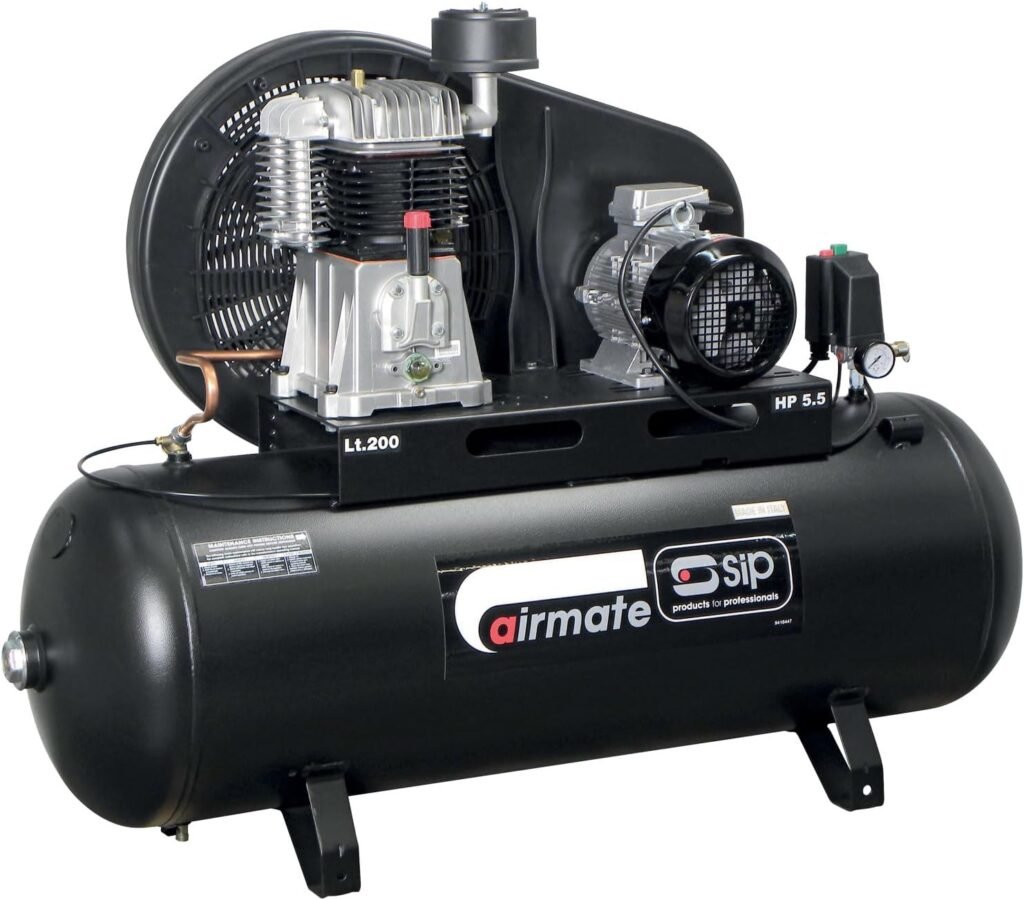

SIP Airmate TN5.5/200 Belt Drive Air Compressor Review
When we look for a serious compressor for the garage or workshop, we usually want power, consistency, and reliability in one package. The SIP Airmate TN5.5/200 Belt Drive Air Compressor is built with exactly that in mind. In this review, we walk through what it offers, how it performs, and whether it suits our setup and style of work.
Key Specifications at a Glance
Before we get into details, it helps to set out the core numbers. These specs shape what tasks we can reasonably expect the SIP Airmate TN5.5/200 to handle day in and day out.
Core Technical Details
This compressor is designed as a heavy-duty unit for workshops and professional environments. The numbers highlight that we are dealing with more than a hobby machine.
| Feature | Specification |
|---|---|
| Model | SIP Airmate TN5.5/200 Belt Drive Air Compressor |
| Power Supply | 400V, 20A, 3‑Phase |
| Motor Power | 5.5hp / 4.1kW |
| Tank Capacity | 200 litres |
| Maximum Pressure | 145psi / 10 Bar |
| Air Delivery (approx.) | 24CFM (Cubic Feet per Minute) |
| Drive Type | Belt-driven |
| Lubrication | Oil-lubricated |
| Typical Applications | Garage, workshop, trade, industrial, professional |
| Suitable Tools | Paint sprayers, air guns, airbrushes, impact wrenches, nailers, more |
These figures tell us that this is aimed at users who need continuous, reliable airflow and are comfortable working with 3‑phase equipment.
Design and Build Quality
A compressor like this is an investment, so we naturally want to know how it’s built. The SIP Airmate TN5.5/200 is clearly made for regular use in demanding spaces rather than occasional DIY use.
Heavy-Duty Construction
We can think of this unit as a solid, workshop-grade machine rather than a light, portable gadget. The 200L tank and robust chassis give it a grounded, stable presence.
The construction feels geared toward long-term service: sturdy tank, strong frame, and components arranged to be serviceable. For a busy workspace, this is exactly the sort of build that can handle frequent start-stop cycles and extended sessions.
Belt-Driven Layout
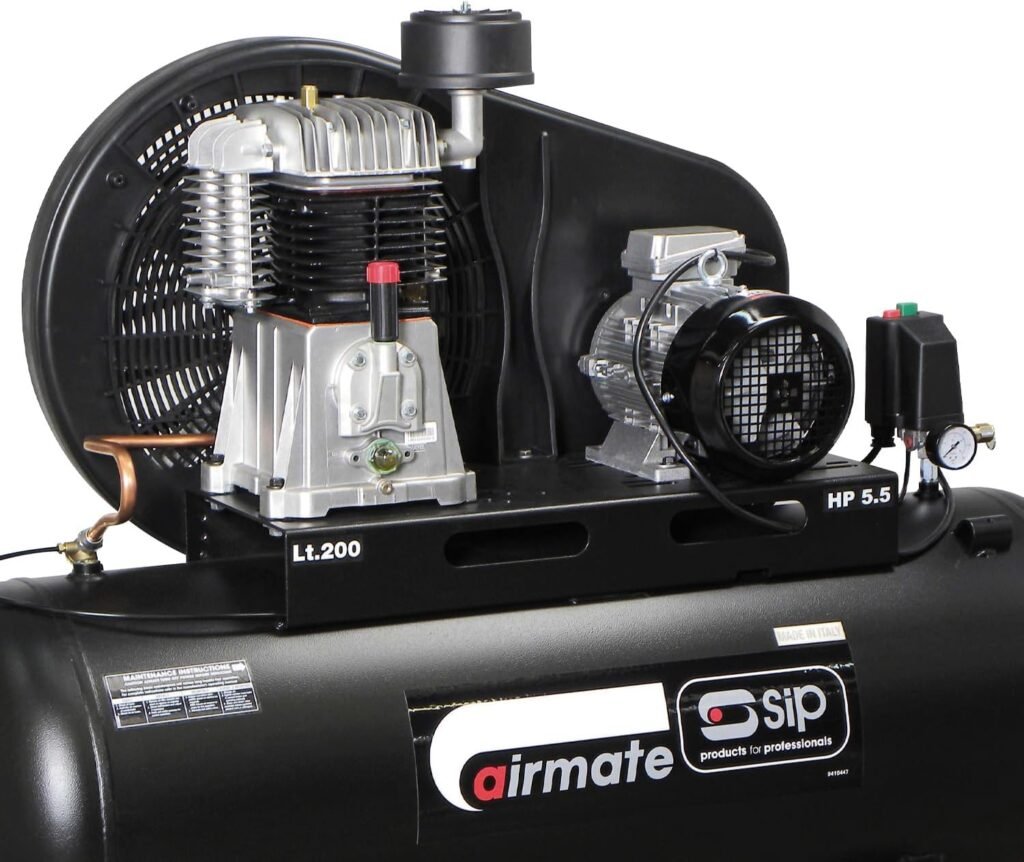
The belt drive is at the heart of the Airmate’s smoother operation. Instead of a direct-drive layout, the motor uses a belt and pulley system to turn the pump at an optimal speed.
This helps in a couple of ways. First, it reduces noise compared to many direct-drive compressors. Second, it can help extend the life of both motor and pump by avoiding harsh, high-speed operation. It feels more refined and workshop-friendly than a screaming direct-drive unit.
Power and Performance
Performance is where we decide if this compressor really earns a place in our garage or workshop. The combination of motor power, pressure, and air delivery makes it suitable for serious tasks.
Motor Power: 5.5hp / 4.1kW
A 5.5hp (4.1kW) motor is right in that sweet spot for professional shop use. It is powerful enough to keep up with multiple air tools across a range of applications without constantly waiting for the tank to refill.
With 3‑phase 400V supply, the motor benefits from smoother, more efficient power delivery, which typically means better durability and less voltage drop under load. We should be comfortable that this is not underpowered for tasks like spray painting, sandblasting smaller parts, or running larger impact wrenches.
Pressure and Airflow: 145psi / 10 Bar and 24CFM
Pressure alone doesn’t tell the full story; airflow matters just as much. This unit delivers up to 145psi (10 Bar), which is enough for the vast majority of air tools that we might use in a professional or serious home workshop.
At around 24CFM, we get a generous flow of air suited to tools that demand continuous supply. That means we can run high-demand equipment like spray guns and air grinders with much fewer interruptions than we’d see with smaller compressors. It supports both intermittent tools and more continuous ones comfortably, provided we match hose and fittings properly.
200L Tank Capacity
The 200-litre tank is a core reason to choose this compressor over smaller units. Tank size directly impacts how often the motor has to run and how stable our output feels across longer sessions.
Why 200 Litres Matters in Real Use
A larger tank works like a buffer. We can run high-demand tools for longer without the motor kicking in immediately. For tasks like paint spraying or using air sanders, this makes a noticeable difference in consistency and comfort.
With 200L on tap, we also reduce cycling frequency of the motor and pump. This usually translates to less wear and tear, quieter overall operation over a given time, and more relaxed working conditions. For us, that often matters just as much as raw power.
Oil-Lubricated Operation
Lubrication is a central part of how this compressor runs. Oil-lubricated units differ from oil-free models in several key ways that affect longevity and output quality.
How Oil Lubrication Helps
In this compressor, oil is introduced into the compression mechanism to reduce friction between moving parts. This has a number of benefits:
- Less friction: Components wear more slowly.
- Better heat dissipation: Oil helps carry heat away from key surfaces.
- Improved efficiency: Smoother movement means less wasted energy.
After compression, the oil is separated from the air, leaving us with clean output suitable for tools and processes that need uncontaminated air.
Clean Air for Tools and Spraying
Even though the compressor is oil-lubricated, it is designed so that the compressed air itself remains clean. For paint spraying, airbrushing, or anything sensitive to oil contamination, we still want proper filtration and possibly a water/oil separator in the line, but the inherent design supports reliable, clean air delivery.
This combination makes it a strong choice for auto painting, furniture finishing, or any task where air quality directly affects the final result.

Intended Use: Garage, Workshop, Trade, and Professional
The product is clearly marketed for garage and workshop use, but the design choices show that it’s also prepared for more intensive trade and industrial demands.
Garage and Workshop Tasks
In a garage or home workshop, this unit may be more than enough power, which is not a bad thing if we work on cars, restoration, or serious fabrication projects. Typical uses might include:
- Running impact wrenches and ratchets for vehicle maintenance.
- Operating large and small nailers or staplers.
- Spray painting panels, parts, or full vehicles.
- Powering die grinders and cut-off tools.
- Supporting blow guns for cleaning and drying parts.
With 24CFM and a 200L tank, we can handle all of the above without constantly waiting for pressure to recover, especially when we’re working for extended periods.
Trade and Professional Applications
In trade or industrial settings, consistency and durability matter just as much as raw performance. This compressor fits into those environments thanks to its robust build, 3‑phase motor, and heavy-duty design.
We might find it particularly useful in:
- Body shops requiring steady airflow for paint systems.
- Small manufacturing spaces using pneumatic tools.
- Carpentry or joinery workshops with multiple air-powered tools.
- Maintenance departments dealing with various air demands daily.
It’s not a portable site compressor; it’s more of a fixed or semi-fixed piece of workshop infrastructure that becomes part of our everyday workflow.
Ease of Use and Operation
Powerful equipment doesn’t help us much if it’s awkward to run. The SIP Airmate TN5.5/200 is designed with operational simplicity in mind, even if it’s clearly intended for users comfortable with workshop gear.
User-Friendly Features
While exact control layouts may vary slightly by batch or version, this compressor includes the typical user-friendly elements we expect:
- Clear pressure gauges for monitoring tank and line pressure.
- Accessible controls for starting, stopping, and adjusting.
- Easy access to drains and oil fill/check points.
- Robust feet or wheels (depending on configuration) for stable positioning.
The overall idea is that once installed and wired correctly, day-to-day operation feels straightforward, with little fuss or confusion.
Suitable for a Range of Tools
We can use it with simple airbrushes just as easily as with standard paint sprayers or heavy tools, as long as we regulate pressure appropriately. From low-pressure fine-detail airbrushing to high-flow spray guns, it’s flexible enough to adapt.
We still need to size our regulators, filters, and hoses correctly, but the compressor itself supplies the foundation: plenty of airflow and consistent pressure.
Air Tool Compatibility
One of the big advantages of a compressor with this capacity is the flexibility to run a wide spectrum of air tools. It’s not limited to one niche.
From Airbrushes to Heavy-Duty Tools
The manufacturer points out that this model can support applications as delicate as airbrushing and as demanding as full professional use. That range means:
- Fine airbrush work at regulated, lower pressures.
- Standard HVLP or conventional spray guns for painting panels and objects.
- Air guns for cleaning, dusting, and blowing off surfaces.
- Pneumatic nailers and staplers for construction or carpentry.
- Impact wrenches, ratchets, grinders, sanders for automotive and metalwork.
We might not run all of these simultaneously, but the compressor can comfortably support most tool types that we’d expect in a typical workshop.
Consistency During Continuous Use
For tools that run continuously, like sanders or grinders, the key is whether the compressor can keep up without constantly dropping pressure. With 24CFM and a 200L tank, this machine is considerably better prepared for sustained use than small or mid-range domestic compressors.
We may still occasionally pause to allow the tank to recover during very heavy sessions, but overall, it is clearly intended to handle demanding workflows.
Noise Level and Workshop Comfort
While the exact decibel rating may not be specified in the product details we have, the belt-drive configuration strongly suggests quieter operation than many direct-drive alternatives.
Belt Drive and Noise Reduction
The belt drive allows the pump to run at a more controlled speed, which often leads to less harsh, shrill noise. For us, that means:
- A more comfortable acoustic environment in the workshop.
- Easier communication without shouting over extreme noise.
- Less fatigue when working around the compressor all day.
We should still treat it as a powerful industrial unit—it’s not silent—but it is more manageable to be around compared to many high-speed direct-drive models.
Vibration and Stability
The heavy tank and robust chassis naturally add stability. That means fewer walking movements across the floor, less rattling, and minimal vibration transmitted into the workspace.
Stability also helps protect fittings and connections over time, reducing the risk of leaks caused by constant shaking and movement.
Installation Considerations
Because this is a 400V 3‑phase, 20A machine, installation is not as simple as plugging into a standard domestic socket. We need to treat it as professional equipment.
Electrical Requirements
We must have access to a 400V 3‑phase supply that can reliably deliver 20A. This typically means:
- An appropriate industrial or workshop electrical panel.
- Professionally installed wiring and breakers.
- Compliance with local electrical codes.
Most home garages do not naturally have 3‑phase power, so those of us in domestic environments may need to confirm our building’s capacity or work with an electrician before purchase.
Space and Placement
A unit with a 200L tank takes up a respectable footprint. We should plan:
- Adequate space around the compressor for cooling airflow.
- Access for maintenance (oil checks, draining the tank, etc.).
- Proximity to the main tools or air lines we plan to use.
Many workshops place this kind of compressor against a wall in a dedicated corner, sometimes in a small quiet room or enclosure, as long as ventilation is not restricted.
Maintenance and Longevity
We get the best value out of a unit like this when we look after it properly. Oil-lubricated compressors are usually very reliable, but they do need routine attention.
Routine Maintenance Tasks
To keep performance high and extend service life, we should build a simple maintenance habit:
- Check and change oil at recommended intervals.
- Drain condensate from the tank regularly to prevent corrosion.
- Inspect belts for wear, tension, and alignment.
- Check fittings and hoses for leaks or damage.
- Keep filters clean for optimal airflow and air quality.
These tasks are not complicated, but they pay off significantly in long-term reliability.
Designed for Long-Term Use
From the motor to the pump and tank, the whole setup feels aimed at users who want a compressor that becomes part of the workshop for years, not months. The already robust design, combined with oil lubrication and belt drive, gives confidence that, with sensible care, this unit can go the distance.
Benefits of the SIP Airmate TN5.5/200
It helps to gather the main strengths of this compressor in one place so we can weigh them against our own needs and workspace conditions.
Strong Air Delivery and Capacity
The combination of a 5.5hp motor, 24CFM output, and a 200L tank gives us:
- Enough power for heavy tools and extended sessions.
- Fewer interruptions due to pressure drop or refilling.
- Smooth and consistent performance for spray applications.
For anyone who has struggled with underpowered compressors, the difference can feel quite dramatic.
Professional-Grade Versatility
We can use this compressor for many types of work and adapt it over time as our workshop grows. Whether we’re:
- Expanding from basic DIY into more serious automotive work.
- Running a trade workshop with multiple tools.
- Setting up a small production or fabrication space.
The Airmate TN5.5/200 is flexible enough to anchor that setup and support a variety of pneumatic demands.
Limitations and Considerations
No product is perfect for every user, and it’s important we acknowledge areas where this compressor may not be the best fit.
Not Ideal for Small or Casual Users
For those of us who only occasionally inflate tyres or use a small nailer, this compressor is likely far more than we need. The size, power requirements, and cost will not make sense if we only need light, occasional use.
A smaller, possibly oil-free or direct-drive model might be more suitable in that scenario, especially if we lack 3‑phase power.
3‑Phase Power Requirement
The 400V 3‑phase, 20A supply requirement is a major consideration. If our workshop or garage doesn’t have 3‑phase capability, we would need:
- An electrical upgrade (which can be costly and complex), or
- A different compressor model designed for single-phase use.
We should confirm our electrical setup before committing to this purchase.
Using the Compressor for Paint Spraying
One of the highlighted strengths of this compressor is its suitability for paint spraying duties. That’s a task where airflow and consistency are vital.
Consistent Air for Smooth Finishes
Paint spraying requires a continuous, stable air supply to maintain an even pattern and finish. The 24CFM output and 200L tank give us:
- Stable pressure for longer passes.
- Reduced risk of spatter or inconsistency due to air drop.
- Better quality control over coatings and finishes.
This is especially important if we’re working with automotive finishes or fine furniture, where surface quality is highly visible.
Integration with Filtration and Regulation
To get the most out of it for spraying, we will want:
- A good regulator to fine-tune line pressure.
- Filters and possibly an air dryer to control moisture and oil.
- Proper hose selection to avoid pressure loss and contamination.
The compressor provides the strong, consistent core, while these add-ons help tailor the air to our specific paint system and finish requirements.
Using the Compressor as an Airbrush System
While the unit is clearly powerful, it can still be used in more delicate tasks such as airbrushing. It simply means we will be working at a fraction of its total output.
Controlled, Low-Pressure Output
For airbrushing, we typically run at much lower pressures and use much lower airflow. The Airmate can easily handle that, but we must rely on:
- Precise regulators.
- Good moisture and oil filtration.
- Careful line setup.
In this role, the compressor will rarely be working hard. Instead, we enjoy extremely stable pressure, virtually no recovery delays, and a lot of headroom for future expansion into other air tools.
Industrial and Trade-Grade Reliability
Beyond garages and hobby workshops, this compressor is also positioned as strong enough for industrial and trade use. That suggests a focus on endurance, not just initial performance.
Handling Heavy Workloads
In a busy environment, compressors may run many hours each day, often with short breaks between cycles. The belt drive, oil lubrication, and 3‑phase power supply all contribute to:
- Cooler, smoother operation over time.
- Reduced mechanical stress on key parts.
- Greater tolerance for multiple start/stop cycles.
In practice, this can mean fewer breakdowns, reduced downtime, and more consistent productivity.
Suitable as a Primary Workshop Compressor
For small to medium workshops, this model can easily act as the main air supply. Multiple outlets and hose reels can be fed from it, allowing several tools to be used over the course of a day without issue.
While we may need to manage concurrent high-demand tools carefully, the overall capacity is generous enough for typical multi-user setups.
Safety and Good Practice
Any high-powered compressor requires sensible handling to keep us and our workspace safe. The better we respect it, the better it will serve us.
Basic Safety Considerations
Key points we should observe include:
- Ensuring proper installation by a qualified person, especially for electrics.
- Keeping the area around the compressor clear for airflow and access.
- Regularly checking safety valves and pressure switches for correct function.
- Never tampering with factory-set pressure limits.
Treating it as a serious industrial tool helps keep accidents at bay and ensures constant, dependable service.
Responsible Operation
We should avoid extended continuous running beyond what is recommended by the manufacturer. Even heavy-duty compressors perform best when we give them reasonable rest periods between the hardest cycles.
By combining sensible use with routine checks, we maintain both safety and performance across many years.
Comparison with Smaller “Mini” Compressors
The manufacturer makes a point of stating that this unit is not just another mini air compressor. That distinction is worth expanding, because it speaks to both capability and expectations.
What Sets It Apart
Compared to small portable models, this compressor offers:
- Far higher airflow (24CFM vs. often 5–9CFM or less).
- Much larger tank capacity (200L vs. typical 6–50L).
- Industrial build quality with belt drive and oil lubrication.
- 3‑phase power for smoother, more robust operation.
In other words, it is not simply a “bigger version” of a portable unit; it’s a different class of machine intended to be a central workshop asset.
When a Mini Compressor Is Not Enough
If we already own a small compressor and find ourselves facing limitations like:
- Constant waiting for the tank to refill.
- Inability to run spray guns smoothly.
- Pressure drops when using grinders or sanders.
- Overheating during longer sessions.
then the SIP Airmate TN5.5/200 is a logical upgrade path that solves those issues with significant overhead for growth.
Cost vs. Value Consideration
While we might not have the exact price in front of us, we can still think about value in terms of capability and longevity.
Looking Beyond Upfront Price
A cheaper, smaller compressor might feel attractive at first, but in a busy workshop we often end up paying the difference through:
- Downtime while waiting for pressure to recover.
- Tools not performing as intended.
- Shorter service life and more frequent replacements.
With the SIP Airmate TN5.5/200, we pay for a professional-class solution that brings higher productivity and a longer expected lifespan, particularly if maintained correctly.
Matching Investment to Our Needs
If our usage is light or infrequent, this model may be more than our situation justifies. But if we:
- Operate a workshop professionally.
- Use air tools frequently.
- Need paint-quality air and steady performance.
then investing in a robust, heavy-duty compressor often makes both technical and financial sense over time.
Who This Compressor Is Best For
To help us decide if this model matches our profile, it helps to summarise the ideal user types and environments.
Ideal Users and Workspaces
We are likely a good match for this compressor if:
- We run a garage, body shop, or trade workshop.
- We have or can install 400V 3‑phase electrical supply.
- We use multiple air tools or run high-demand tools often.
- We want a long-term, central compressor rather than a portable, occasional-use unit.
For such users, the SIP Airmate TN5.5/200 can quickly become the backbone of the workshop.
Users Who May Want to Look Elsewhere
On the other hand, this may not be the best fit if:
- We only carry out occasional, light tasks.
- Our workspace is a small domestic garage without 3‑phase power.
- We prioritise extreme portability over capacity.
- We’re looking for a low-cost starter compressor for very basic use.
In those cases, a smaller, single-phase, possibly oil-free model may be more appropriate and cost-effective.
Final Thoughts on the SIP Airmate TN5.5/200
Looking at the whole picture, the SIP Airmate TN5.5/200 Belt Drive Air Compressor stands out as a serious, workshop-grade solution rather than a casual tool. Its 5.5hp / 4.1kW motor, 200L tank, 145psi / 10 Bar pressure, and 24CFM air delivery combine to create a powerful, reliable backbone for garages, trade shops, and professional spaces.
We get a machine that can support tasks as delicate as airbrushing and as demanding as continuous paint spraying and heavy pneumatic tools. The oil-lubricated, belt-driven design leans strongly toward durability, smoother running, and a quieter, more comfortable workspace compared with many direct-drive alternatives.
This compressor does require a 400V 3‑phase, 20A supply and enough space to live comfortably in our workshop, so it is clearly aimed at serious users rather than casual hobbyists. For those of us who need consistent, high-quality compressed air for a wide range of tools and applications, the SIP Airmate TN5.5/200 offers a compelling combination of power, capacity, and longevity that can anchor our workshop for years to come.
Disclosure: As an Amazon Associate, I earn from qualifying purchases.