Are we looking for a tough, reliable compressor pump that can keep up with serious work?
When we shop for an air compressor pump, we’re usually looking for more than just numbers on a spec sheet. We want something that actually lasts, runs consistently, and does not overheat or quit in the middle of a job. That’s where the NorthStar Air Compressor Pump – 1-Stage, 2-Cylinder, 13.7 CFM at 90 PSI steps in as a serious option for our shop or garage.
In this review, we walk through how this pump is built, how it performs, and what it’s like to live with it over the long term.

What Is the NorthStar Air Compressor Pump?
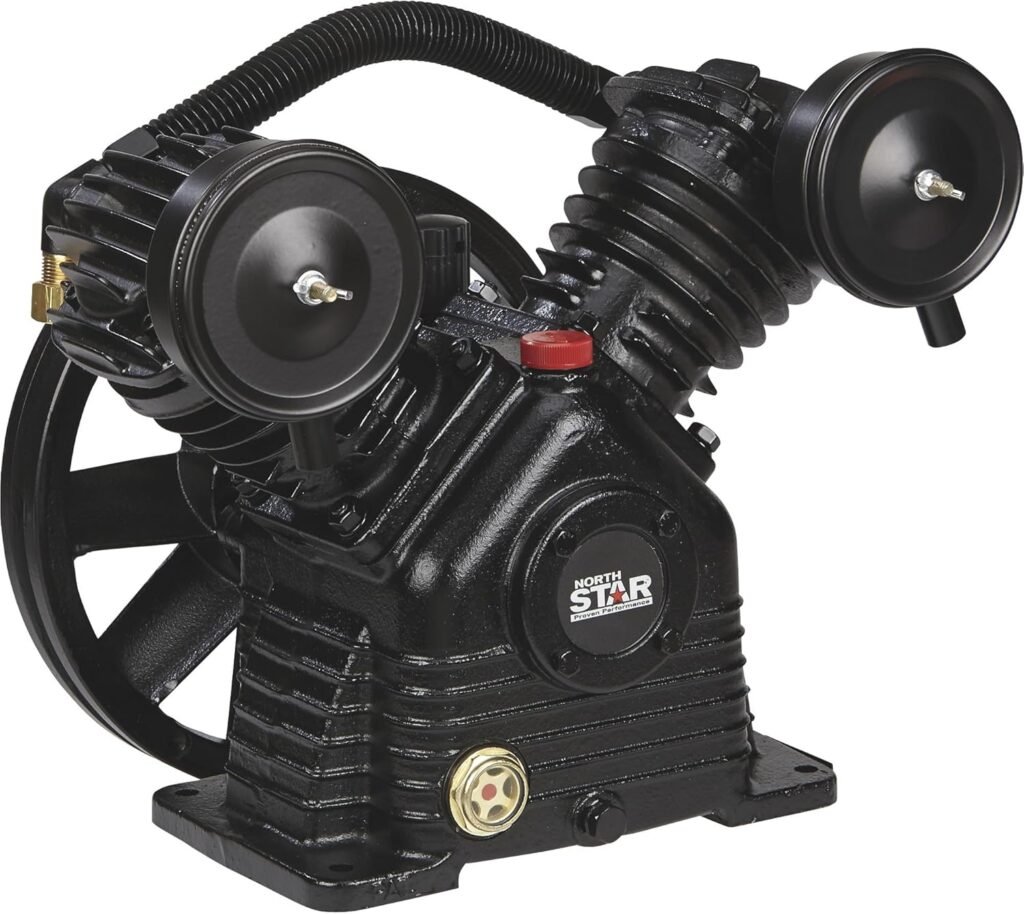
This compressor pump is a standalone, 1-stage, 2-cylinder replacement or upgrade unit designed for those of us who already have a motor and tank, or who want to rebuild an existing compressor. It is not a full compressor package; it’s the heart of the system.
We see it as a solid choice for home shops, small businesses, and serious DIY users who want near-commercial durability without jumping into giant industrial setups.
Key Specifications at a Glance
Before we go deeper into how it behaves in real use, it helps to see the essential numbers in one place. These specs form the backbone of what we can reasonably expect in output and durability.
| Feature | Specification / Detail |
|---|---|
| Product Name | NorthStar Air Compressor Pump |
| Stage Type | 1-Stage |
| Number of Cylinders | 2 |
| Air Delivery | 13.7 CFM at 90 PSI |
| Pump Material | Full cast iron |
| Pump Head Material | FC35 grade cast iron |
| Valve Type | Floating-type Swedish steel valves |
| Cooling Design | V-style cylinder layout |
| Operating Style | Slower RPM for cooler operation and longer life |
| Intended Use | Replacement/upgrade compressor pump (motor & tank required) |
These numbers tell us we are not dealing with a tiny hobby pump. The 13.7 CFM at 90 PSI rating puts it into a category that can handle serious air tools, continuous use tasks, and shop-level work.
Build Quality and Materials
When we pick up or install a compressor pump, the first impression usually comes from its weight and feel. The full cast iron construction of this NorthStar unit sends a clear message: it is built to take long hours and heavy workloads.
We appreciate that this is not a “mixed materials” unit with a cast iron sleeve and lots of aluminum where it matters least. The full cast iron body adds weight, but it also adds resistance to wear, better heat management, and structural stability over years of use.
Full Cast Iron Pump for Long Service Life
Cast iron remains the gold standard for compressor pumps that are expected to last. The NorthStar pump uses cast iron for the entire pump, including the crankcase and cylinders, which is a strong indicator of long-term reliability.
We like this because cast iron:
- Handles heat cycles better than many lighter alloys
- Resists warping and distortion under continuous load
- Reduces internal wear over time when properly lubricated
If we plan to run the pump frequently or to support a busy shop environment, that extra toughness translates into fewer breakdowns and less money spent on replacements.

V-Style Cylinder Design and Cooling Efficiency
Cooling is one of the most important aspects of compressor performance. Even a powerful unit can be disappointing if it gets too hot and needs frequent breaks.
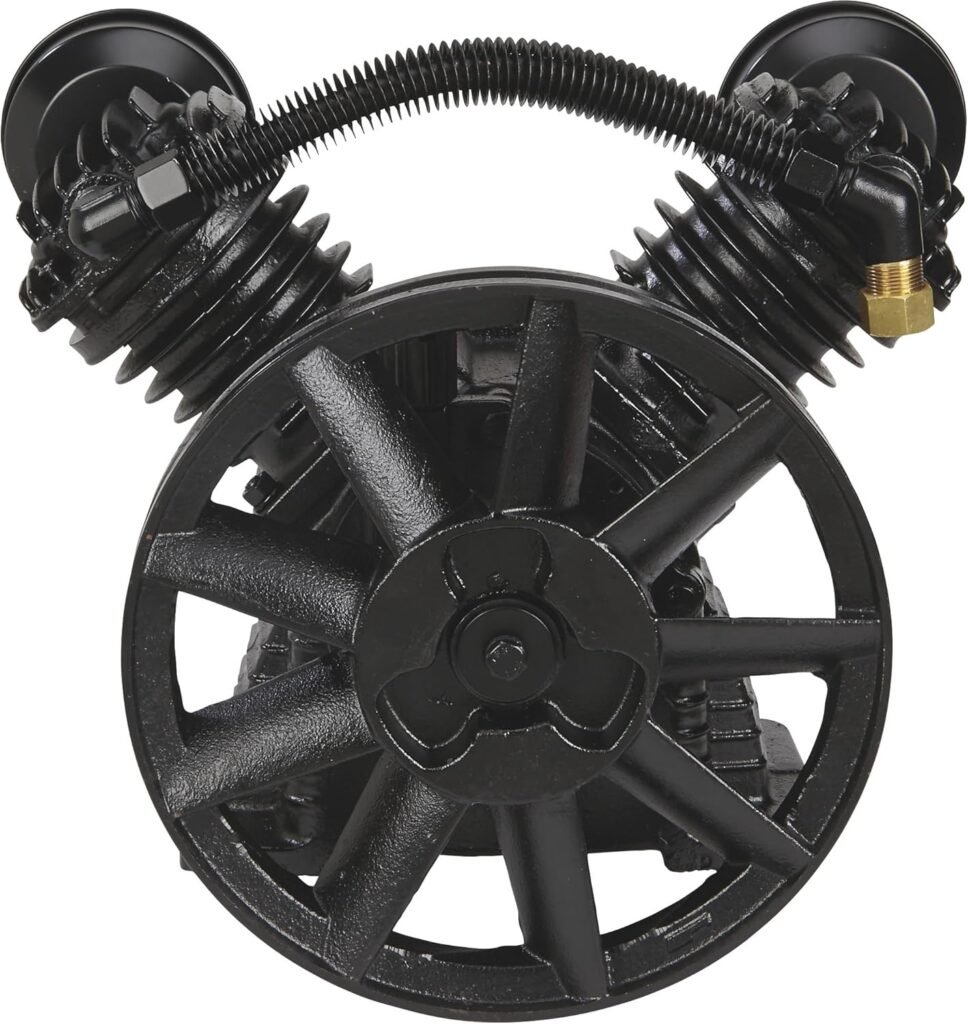
The NorthStar pump uses a V-style cylinder design, where the two cylinders are arranged in a V-shape rather than in-line. This layout is more than just aesthetics; it affects airflow and cooling across the pump.
Why the V-Style Layout Helps
By spreading the cylinders apart, the pump can shed heat more effectively. There is more surface area exposed to airflow, and less heat build-up in tight spaces.
We find that this layout:
- Improves natural air circulation around the cylinders
- Helps maintain more stable operating temperatures
- Reduces thermal stress on internal components
In practical terms, this makes the pump more suitable for longer runtimes and for tasks that demand sustained airflow, such as running impact wrenches, sanders, or paint equipment.
Pump Head Made of FC35 Grade Cast Iron
The pump head is often subjected to the highest heat and pressure in the entire system. NorthStar uses FC35 grade cast iron for this crucial component, which is a higher grade of cast iron with better strength and durability properties.
We like seeing this level of material choice because it shows that the brand is not cutting corners on the parts that matter most.
What FC35 Grade Means for Us
FC35 grade cast iron has improved tensile strength and better resistance to cracking under pressure and heat cycling. For us as end users, that translates to:
- Reduced risk of head warping or cracking under heavy use
- Better long-term sealing and compression performance
- More consistent pressure output as the pump ages
For anyone planning to keep this compressor pump running for many years, that extra durability in the head material should add real value.
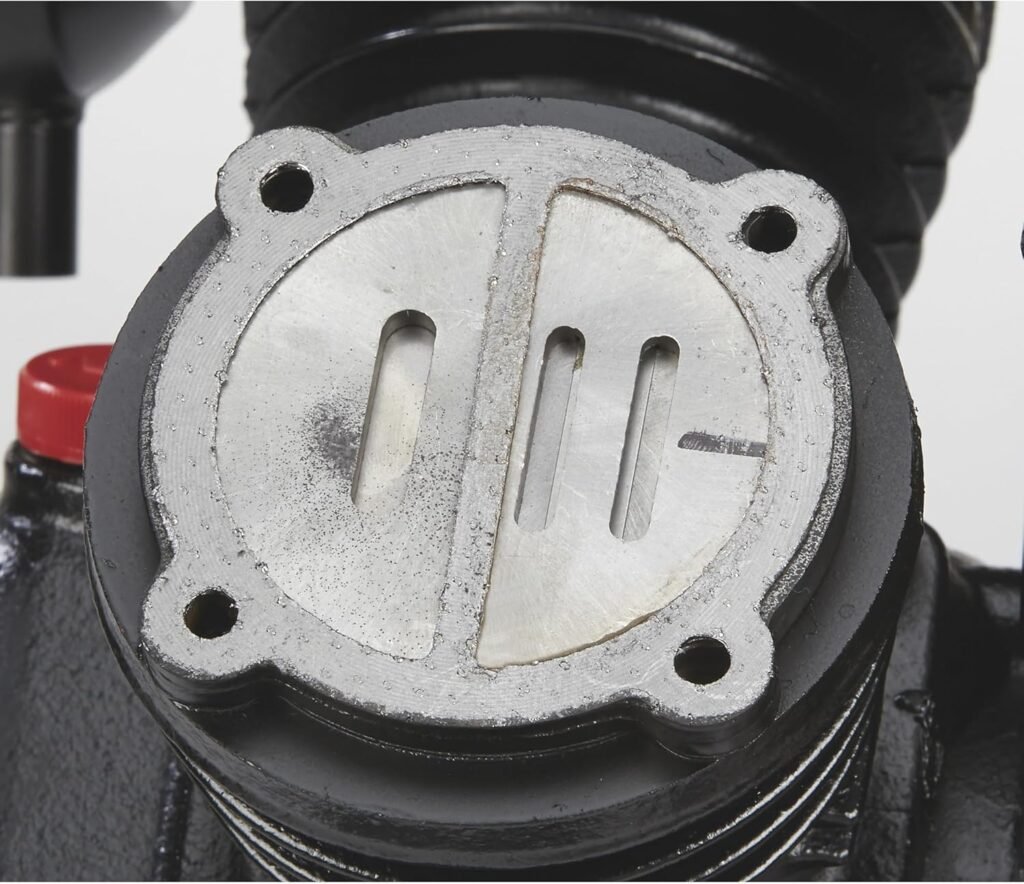
Floating-Type Swedish Steel Valves
Inside the pump, the valves control airflow in and out of the cylinders. They open and close rapidly under pressure, and they can be a common failure point in lower-quality pumps.
NorthStar uses floating-type Swedish steel valves, which are designed for longer valve life and more precise control of airflow.
Why Valve Quality Matters
Poor-quality valves can lead to:
- Loss of compression
- Reduced CFM output
- Harder starts and irregular performance
- Early pump failure
By using Swedish steel, known for its high-grade metallurgy, and a floating design, this pump aims to deliver:
- Longer valve lifespan, even under heavy cycles
- More stable air delivery over time
- Fewer internal failures related to valve breakage or bending
We see this as a big plus if we want a pump that we can put to work day after day without constantly worrying about internal wear.
Slower RPM Operation: Cooler, Quieter, Longer-Lasting
A critical design philosophy behind this pump is that it runs at slower RPMs compared to many budget compressor pumps. Slower operating speed might sound like a downside at first, but in the world of compressors, it is usually the opposite.
We prefer slower RPMs for serious, long-term use because they reduce heat, friction, and noise, all of which shorten the life of moving parts.
Benefits of Lower-Speed Operation
Running more slowly provides us with several practical advantages:
- Cooler operation – Less friction and lower internal speed means temperatures stay more manageable, helping oil and seals last longer.
- Longer component life – Bearings, pistons, and rings are not hammered as hard or as often, which increases service intervals.
- Quieter behavior – While no compressor pump is silent, slower RPMs typically mean a more tolerable sound level in the shop.
Instead of chasing maximum speed, NorthStar has chosen a balance that leans toward durability and consistent airflow.
Air Delivery and Performance: 13.7 CFM at 90 PSI
The headline performance number for this pump is 13.7 CFM at 90 PSI. That figure tells us how much air it can deliver steadily at a commonly used pressure level.
For many of our tools and tasks, 90 PSI is the standard operating range. This makes the rating very relevant in real life, rather than just looking impressive on paper.
What 13.7 CFM at 90 PSI Means in Real Use
CFM (cubic feet per minute) measures how much air the pump can provide, and that directly affects which tools we can run and for how long. With 13.7 CFM at 90 PSI, we can expect:
- Support for impact wrenches (1/2″ and often 3/4″)
- Operation of air ratchets and die grinders for sustained periods
- Use of HVLP paint guns, depending on the gun’s CFM needs
- Sandblasting in light-to-medium duty setups
- Running multiple smaller air tools with careful management
This performance level positions the NorthStar pump well above small portable units, and into the territory of serious shop use.
One-Stage, Two-Cylinder Design: What It Means for Us
This pump is a 1-stage unit, meaning it compresses air in a single step rather than passing it through multiple compression stages. That makes it simpler than a 2-stage compressor, which is often used for very high-pressure applications.
The two-cylinder configuration helps balance the airflow and smooth out pulsations, providing a more continuous output.
Suitability of a Single-Stage Pump
For most of us running automotive tools, woodworking tools, and shop equipment, a 1-stage compressor is more than adequate. We usually stay in the 90–120 PSI range for standard tasks.
A 1-stage, 2-cylinder pump like this one offers:
- Less mechanical complexity than a 2-stage design
- Easier maintenance and fewer parts to manage
- Sufficient pressure for typical shop and garage tasks up to around 135–150 PSI system pressures, depending on our overall setup
Unless we specifically require extremely high pressures (for niche industrial uses), this single-stage design should serve our daily needs comfortably.
Installing the NorthStar Pump: What We Need to Know
Because this is a pump only, we either mount it on an existing tank and motor assembly or build a new setup around it. That means we need to pay attention to alignment, pulley ratios, and adequate cooling clearance.
We should also ensure our motor and tank are matched properly to this pump so we can fully benefit from its capacity.
Basic Installation Considerations
When we install this pump, we want to consider:
- Motor size and RPM – We need a motor powerful enough (commonly in the 3–5 HP range, depending on our setup) and properly matched RPM for the recommended pump speed.
- Pulley ratio – The pump is designed to run at slower RPMs, so we need the correct pulley size combination to hit the manufacturer’s target speed.
- Mounting location – Solid mounting on the compressor tank or frame with proper vibration control helps reduce noise and mechanical stress.
- Cooling clearance – The V-style cylinders and cooling fins need open airflow around them, so we should avoid enclosing the pump in tight, unventilated spaces.
Proper installation plays a huge role in how well this pump performs over time.
Maintenance and Service Life
The NorthStar pump is built for long service life, but, as with all compressors, that only holds true if we maintain it properly. The cast iron construction and Swedish steel valves give it strong bones, but good habits keep those bones moving.
We find that consistent maintenance on a unit like this is fairly straightforward and not overly time-consuming.
Routine Maintenance Tasks
Here are typical maintenance points we should factor into our routine:
- Oil checks and changes – Keeping the oil at the correct level and changing it on schedule is crucial for bearing and cylinder longevity.
- Air filter inspections – A dirty intake filter can strain the pump and introduce contaminants into the system.
- Belt inspection and tension – If our system uses belts, we should check for wear and adjust tension regularly.
- Fastener checks – Vibration can loosen bolts over time; a quick check now and then helps maintain structural integrity.
- Cooling fin cleaning – Dust and debris on the fins can reduce cooling efficiency, so we want to keep them reasonably clean.
With a bit of attention, this pump is clearly designed to reward us with many years of service.
Noise and Vibration Characteristics
Most of us accept that air compressors are not quiet machines, but we still care about how tolerable they are to be around. The NorthStar pump’s slower RPM and cast iron build help limit harsh noise and vibration compared to many cheap, high-speed units.
We should still expect a solid mechanical sound profile, but not the shrill, grinding tone some small pumps produce.
What We Can Expect in Practice
In a typical shop or garage setting, we will likely notice:
- A deep, mechanical thump rather than high-pitched whine
- Reduced vibration transmitted to the tank and floor, especially if mounted correctly
- Quieter behavior under partial loads and with good sound-dampening adjustments around the area
While this will not replace a silent compressor, for its size and output it does a respectable job of keeping noise in a manageable range.
Efficiency and Operating Costs
When we talk about efficiency in a compressor, we usually mean a combination of:
- Air output versus power consumed
- Heat management
- Long-term reliability
The NorthStar pump’s design choices—slower RPM, robust materials, and solid valves—help improve effective efficiency, even if we do not have a detailed lab breakdown of watts per CFM.
Where the Efficiency Shows Up
We notice efficiency benefits in several ways:
- Reduced downtime – The pump is less likely to overheat and trip off, allowing continuous work.
- Lower wear and tear – Components do not need to be replaced as often, cutting lifecycle costs.
- Stable performance – Less performance drop-off over time due to internal parts holding up better.
In the long run, a more durable pump like this often ends up costing us less than a cheaper unit that needs repeated repairs or early replacement.
Use Cases: Who Gets the Most from This Pump?
Not every user needs this level of durability or capacity. Some of us only occasionally fill tires or run a brad nailer. For others, air tools are central to our daily work. The NorthStar pump shines most in environments where air is used frequently and for substantial tasks.
We see this pump making particular sense for:
Automotive and Mechanical Work
Shops and serious hobby mechanics often rely on air tools for speed and torque. With 13.7 CFM at 90 PSI, this pump can comfortably support:
- Impact wrenches for lug nuts and suspension work
- Air ratchets for confined spaces
- Blow guns and tire inflators
- Die grinders and air hammers with reasonable duty cycles
For us in this setting, the key benefit is consistent air delivery and reduced risk of overheating when we are in the middle of a job.
Woodworking and Carpentry
For those of us who spend time in a woodshop, air is crucial for:
- Framing nailers and finish nailers
- Spray guns for finish work (depending on gun’s CFM requirements)
- Sanders and other pneumatic tools
The steady output and cooling efficiency of this pump help avoid pressure drops that could ruin a coat of finish or interrupt sanding tasks.
Small Business and Light Industrial Use
If we run a small business that requires frequent air usage—like a tire shop, fabrication shop, or small manufacturing operation—this pump’s durability and output become a major plus.
We benefit from:
- Longer continuous operating capability
- Robust materials that handle daily workloads
- Reduced service interruptions compared to cheaper pumps
While it may not be sized for massive industrial lines, it fits very well into light commercial operations.
Pros and Cons Summary
To help us quickly evaluate whether the NorthStar pump suits our needs, it helps to see the major strengths and trade-offs clearly laid out.
| Aspect | Pros | Cons |
|---|---|---|
| Durability | Full cast iron body and FC35 head for long life | Heavier than aluminum or hybrid pumps |
| Cooling | V-style cylinders and slower RPM help control heat | Still needs good airflow; not for tight enclosures |
| Valves | Floating Swedish steel valves for long valve life | Valve replacement, while rare, may be more specialized |
| Performance | 13.7 CFM at 90 PSI supports serious air tool use | Overkill for casual, low-demand home users |
| Noise/Vibration | Slower RPM and cast iron reduce harsh noise | Not “quiet” in an absolute sense |
| Maintenance | Straightforward oil and filter maintenance | We still must commit to routine service |
| Cost vs. Value | Strong long-term value for heavy users | Initial cost can be higher than bargain pumps |
This mix shows us that the NorthStar pump leans heavily toward professionals and serious hobbyists who prioritize longevity and reliability over initial price and ultra-compact size.
Comparing the NorthStar Pump with Typical Budget Options
When we compare this pump to many budget-level air compressor pumps included in low-cost compressors, the design philosophy stands out. Those lower-priced units often run at very high RPMs with smaller, lighter components to keep pricing down.
By contrast, this NorthStar pump focuses on:
- Strong materials (full cast iron, FC35 head)
- Lower RPM for reduced stress
- Higher-quality valves for reliability
While a bargain compressor might work fine for occasional weekend jobs, once we start using air tools regularly, we begin noticing issues like:
- Overheating
- Noisy, rough operation
- Lower-than-claimed CFM performance
- Shorter pump life
With the NorthStar pump, we are clearly aiming for a more serious, dependable backbone for our air system.
Long-Term Ownership Expectations
If we install and maintain this pump properly, we should reasonably expect it to last many years, even in regular service. The combination of cast iron construction, slower RPM, and high-quality internal components is purpose-built for extended life.
We should still respect its limits—regular oil changes, avoiding extreme overpressure scenarios, and staying within recommended speed ranges—but this unit is built to reward that care.
What We Can Expect Over the Years
Over time, we can generally look for:
- Consistent pressure and CFM output, with limited drop-off
- Fewer catastrophic failures due to material fatigue
- Predictable maintenance cycles without constant tinkering
For those of us considering this as an upgrade from a failing pump, the NorthStar model offers a meaningful step up in stability and robustness.
Who Should Skip This Pump?
As good as it is in its category, this pump will not be the ideal choice for everyone. In some cases, we might be better off with a smaller, cheaper, or different-style unit.
We might want to pass on this pump if:
- We only use air very occasionally for light tasks
- Portability is our top priority (this is a heavy, stationary pump)
- We need extremely high pressures beyond typical shop ranges and should instead look for a 2-stage unit
- Budget is extremely tight and we cannot justify investing in a long-life pump
In those situations, a smaller portable compressor or a less industrial-focused pump might align better with our use pattern.
Practical Tips Before We Buy
If we are considering the NorthStar Air Compressor Pump – 1-Stage, 2-Cylinder, 13.7 CFM at 90 PSI, there are a few practical questions we should ask ourselves to ensure it fits into our setup properly.
We can use this quick checklist to fine-tune our decision:
- Do we already have or plan to get a motor that matches the recommended horsepower and RPM?
- Is our compressor tank appropriately sized for this pump’s output (often in the 60–80 gallon range for comfortable use, depending on our needs)?
- Do we have enough shop space and ventilation to allow proper cooling?
- Are we ready to follow a basic maintenance schedule (oil changes, filters, belts)?
- Is our task list—automotive tools, spray finishing, shop tools—heavy enough to take advantage of the pump’s capacity and durability?
If the answers lean toward yes, we are probably a good match for this model.
Final Thoughts: Is the NorthStar Air Compressor Pump Worth It?
Putting everything together, the NorthStar Air Compressor Pump – 1-Stage, 2-Cylinder, 13.7 CFM at 90 PSI stands out as a strong choice for those of us who treat compressed air as a core part of our work or serious hobby.
We get:
- A full cast iron pump body and FC35 grade head for strength and longevity
- A V-style cylinder layout and slower RPM operation for better cooling and reduced wear
- Floating-type Swedish steel valves for longer-lasting, reliable airflow control
- A robust 13.7 CFM at 90 PSI performance level that comfortably supports a wide range of tools
It is not a casual, throwaway unit. Instead, it is built as a dependable workhorse meant to anchor a solid air system for years.
If we want a compressor pump that can handle real workloads, stay cooler than many high-speed competitors, and reward us for taking basic care of it, the NorthStar pump is a compelling option to put at the heart of our setup.
Disclosure: As an Amazon Associate, I earn from qualifying purchases.