Have we ever wished our workshop had just a bit more power, reliability, and air capacity without jumping to a huge industrial unit?

What Is the SIP Airmate V-Twin Air Compressor?
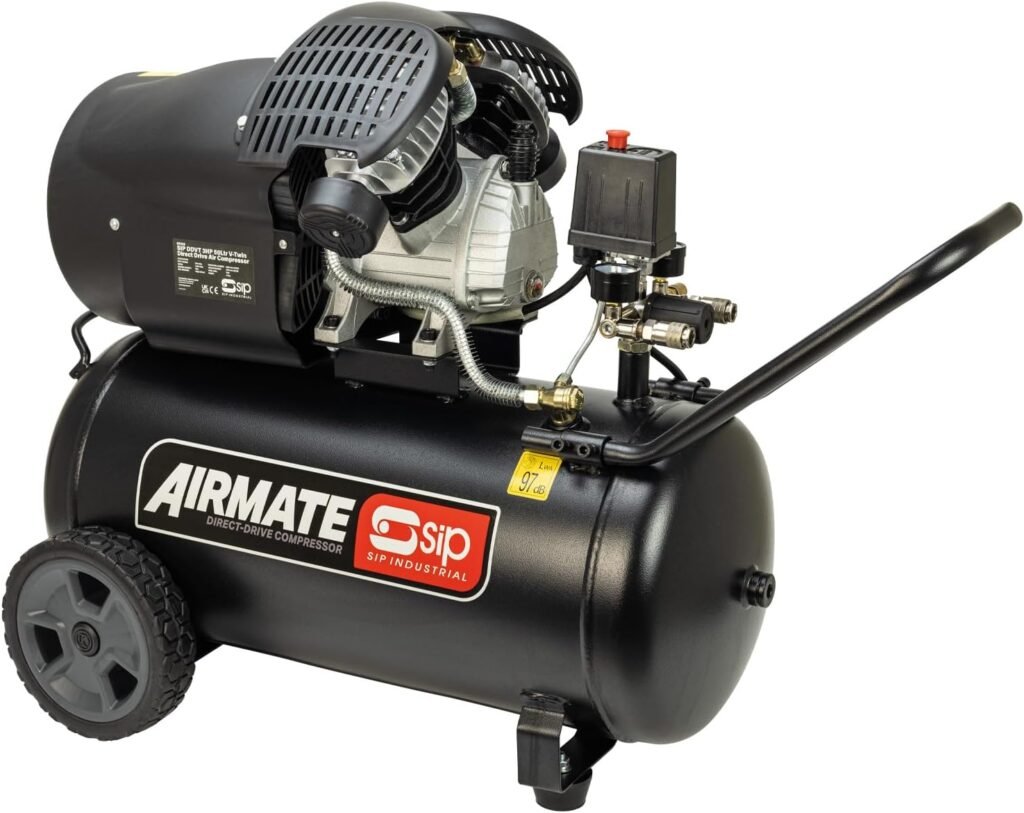
The SIP Airmate V-Twin Air Compressor Oil-Lubricated Direct Drive, 230V 50L 3hp 2.2kW 145psi 14CFM is built as a compact, workshop-friendly unit that still packs serious performance. We get a V-twin pump, a 50-litre tank, and enough pressure and airflow to comfortably run a wide range of air tools.
Instead of being a tiny hobby machine or a massive industrial beast, this model sits comfortably in the middle. It is aimed at professionals in smaller garages and serious DIY users who need real performance but also value portability and space-saving design.
Key Specifications at a Glance
Before we talk about how this compressor feels to use, it helps to see the important numbers in one place. These figures give us a clear idea of what kind of work it can handle and how it compares to other workshop compressors.
| Feature | Specification |
|---|---|
| Product Name | SIP Airmate V-Twin Air Compressor Oil-Lubricated Direct Drive |
| Motor Power | 3hp (approx. 2.2kW) |
| Voltage | 230V (single phase) |
| Tank Capacity | 50 litres |
| Pump Type | V-twin, oil-lubricated, direct drive |
| Maximum Pressure | 145psi (approximately 10 bar) |
| Air Delivery | 14CFM (cubic feet per minute) |
| Application | Small to medium workshops, home garages, professional and DIY use |
| Mobility | Portable design (wheeled configuration on most variants) |
| Ideal Use Cases | Air tools, inflating, spraying, cleaning, automotive tasks, maintenance |
This table shows us that the SIP Airmate is not just a light-duty inflator. With 3hp and 14CFM, we are firmly in semi-professional territory, which opens the door to a broad range of workshop and automotive tasks.
Build Quality and Design
The overall design of the SIP Airmate V-Twin shows a clear focus on durability and practicality. From the V-twin layout to the oil-lubricated direct drive, the whole system is built to run harder and longer than a typical budget compressor.
We notice the compact footprint first. The 50-litre tank gives us a good balance: enough stored air without taking over the entire floor. The components are generally easy to access, making routine checks and maintenance straightforward.
Construction and Materials
When we look closely at the compressor, the build feels reassuringly solid. The steel tank is sturdy, and the V-twin pump is mounted in a way that suggests longevity rather than purely cost-saving.
We also tend to see metal fittings where it matters, such as on the tank, fittings, and main structure. While some external parts may be plastic for weight and cost reasons, the core mechanical areas feel ready for workshop-level use and not just occasional light tasks.
V-Twin Pump Layout
The V-twin pump design is not just for looks. Having two cylinders arranged in a V gives smoother operation and better efficiency compared with many single-cylinder designs. This helps with air delivery, heat distribution, and overall durability.
We also appreciate that this layout usually means improved cooling. When the pump runs, the airflow over the fins and heads tends to be more effective, which is especially important when we are working the compressor hard during longer sessions.

Power and Performance
Performance is where this unit stands out. With a 3hp motor, 14CFM airflow, and 145psi maximum pressure, it comfortably runs a wide selection of air tools that would overwhelm smaller home compressors.
In everyday use, this combination means we can complete tasks faster, with fewer pauses for the tank to refill. The machine is more than just an inflator; it can truly support workshop productivity.
Motor Power: 3hp / 2.2kW
The 3hp (2.2kW) motor gives us a solid backbone for most workshop tasks. That level of power is typical of compressors that can handle professional or semi-professional work, rather than just light DIY inflating and blowing.
Having this much motor power means that when demand increases—such as when using air-hungry tools like impact wrenches or spray guns—the compressor is not instantly struggling. It builds pressure quickly and recovers faster when the tank starts to drop.
Airflow: 14CFM and What It Means in Practice
The headline figure of 14CFM tells us that this machine can deliver a steady volume of air suitable for demanding tools. While the usable free air delivery (FAD) is usually somewhat lower than the theoretical CFM, 14CFM still puts this in a strong category.
In practice, this level of airflow allows us to:
- Run most air impact wrenches for wheel nuts and suspension work
- Use air ratchets, chisels, and sanders for longer bursts
- Handle spray guns for painting panels or smaller projects
- Power blow guns and air dusters for cleaning machinery and parts
We may still need to work in cycles for very high-demand continuous tools, but overall, the 14CFM rating gives us a comfortable operating window.
Pressure: Up to 145psi
The 145psi maximum pressure (around 10 bar) is more than enough for most workshop tasks. Many air tools operate happily within the 90–120psi range, so having 145psi as our upper limit means we have a margin above typical working pressure.
This pressure range gives us:
- Strong performance for impact tools that rely on high torque
- Reliable pressure for spraying where consistency matters
- Enough headroom for inflating tyres and other items to higher pressures when needed
We can easily regulate the output to match the tool requirements using the built-in regulator (if provided on our specific configuration).
Tank Capacity and Air Storage
With a 50-litre tank, we gain a healthy buffer of stored air without a giant footprint. This mid-range capacity is often the sweet spot for people with limited space but serious tasks.
A larger tank reduces how often the compressor cycles on and off. For many jobs, it also allows for short bursts of high-demand work without the motor constantly running. We get smoother operation and less strain on the machine overall.
Why 50 Litres Works for Most Workshops
For small to medium workshops, 50 litres is usually a very workable size. It is large enough to support a variety of air tools and processes but still portable and easy to store.
We find 50 litres especially suitable for:
- Home and hobby garages
- Detailing and maintenance bays
- Small fabrication areas
- DIY woodworking or metal shops using nailers, staplers, and blow guns
Where we need heavy, continuous industrial-level use, we might step up to a bigger tank. But for most of us, 50 litres hits a comfortable and practical balance.
Oil-Lubricated Direct Drive System
This compressor uses an oil-lubricated direct drive pump. That combination is chosen to balance efficiency, durability, and cost while avoiding the bulk of belt-driven systems.
Instead of relying on an oil-free, maintenance-free approach, this model embraces lubrication as a way to keep the internal components running smoothly and for longer. It requires a little more involvement from us, but we gain life and performance in return.
What Oil-Lubrication Means for Us
An oil-lubricated compressor has a pump that sits in an oil bath or uses oil to lubricate the moving parts. We need to monitor the oil level, change it periodically, and keep an eye out for contamination.
In exchange, we usually get:
- Smoother operation with less wear on the internals
- Improved longevity, especially under heavier or more constant workloads
- Better performance consistency over time
For workshop-oriented users, this arrangement is typically preferable to oil-free designs, which tend to be louder, wear faster, and feel more “disposable”.
Direct Drive vs Belt Drive
With a direct drive design, the motor is connected directly to the compressor pump, rather than using a belt and pulley system. This keeps the compressor more compact and usually reduces mechanical losses.
We get:
- A more compact footprint
- Fewer external mechanical parts to maintain, such as belts
- Often lower cost than equivalent belt-driven models
On the other hand, direct drive compressors may transmit a bit more vibration and can run faster RPMs. But for this size and class, the direct drive works well, especially in a mid-range, semi-professional context.
Portability and Footprint
One reason we might choose this SIP Airmate model is the balance between size and performance. With a 50-litre tank and compact pump assembly, this unit is quite manageable in a typical garage or workshop.
Even when we do not need to move it constantly, having a smaller footprint is useful. It leaves more floor space free for vehicles, benches, storage, and other tools.
Moving It Around the Workshop
Most versions of this compressor come with wheels and a handle, making it relatively easy to move around. We can wheel it over to a vehicle bay, then back to a bench area, without needing heavy lifting equipment.
Weight will depend on the exact configuration, but as a 3hp, 50-litre model, it is substantial without being unmanageable. For those of us used to lugging small DIY compressors, this will feel like a more serious piece of equipment, yet still manageable with basic care.
Everyday Usability
Daily usability of a compressor is about more than specs. It comes down to how easy it is to start, run, adjust, and maintain in real conditions. The SIP Airmate V-Twin is clearly aimed at making frequent use straightforward rather than a burden.
From switching it on to adjusting pressure for each tool, the controls and layout are built to support workshop routines. We can set it up, plug in our tools, and get to work with minimal fuss.
Controls and Setup
The standard arrangement usually includes:
- An on/off switch in an accessible position
- Pressure gauges to show tank and regulated output pressure
- A pressure regulator to set the output pressure for our tools
- One or more quick-release couplers for airline connection
We simply connect the compressor to a suitable 230V supply, check the oil level, and then attach our airline and tools. Adjusting the regulator to match tool requirements is quick and intuitive.
Noise Levels and Comfort
While exact decibel levels are not listed in the product details, we can reasonably expect this class of oil-lubricated, direct drive compressor to be audible but manageable in a small workshop. Oil-lubrication usually helps keep mechanical noise down compared to oil-free units.
We might still want to use hearing protection, particularly in a confined space. However, the noise is unlikely to be excessive for a 3hp compressor. Many of us will find it perfectly acceptable for daily use in a garage or home workshop.
Ideal Use Cases and Applications
This compressor is designed for small to medium workshops and serious DIY users. It sits in that niche where we want more than occasional usage and light tools, but we also do not need a full industrial system.
We can treat the SIP Airmate V-Twin as a core part of our workshop setup, especially if we enjoy working on vehicles, building projects, or maintaining equipment.
Automotive and Garage Work
For automotive enthusiasts and mechanics, this compressor is a strong option. With 14CFM and 145psi, it can comfortably support:
- Impact wrenches for wheels, suspension, and underbody work
- Air ratchets for tight spaces
- Tyre inflators with accurate pressure control
- Blow guns for cleaning engine bays, brakes, and parts
- Underbody and cavity wax spraying with suitable guns
We can carry out most routine garage tasks with enough performance to feel professional without overspending on industrial kit.
Workshop and DIY Projects
Beyond vehicles, this machine fits beautifully into general workshop life. We can use it for:
- Nail guns and staplers for woodworking and framing
- Air sanders and grinders for metal or wood preparation
- Orbital sanders for smoothing surfaces and preparing for finish
- Spray guns for painting furniture, panels, or projects
- Cleaning tools and filters with a blow gun
For serious DIYers and hobbyists, this compressor lets us step up from small, underpowered models and actually use air tools the way they are meant to be used.
Professional Use in Small to Medium Workshops
If we run a small workshop or a trade business—such as detailing, repair, or maintenance—this compressor can slot into daily operations. It may not be the right choice for 24/7 industrial processes, but for daily tasks in a small team, it is very capable.
We can integrate it into:
- Small fabrication and engineering setups
- Car detailing spaces needing compressed air for blow drying and cleaning
- Maintenance workshops handling machinery and equipment servicing
The overall performance enables professional work without committing to much larger, more complex compressor systems.
Efficiency and Running Costs
Efficiency is not just a marketing phrase; it affects what we pay and how often the machine needs attention. With its oil-lubricated, direct drive design, the SIP Airmate V-Twin offers a healthy balance between power use and performance.
Over time, good efficiency means less wasted power, less heat, and fewer issues. While we still pay attention to oil changes and maintenance, the core system is built to work smart, not just hard.
Electrical Consumption vs Output
At 2.2kW, the motor is reasonably powerful but not outrageous for domestic or small commercial 230V supplies. We need to make sure our wiring and breaker can handle the starting current, but once running, the power draw is manageable.
When paired with 14CFM airflow, this consumption becomes more understandable. We are paying for real, usable performance, not just noise and heat. For many of us, that is a fair trade, especially if we use air tools regularly.
Duty Cycle and Heat Management
While the specific duty cycle rating is not listed in the provided product details, the V-twin layout and oil-lubrication strongly suggest better heat handling than a basic, oil-free compressor. We should still avoid running the compressor at 100% duty for long periods, but typical workshop patterns are unlikely to cause problems.
We gain:
- Reasonable running periods for heavy tasks
- Cooler operation thanks to the V-twin and oil-lubrication
- Less stress on the motor and pump components
If we know we are going to be using air continuously for sandblasting or industrial sanding, we might look for a larger, belt-driven machine. For most realistic workshop patterns, this compressor will sit in a comfortable operating zone.
Maintenance and Longevity
A compressor like this rewards regular, simple maintenance. When we keep up with oil changes, drain the tank, and monitor basic wear, the compressor is far more likely to run reliably for many years.
The SIP Airmate V-Twin is not a throwaway tool. It is a workshop asset, and treating it that way pays off in the long run.
Routine Checks and Care
There are a few routine tasks we should be prepared to perform:
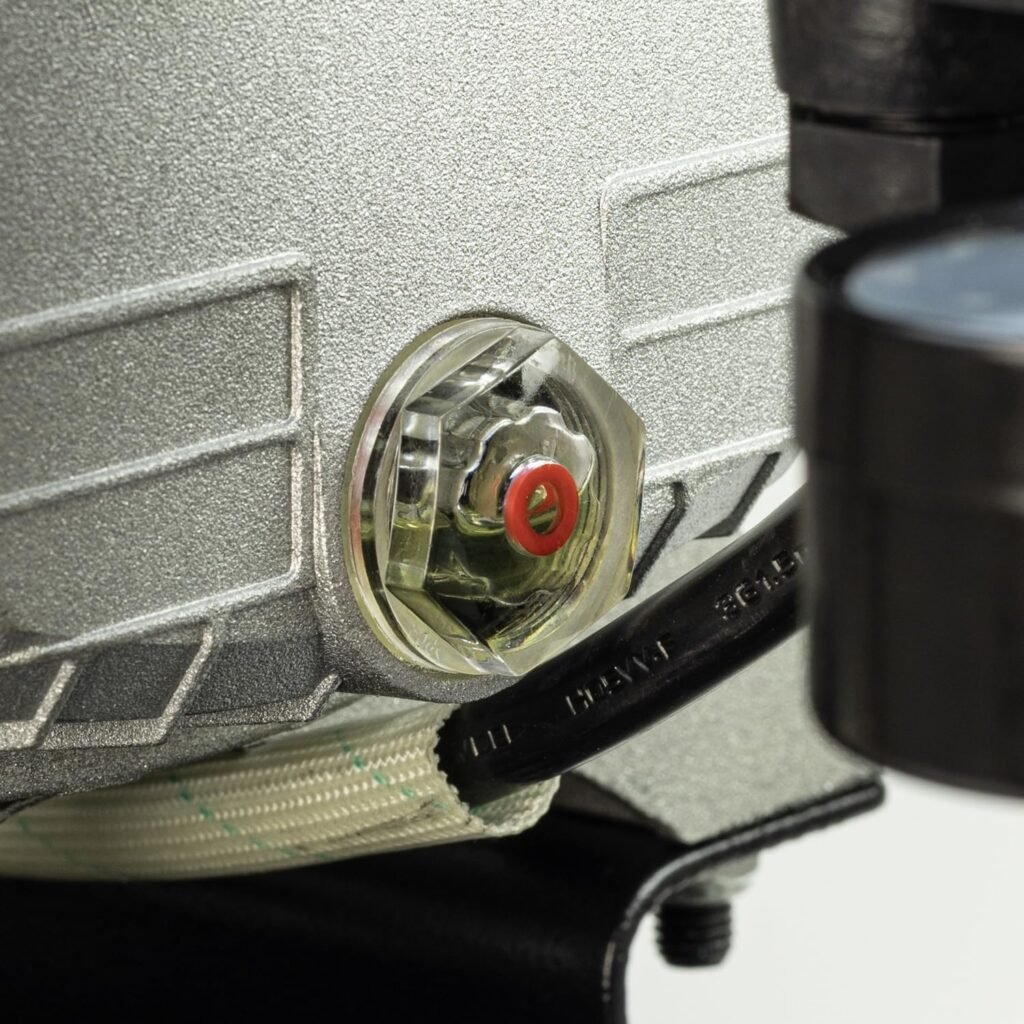
- Check and top up the oil using the sight glass or dipstick
- Change the oil at the recommended intervals
- Drain condensation from the tank regularly (daily, if used heavily)
- Inspect hoses, fittings, and couplers for leaks or wear
- Keep the compressor in a clean, ventilated environment
These small steps help keep internal rust at bay, protect the pump, and maintain consistent performance.
Durability Expectations
With its V-twin, oil-lubricated construction and solid tank, we can reasonably expect this unit to last many years under regular use. It is not one of those ultra-cheap, ultra-light compressors that fades quickly.
As long as we avoid neglect (such as running with no oil or letting water collect in the tank), the SIP Airmate V-Twin should prove dependable. It is designed for repeated, real-world use rather than occasional novelty jobs.
Advantages of the SIP Airmate V-Twin
To understand whether this model suits our needs, it helps to look at its most significant strengths. For many users, these advantages make it a worthwhile investment over entry-level models.
We can think of it as a mid-range workhorse that balances capability, size, and price.
Strong Air Delivery and Pressure
With 14CFM and 145psi, this compressor stands out among hobby-class units. We have enough airflow to use serious tools and enough pressure to keep them effective throughout a job.
Instead of constantly waiting for the tank to refill or seeing our tools underperform, we enjoy more consistent output. For anyone who has struggled with tiny compressors, that is a very noticeable improvement.
Versatile Across Many Tasks
Because of its power and tank size, the SIP Airmate V-Twin is truly multi-purpose. We are not confined to light inflating and dusting; we can step confidently into proper workshop tasks.
This versatility increases the value of the machine. We can use it today for basic duties and grow into more advanced air tools over time without needing to replace the compressor right away.
Compact but Capable
The 50-litre tank and direct drive layout result in a relatively compact footprint. In cramped workshops and garages, that is a real benefit.
We get the feeling of a professional-grade compressor without committing to a huge floor-standing unit. For many home mechanics and small businesses, that compromise is ideal.
Oil-Lubricated Design for Longevity
Instead of going for the lowest possible maintenance profile, this model embraces oil-lubrication as a way to ensure smoother, longer-lasting performance.
When we accept the small extra effort of checking and changing oil, we gain:
- Increased reliability
- Better heat management
- Reduced wear and tear over time
If we value durability, this design choice is a significant advantage.
Potential Drawbacks and Considerations
No compressor is perfect for everyone, and the SIP Airmate V-Twin is no exception. It is important that we match our expectations with what this machine is designed to do.
By understanding its limits, we can decide if it’s right for our workshop or if we should consider a different style or size.
Not a Heavy Industrial System
While powerful for small to medium workshops, this is not an industrial plant compressor. If our work requires:
- Continuous, all-day high-demand use
- Multiple operators using large air tools simultaneously
- Dedicated industrial processes like big sandblasting cabinets
Then we might be better served with a larger, belt-driven, stationary compressor with a bigger tank and a higher duty cycle.
Requires Regular Oil Maintenance
An oil-lubricated compressor needs our attention. We must check levels, change oil, and keep the system clean. For users who absolutely do not want any maintenance tasks, this might feel like a downside.
However, many of us in workshop environments already maintain tools and machines as routine. If we are comfortable doing that, the extra effort is minimal and well worth the payoff.
Noise Is Still a Factor
While oil-lubrication helps, a 3hp direct drive compressor will still make a noticeable amount of noise when running. This is the nature of the machine; it compresses air rapidly and has a powerful motor.
We should plan our setup with noise in mind:
- Use hearing protection if needed
- Keep the compressor on a solid surface to reduce vibration
- Position it away from quiet work areas where possible
For most workshops, this will be acceptable, but it is still wise to plan ahead.
Who Will Benefit Most From This Compressor?
The SIP Airmate V-Twin Air Compressor is clearly targeted at users who sit between casual DIY and full industrial operations. If we fit into that middle ground, this machine can be a superb match.
We can think about our own situation and see whether our needs align with what this compressor offers.
Ideal Users
This compressor is particularly suited to:
- Home mechanics who routinely work on cars, bikes, or machinery
- Small garage owners who need a reliable, mid-range compressor for daily tasks
- Serious DIYers and hobbyists who use air tools regularly
- Trade workers in small workshops—from detailers to repair technicians
If we find ourselves often frustrated by underpowered compressors or wishing we had more air capacity, this SIP model could feel like a major upgrade.
Less Suitable Situations
We may want to look for another option if:
- We only need a compressor a couple of times per year for light inflating
- We are running a large industrial workshop with multiple demanding stations
- We have no interest in doing any maintenance, including simple oil checks
In these cases, either a smaller, simpler compressor or a much larger industrial unit might be a better fit.
Comparison With Typical Entry-Level Compressors
Many of us start out with a small, inexpensive compressor and then reach a point where we outgrow it. Compared to those basic models, the SIP Airmate V-Twin is a significant step forward.
We gain more power, more capacity, and more durability, which changes the way we can use air tools day to day.
Performance Differences
Typical entry-level compressors might offer:
- 1.5–2hp motors
- 24–25 litre tanks
- 6–9CFM airflow
- Lower maximum pressures
Against that backdrop, 3hp, 50 litres, and 14CFM make this SIP unit stand out clearly. We can step into a wider range of tools, run them more effectively, and complete tasks faster.
Build and Longevity
Entry-level compressors often use oil-free or very basic oil-lubricated systems with minimal attention to long-term durability. The SIP Airmate V-Twin, in contrast, is built for ongoing regular use.
If we are moving from an inexpensive starter compressor to this model, we will likely notice:
- More robust construction
- Better stability under load
- A greater sense of “professional” quality
That difference is what makes upgrading worthwhile for people who spend a lot of time in their workshop.
Practical Tips for Getting the Best From This Compressor
To really make the most of the SIP Airmate V-Twin, we can adopt a few simple habits. These do not require expert skills, just a little attention and routine.
Over time, these practices pay off in quieter running, longer life, and fewer unexpected issues.
Setup and Installation Tips
When we first set it up, we should:
- Place the compressor on a level, solid surface
- Ensure there is good ventilation around the unit for cooling
- Use a suitable 230V power supply with appropriate protection
- Check the oil level before first use
- Run the compressor once with the outlet closed to build and test pressure
We might also consider using a dedicated airline filter and regulator for sensitive tools, especially spray guns, to ensure clean, dry air.
Daily and Weekly Habits
We can keep our compressor healthy with simple regular actions:
- Drain the tank at the end of each day of use
- Check for any new leaks around fittings and hoses
- Periodically check and adjust the regulator setting to avoid overworking tools
- Listen for any unusual sounds that could signal developing issues
With these habits, the compressor will remain a reliable partner rather than a source of constant tinkering.
Final Thoughts: Is the SIP Airmate V-Twin Worth It?
If we are running a small to medium workshop, a busy home garage, or we simply take our projects seriously, the SIP Airmate V-Twin Air Compressor Oil-Lubricated Direct Drive, 230V 50L 3hp 2.2kW 145psi 14CFM offers a compelling package.
We get:
- Strong 14CFM airflow and 145psi pressure
- A 3hp, 230V motor suitable for serious workshop tasks
- A practical 50-litre tank in a compact, portable frame
- An oil-lubricated V-twin direct drive pump designed for efficiency and durability
It is not a throwaway tool and not an industrial giant, but it sits confidently in the middle, where many of us actually work. If we want a compressor that can grow with our projects, handle real tools, and stay reliable with some basic care, this SIP Airmate V-Twin is a strong choice for our workshop.
Disclosure: As an Amazon Associate, I earn from qualifying purchases.