Disclosure: As an Amazon Associate, I earn from qualifying purchases.
Could this 50L Portable Air Compressor 2.5HP 8Bar 9.6CFM Electric 220V 5 Piece Tool Kit be the practical workhorse we’ve been looking for?

Quick Overview
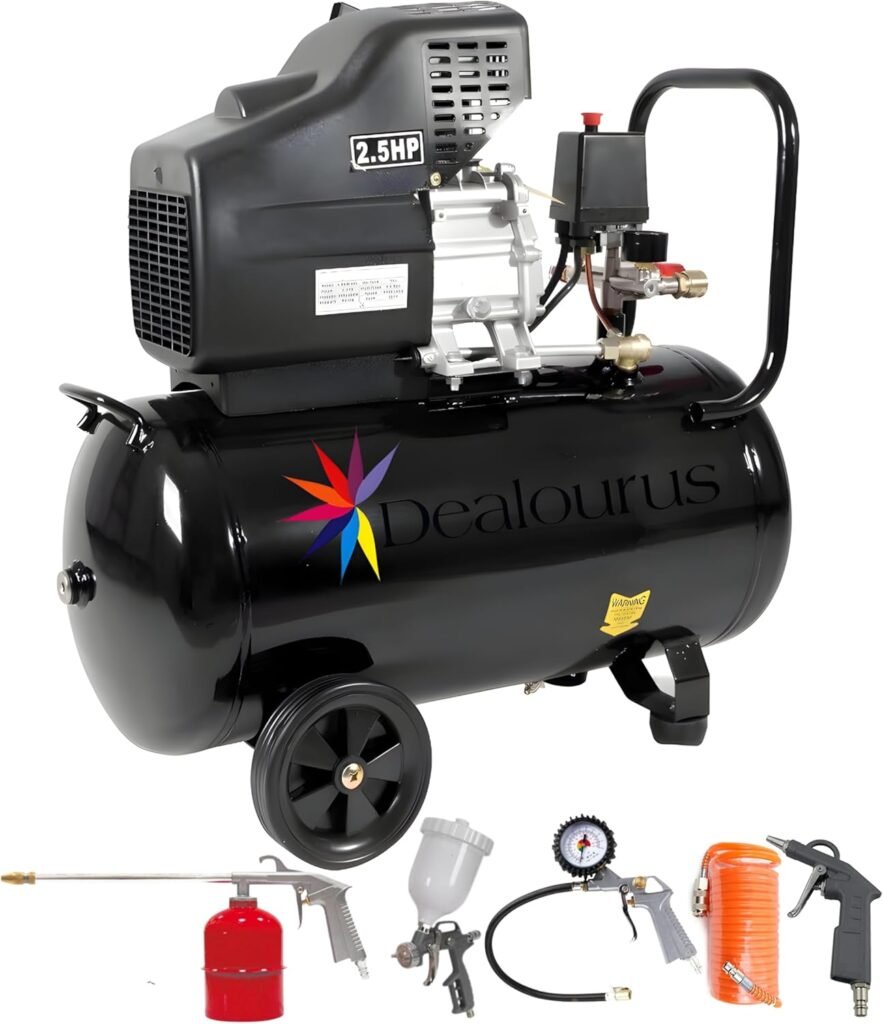
We’ll keep this short and friendly: this kit is a 50-litre portable air compressor marketed for workshop and automotive use, bundled with a five-piece accessory kit including spray guns, a tyre inflator, a coiled hose, and a blow gun. It promises solid pressure (8 bar) and portability thanks to large wheels and handles, aiming to be useful for both DIYers and professionals.
Key Features at a Glance
Under this heading we want to summarize the main selling points in plain terms. The highlights are a robust motor, a generously sized tank, a useful accessory set, and build features that aim to make the unit durable and mobile for garage or workshop settings.
What the Manufacturer States
We like to quote the headline claims so we know what to test mentally against expectations. The product is described as having a 1.5 kW (2HP) motor running at 220V/50Hz, delivering up to 8 bar (approximately 116 psi) and 185 litres per minute air displacement, with a 50-litre tank and a European-standard welded tank construction. A 1-year warranty is included.
Marketing vs. Specification Notes
It’s common for product titles and descriptions to use slightly different figures. The title references 2.5HP and 9.6 CFM, while the description lists 1.5 kW (2HP) and 185 L/min. We’ll point out these differences and how they can affect what to expect in real use so you’re not surprised.
Detailed Specifications Table
We find tables useful for quick decisions, so here’s a clear breakdown of the core specifications and any relevant notes. This layout helps us and readers compare the claims at a glance.
| Specification | Stated Value(s) | Notes |
|---|---|---|
| Tank capacity | 50 L | Good size for light-to-medium workshop tasks and intermittent tool use. |
| Motor power | 1.5 kW (2HP) listed; title claims 2.5HP | Some listings use different HP conversions. We recommend verifying actual motor plate rating on arrival. |
| Voltage & Frequency | 220V / 50Hz | Standard single-phase supply common in garages and home workshops. |
| Max pressure | 8 bar (~116 psi) | Suitable for many pneumatic tools and painting applications. |
| Air displacement | 185 L/min (manufacturer); title claims 9.6 CFM | 185 L/min ≈ 6.5 CFM; 9.6 CFM is higher. Expect actual flow closer to 6–7 CFM unless otherwise measured. |
| Accessories | 5-piece kit: suction spray gun, gravity spray gun, tyre inflator with gauge, coiled hose, blow gun | Good starter set for painting, tyre inflation, and cleaning. |
| Portability | Large wheels, handle | Designed for maneuverability in workshops and garages. |
| Construction | European-standard welded tank, quality bearings | Aims to meet higher manufacturing standards for durability. |
| Warranty | 1 year | Standard warranty period for many compressors at this price point. |
We like to flag the CFM discrepancy above because tool compatibility often depends more on CFM at a given pressure than on peak pressure alone.
Performance in Real-World Tasks
We’ll talk through the types of tasks this compressor is likely to handle well and where it may struggle. That helps set realistic expectations for workshop and automotive users.
Painting and Spray Work
For painting, consistent airflow and pressure stability matter most. With a 50L tank and an 8 bar max rating, we expect decent short bursts for touch-ups and smaller painting tasks, especially with the gravity-feed spray gun included. For larger, continuous spray jobs or professional automotive panel work, we’d recommend testing whether the airflow (CFM) sustains the spray gun at the desired pressure without frequent motor cycling.
Tyre Inflation and Automotive Use
Tyre inflation is straightforward for this unit. The tyre inflator with built-in gauge makes topping up a tyre quick and accurate. For tasks like impact wrench work, the actual usable performance comes down to sustained CFM; smaller repair tasks and pneumatic ratchet use should be satisfactory, while heavy-duty, continuous impact wrenching may push the compressor beyond optimal continuous output.
Sanding, Stapling, and Nailing
Tools like pneumatic sanders and staple guns draw moderate airflow. The 50L tank provides buffer capacity for intermittent use and should keep us running through many small jobs without constant motor recycles. For extended sanding sessions, we’d keep an eye on how often the compressor runs and whether pressure drops affect finish quality.
Motor and Drive System
We like this part of a compressor because it often determines longevity and maintenance.
Power and Efficiency
The stated 1.5 kW (2HP) motor suggests decent starting torque and adequate power for a 50L compressor. If the listing’s 2.5HP claim turns out to be marketing, that may change expectations for recovery time and peak performance. We advise checking the motor nameplate on delivery to confirm the true motor rating.
Bearings and Moving Parts
The manufacturer highlights high-quality bearings and a European-standard welded tank, which are good signs for durability. Bearings that are well-fitted and greased will reduce wear and noise, and a welded tank built to rigid standards reduces the risk of leaks and cracking under repeated pressurization cycles.
Pressure and Airflow (CFM)
Understanding pressure and airflow is critical because many tools specify CFM requirements at a given pressure.
Maximum Pressure
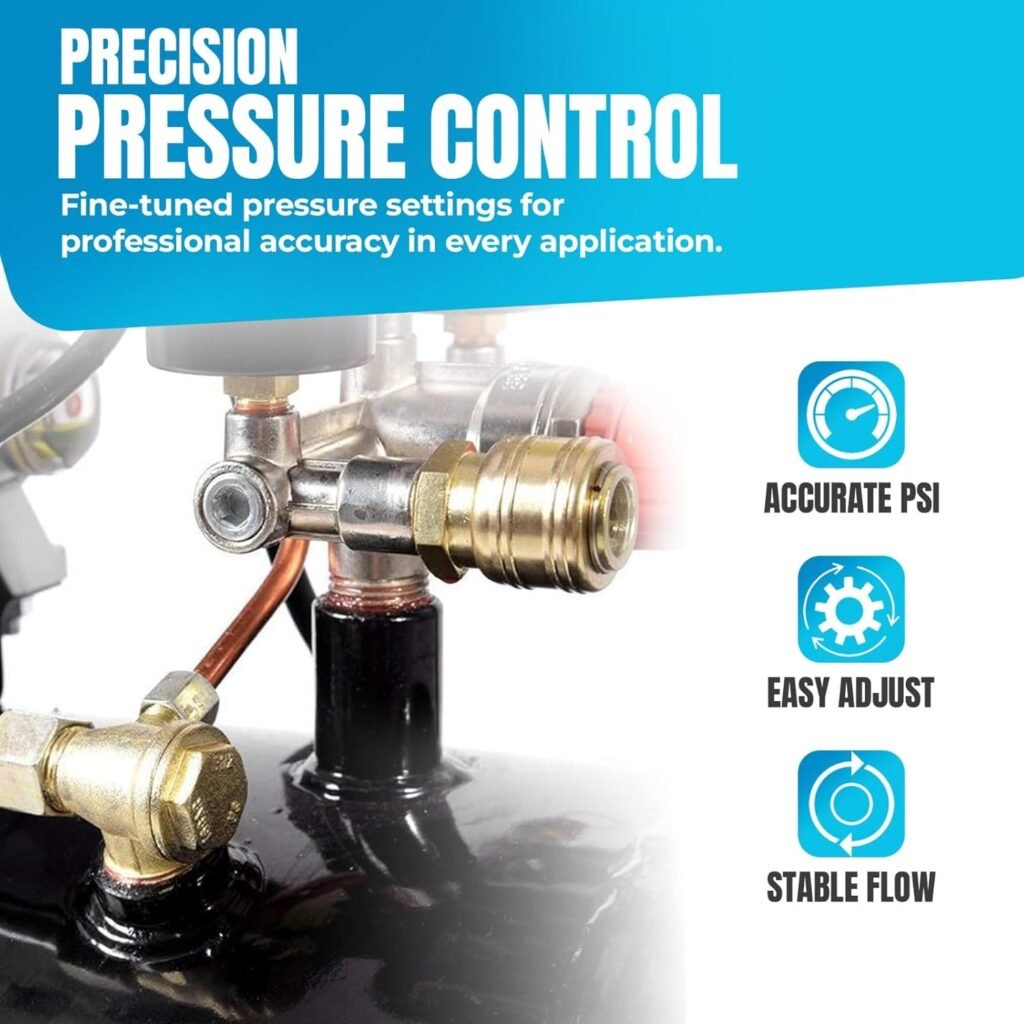
The 8 bar max is generous for most workshop tasks. It covers painting, tyre inflation, pneumatic fastening, and many air-driven tools. We like that it doesn’t overstate maximum pressure beyond typical use.
Airflow (CFM) — The Important Caveat
There’s a notable discrepancy: the description lists 185 L/min (≈6.5 CFM), while the product title claims 9.6 CFM. Those are materially different figures for tool compatibility. We recommend treating the 185 L/min figure as the more conservative and realistic number unless the seller confirms otherwise. For tools that require higher sustained CFM (e.g., some larger sanders or continuous spray guns), we should verify compatibility before committing.
Tank Capacity and Recovery Time
The 50-litre tank is a solid mid-size choice for a portable compressor, balancing capacity with mobility.
Why 50L Works for Most Tasks
A 50L tank stores a useful volume of air, so we get a buffer that helps keep pressure steady during intermittent tool use. This reduces motor start frequency compared with smaller tanks, which is kinder to the motor and gives a more stable tool performance.
Recovery Time Expectations
Recovery time depends on motor power and the current draw of tools. If the motor is the lower 1.5 kW rating, recovery will be reasonable but not lightning-fast. If you need near-continuous high-CFM air, consider a compressor with a larger motor or a bigger tank.
Build Quality, Materials, and Mobility
We value robust construction and smart design for units that move around a busy workshop.
Chassis and Tank Construction
The European-standard welded tank and quality materials suggest a focus on durability. Welded tanks built to higher industry standards reduce leak risk and tend to last longer than cheaper, riveted tanks.
Wheels, Handles, and Maneuverability
Large wheels and a sturdy handle make this unit easier to move across workshop floors. We appreciate mobility in a 50L compressor because it allows us to take the unit to the vehicle or project instead of vice versa.
Noise and Vibration
Noise is something we personally notice in a workshop. The listing doesn’t give a dB rating, so we infer based on motor size and construction.
Typical Noise Expectations
A 2HP-ish compressor without specific sound insulation will be audible but tolerable for short tasks. We advise using hearing protection during prolonged operation and placing the compressor on anti-vibration mats where noise and vibration are concerns.
Vibration Management
Quality bearings and a rigid chassis reduce vibration transmission. The large wheels help isolate some vibration while moving, but for long-term stationary use, placing rubber feet beneath the compressor will keep it quieter and more stable.
Accessories Included — What We Get
The kit includes five main accessories, which help provide immediate utility out of the box.
Suction-Feed Spray Gun (with red canister)
This is useful for certain coatings and tasks where suction feed is sufficient. It’s handy for general-purpose spraying where gravity feed isn’t necessary.
Gravity-Feed Spray Gun
Gravity feed guns are typically more efficient at using paint with lower pressure requirements and providing finer atomization, making this a welcome inclusion for paint and finish work.
Tyre Inflator with Pressure Gauge
This is straightforward and highly practical for automotive users. The built-in gauge helps ensure accurate inflation without needing a separate meter.
Coiled Air Hose
A coiled hose keeps the workspace tidy, stretches when needed, and retracts to save space. It’s a practical choice for garage use, though longer straight hoses may be preferable for some applications.
Blow Gun
A blow gun is versatile for cleaning dust and debris from workpieces and machinery. It’s an essential basic accessory we’d expect with a starter kit.
Setup, First Use, and Initial Tests
We like to know how much time and effort are required to get a compressor running reliably.
Unboxing and Assembly
Expect minimal assembly: attach the wheels and handle, check oil level if required (some models are oil-free; verify), connect the regulator and fittings, and plug in. We recommend reading the manual thoroughly before first power-up.
Initial Break-In and Checks
On first use, we’ll run the compressor through a couple of fill/drain cycles and check for leaks, unusual noises, and consistent pressure cut-in/cut-out points. This verifies valves and seals and helps ensure the unit is functioning as expected.
Maintenance and Serviceability
A compressor that’s easy to maintain will last longer and cost less to own.
Routine Maintenance Tasks
We’ll want to drain the tank regularly to prevent condensation buildup, check and replace the intake filter as needed, and monitor oil if the unit is oil-lubricated. Bearings and belts (if present) should also receive periodic checks.
Spare Parts and Warranty
A one-year warranty is standard but not generous; for professional usage we might consider extended coverage if available. It’s also practical to check availability of replacement filters, belts, and pressure switches for long-term use.
Safety Features and Considerations
Safety is essential when working with compressed air.
Pressure Relief and Shutoff
Ensure the safety valve works and the pressure switch cuts out at the specified max pressure. We recommend testing the safety valve periodically in addition to regular checks.
Proper Usage Tips
Never point blow guns at people, and always wear eye and hearing protection. Keep the tank drained to prevent corrosion and inspect hoses for damage before each use.
Painting Performance: What to Expect
Painting quality depends on stable pressure and consistent airflow.
Gravity vs Suction Guns
The gravity-feed gun should produce a finer finish with less overspray for small to medium jobs, while the suction-feed gun is useful for larger volumes and thicker coatings. Both guns are useful starter tools; for high-end finishes we’d test with the specific paints and coatings we plan to use.
For Automotive Panel Work
This compressor is well-suited for spot repairs and touch-ups on vehicle panels, but for full resprays of multiple panels you may want a higher CFM source or a larger setup to avoid extended motor cycles and potential pressure dips.
Use in Woodworking and General Maintenance
We like compressors that handle finishing and fastening tasks in a woodshop.
Nailers, Staplers, and Sanders
For nailers and staplers, the 50L tank and motor should be more than adequate for most household and hobbyist jobs. For pneumatic sanders used continuously, monitor the compressor’s duty cycle and pressure stability.
Cleaning and Dust Removal
The included blow gun is great for removing sawdust and debris quickly. Keep an eye on air filtration if you’re using the compressor around fine dust that you want to avoid drawing into the intake.
Pros and Cons
We’ll list the major strengths and the areas that might cause hesitation, so we make a balanced recommendation.
Pros
- 50L tank offers good buffer for intermittent tasks.
- 8 bar max pressure is versatile for many applications.
- Useful accessory kit for immediate use (spray guns, tyre inflator, hose, blow gun).
- Large wheels and handle enhance portability.
- European-standard welded tank and quality bearings suggest solid build quality.
- 1-year warranty included.
Cons
- Conflicting motor/CFM specs in title vs description may confuse buyers.
- If actual airflow is closer to 185 L/min (~6.5 CFM), some continuous high-CFM tools may not perform optimally.
- No dB noise rating provided; expect audible operation for longer runs.
- Warranty is limited to one year; professionals may prefer longer coverage.
Comparison to Similar Models
We like to place the unit in context so buyers can make informed decisions.
Vs. Smaller 24–25L Compressors
A 50L tank gives longer run times and better pressure stability than smaller 24–25L units, making it more suitable for finish work and longer tool runs.
Vs. Larger 100L Stationary Compressors
A 100L unit or a two-stage compressor will provide better continuous CFM and faster recovery but at the cost of mobility and higher price. For many hobbyists and mobile mechanics, the 50L hits a good compromise.
Vs. Higher-CFM Portable Units
If continuous high-flow tools are essential to our work, a unit explicitly rated for higher sustained CFM (with a larger motor) may be a better investment. This model is a good all-rounder but may not replace a dedicated production compressor.
Who Is This Product Best For?
We’ll specify typical user profiles so readers can see if the product matches their needs.
DIY Enthusiasts and Hobbyists
This compressor is a strong fit for DIYers who want an all-in-one starter kit for painting, inflation, and general workshop tasks without investing in larger, more expensive equipment.
Mobile Mechanics and Small Garages
Its portability and 50L tank make it useful for mobile tasks and small garages. It’s particularly handy for tyre work, light impact tool use, and painting/touch-ups.
Small Workshop Owners and Part-Time Professionals
For light professional use and intermittent tasks, this compressor will be adequate. For heavy daily production work, we’d weigh up models with higher sustained CFM and more extended warranties.
Troubleshooting Common Issues
We prefer to be practical and proactive with solutions to likely problems.
No Start or Motor Fails to Run
Check mains supply and the compressor’s power switch. Verify the motor’s thermal protector hasn’t tripped and inspect fuses or breaker. If the motor hums but doesn’t start, it may be a capacitor issue or an internal motor fault.
Pressure Not Reaching Specified Level
Check for air leaks around fittings and hose connections, ensure the intake filter is clean, and inspect the pressure switch settings. A leaky safety valve or damaged tank could also cause low pressure.
Excessive Noise or Vibration
Verify mounting hardware is secure, ensure the compressor is on a level surface, and check bearings and belts for wear. Adding anti-vibration pads can help reduce transmitted noise.
Final Thoughts and Recommendation
We’ll summarize our take so you can decide confidently.
We find the 50L Portable Air Compressor 2.5HP 8Bar 9.6CFM Electric 220V 5 Piece Tool Kit to be a strong mid-range option for hobbyists, DIYers, and small-garage professionals. Its 50L tank, 8 bar maximum pressure, and practical accessory kit give it real utility out of the box. The most important caution is the discrepancy between the listed airflow figures; treat the 185 L/min specification as the conservative baseline unless the seller confirms the higher CFM. For intermittent painting, tyre inflation, finishing work, nailing, and light automotive tasks, this compressor should serve us well. If our work requires continuous high-CFM tools, we recommend evaluating higher-capacity or higher-motor-power alternatives.
Quick Buying Checklist
We like simple checklists to avoid post-purchase regret. Run through these before you buy.
- Confirm the motor plate and seller documentation for true HP/kW and CFM figures.
- Ensure your workshop supply is 220V / 50Hz and has adequate circuit capacity.
- Decide whether the included accessories match your immediate needs.
- Plan for basic maintenance: tank draining, filter changes, and safety valve checks.
- If noise matters, prepare for hearing protection and consider vibration-reducing placement.
Frequently Asked Questions (Short)
We provide brief answers to common queries we expect from buyers.
Q: Is this compressor suitable for continuous professional spray painting? A: For occasional or touch-up painting, yes. For continuous whole-car or production painting, a compressor with higher sustained CFM may be preferable.
Q: How often should we drain the tank? A: We recommend draining daily if used heavily, or at least weekly for light use, to prevent corrosion from condensation.
Q: Can we run an impact wrench with this compressor? A: For light to moderate torque tasks, yes. Heavy, continuous impact wrench use may exceed the sustainable CFM and require a larger compressor.
Q: Is assembly difficult? A: No; assembly is typically limited to attaching wheels and handle and connecting fittings. Always check the manual.
Q: What if the CFM figures differ from the title and description? A: Contact the seller and check the motor nameplate on the unit when it arrives. Use the more conservative figure for tool compatibility planning.
We hope this review helps us make an informed decision about whether this 50L Portable Air Compressor kit fits our workshop and automotive needs.